

Raise a Floppa: Why a Blocky Caracal Became Roblox's Most Important Meme Game
A square cat walks into a Roblox house. You click on it for money. It poops everywhere. Eventually it blows itself up with a C4. That's the entire pitch for Raise a Floppa and somehow, that pitch has been played over 232 million times. Not by accident, not because of a marketing budget, but because a two-person team understood something that most AAA studios still don't: on the internet, absurdity is a feature, not a bug. This article breaks down how a niche Russian caracal became a Roblox institution, why low-poly chaos consistently beats polished realism on UGC platforms, and what Floppa's legacy tells us about the brainrot gaming wave that broke world records in 2025.
⚡ Quick Answer
Raise a Floppa is a Roblox idle game by FLOPPA#1 where you raise a blocky caracal based on the Big Floppa meme. Released March 2022, it surpassed 232 million plays by 2026. Its success built on deliberate absurdity and deep meme literacy made it the spiritual godfather of Roblox's brainrot gaming genre.
The Origin Story: From a Moscow Windowsill to 232 Million Plays
Before there was a Roblox game, there was a photograph. On December 23, 2019, an Instagram user named prozhony posted a photo of his pet caracal a wild cat with dramatically tufted ears lying beside a regular Maine Coon on a windowsill in Moscow. The size contrast was funny. The ears were unhinged. Ironic meme accounts on Instagram began circulating it immediately, and by early 2020, the caracal had a name: Big Floppa, after those magnificent, flopping ears.

The real cat's name is Gosha (short for Georgy), born in Kyiv on December 21, 2017, and adopted by Andrey and Elena Bondarev in Moscow in April 2018. According to Russia Beyond, Gosha's co-owner Elena noted that she only learned of his internet fame through a mutual friend they had no idea the photos had crossed into global meme territory. By 2020, the meme had jumped from Russian Instagram to Reddit, YouTube, and iFunny, evolving from a cute cat photo into a full ironic mythology: Big Floppa as a gangster, a rapper, a war criminal, a philosopher.
The leap to Roblox happened on March 26, 2022, when the developer group FLOPPA#1 launched raise a floppa. The game was, by the developers' own admission, never meant to be a serious release it was built as a meme, not a product. That transparency is core to understanding why it worked.
"The game was only created since the original one was just for a meme and it wasn't supposed to be an actual game that many people would play."
That humility turned out to be a superpower. The game didn't try to compete with Blox Fruits or Brookhaven. It leaned so hard into its own ridiculousness that players had nowhere else to go for that specific flavour of chaos. Within months, it had racked up tens of millions of plays. By 2026, Rolimon's analytics tracked the play count at over 232 million a number that dwarfs the player bases of many "serious" AAA mobile games.
What Actually Happens in Raise a Floppa?
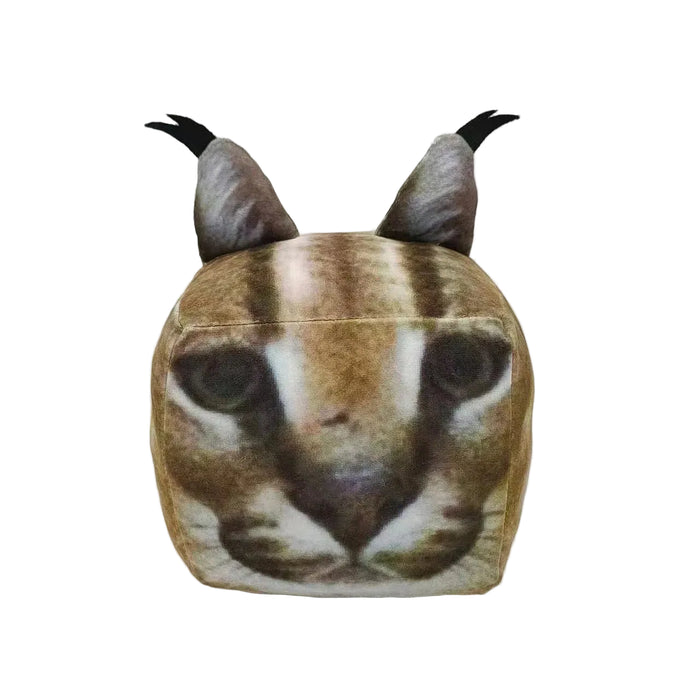
If you've never played, the loop sounds deceptively simple: you spawn in a house, and there's Floppa a blocky, low-polygon caracal. Click on him to generate money. Use that money to buy items from "The Interwebs" (an in-game computer store), which includes upgrades like a Neko Maid to clean up Floppa's frequent messes, a Baby Destroyer to eliminate the annoying offspring spawned by Ms. Floppa, and eventually, absurd endgame companions like a Pop Cat (very noisy) and a Grumpy Cat (self-explanatory). Your goal is reaching one of three "endings" via a Time Machine, a Mysterious Orb, or duplicating a Time Cube.
None of this is explained. The lore is delivered through environmental chaos, item descriptions that read like shitposts, and a community wiki that has grown into a minor literary achievement of internet absurdism. The game also carries the battle scars of Roblox moderation: it was content-deleted and restored three separate times in 2022 alone for allegedly scamming players (because the description said "click the floppa for money"), a DMCA complaint from an impersonator, and alleged racial discrimination (Roblox misread "The Homie Sogga" as a slur). Each takedown generated the hashtag #FreeFloppa and hundreds of thousands of new players who arrived specifically because of the drama.
The Raise a Floppa 2 Era
The original game is now officially discontinued, replaced by Raise a Floppa 2 a more expansive sequel with a revamped two-story house, a basement, expanded item lists, and a full Day/Night system. As of March 2026, the sequel received its "Diamond Fishing Rod Update" just weeks ago, proving the franchise is far from dead. The developers explicitly called Floppa 1 a meme that "wasn't supposed to become popular" and yet here we are, four years later, still fishing in Floppa's pond.
Why Did a Meme Game Beat the Big Studios?
This is the question that should keep every Roblox AAA-wannabe awake at night. Raise a Floppa had no marketing budget, no influencer deals, no polished trailer. It had a blocky cat and a description that got it banned for scamming. Yet it pulled over 232 million plays while many technically superior games languish in obscurity. Here's what actually happened.
1. Pre-Loaded Cultural Capital
By 2022, Big Floppa had been a fixture of internet culture for two years. The subreddit r/bigfloppa was created in June 2020 and became a hub for ironic memes. When the Roblox game dropped, it wasn't introducing a new character it was giving an existing audience something to do with a character they already loved. The game was the merchandise. It was the fan event. Discovery was built in from day one because the meme already had a massive, globally distributed fan base who would share it the moment it existed.
2. Absurdity as Sticky Mechanics
The game's shop items the Baby Destroyer, the Homie Sogga, the Floppa Gunner are items that players describe to other players. Every item is a story. "So I bought this alien shop from the top of the UFO and the Dark Web vendor sold me almond water" is content. It's a sentence that makes zero sense and generates exactly the kind of screenshot that spreads across Discord servers and Reddit threads. The low-poly aesthetic is part of the joke, not a technical shortcoming. Intentionally ugly has been a meme aesthetic since the earliest internet culture, and Roblox's art style leans into it perfectly.
3. Drama as Free Marketing
The three Roblox bans didn't kill Raise a Floppa they supercharged it. Every deletion spawned a community response, news posts, and the #FreeFloppa hashtag. Each restoration was treated like a victory. This is the Streisand Effect working in a developer's favour: the people trying to suppress the game made it far more visible than any ad spend could have. For indie developers on UGC platforms, community drama when handled well is promotional infrastructure.
From Sora Tanka: I first opened Raise a Floppa expecting about ten minutes of entertainment before moving on to something "real." Three hours later, I was deep in the Backrooms buying almond water from a Traveling Merchant whose dialogue read like it was written by a sleep-deprived philosophy student. What struck me wasn't the gameplay itself it was the game's confidence in its own stupidity. There was no tutorial, no hand-holding, no pop-ups trying to sell me Robux. Just Floppa, blinking at me, waiting for me to figure it out. That kind of trusting chaos is genuinely rare in games made by studios of any size.

Floppa's Legacy: The Blueprint for the Brainrot Gaming Wave
In 2025, Roblox experienced something genuinely unprecedented. A game called Steal a Brainrot built around absurd, AI-generated "Italian Brainrot" characters like pizza-gun hybrids with names ending in -ini reached 25.4 million concurrent players, shattering every gaming record in history and dragging the entire Roblox platform to a peak of 47.4 million simultaneous users. The formula take a viral internet meme, wrap it in a stupid-simple idle mechanic, add chaotic social elements, ship fast is identifiably Floppa's formula.
The connection isn't coincidental. Raise a Floppa demonstrated in 2022 that Roblox's audience wasn't just hungry for the next simulator or obby they were hungry for games that felt like their internet culture made playable. Floppa proved the blueprint. Skibidi Toilet refined it. Italian Brainrot broke the world with it. According to Naavik's 2026 UGC industry report, Roblox's DAUs jumped 52% year-on-year in 2025 and the brainrot genre was the primary driver. Creator payouts across the platform hit $1.5 billion in 2025, up 70% year-on-year.
Comparative data across Roblox's major meme-driven game eras. Sources: Rolimons, Naavik, Roblox official blog.
What all of these games share and what separates them from conventionally ambitious Roblox titles is a willingness to look genuinely ridiculous. They don't aspire to photorealism. They're not trying to be Minecraft. They're trying to be their specific meme, delivered as faithfully and chaotically as possible. The low-poly aesthetic of Raise a Floppa isn't a limitation of developer skill; it's the correct choice for the content. Gosha the caracal's appeal was always his weird, lumpy, undomesticated strangeness and a blocky Roblox model captures that spirit more honestly than a polished 3D render ever could.
What Indie Developers Can Learn from the Floppa Formula
The Floppa playbook is teachable. Here's what the game actually demonstrated about viral success on UGC platforms lessons that held true from 2022 through the brainrot explosion of 2025.
Ship Into Existing Audiences, Not Into Voids
Raise a Floppa launched into a community that already existed and already cared. The r/bigfloppa subreddit, Instagram meme accounts, and Discord servers all became instant distribution channels the moment the game existed. Developers on Roblox who build games around already-viral memes don't need marketing they need timing. Get to a meme while it's hot, not six months after it peaked.
Make Your Items Describable (Word-of-Mouth Loops)
Every item in Raise a Floppa is a story someone wants to tell. The Baby Destroyer, the Backrooms, the UFO alien shop players don't just play the game, they report back from it. The game functions as a shared experience with internal lore that players feel compelled to explain to friends. That explanation is an invitation. Build items that are weird enough to describe, not just useful enough to buy.
Embrace the Roblox Aesthetic, Don't Fight It
Roblox's block-people and low-poly worlds are now a culturally distinct aesthetic not a technical limitation. As Taylor Wessing's 2026 games industry analysis notes, the platform's DAUs hit 150 million by end of 2025, with much of that growth driven by lower-end device markets in APAC where fast, lightweight games are the product that actually ships. Trying to build a high-fidelity realistic game on Roblox doesn't make you stand out it makes you look like you don't understand the platform.
The Flop Will Never Stop
Raise a Floppa started as a joke about a big-eared Russian wild cat, and it ended up as a case study in how internet culture becomes product. 232 million plays. Three bans. A sequel actively updated in March 2026. A legacy that threads directly into Roblox's most record-breaking era. Gosha the caracal never asked to be a symbol of indie game development philosophy he just flopped there on the windowsill and let the internet do the rest.
For developers, the lesson is clear: cultural fit beats production quality on UGC platforms, every single time. For players, Raise a Floppa is a reminder that the internet's best games are sometimes its most unserious ones. And for Big Floppa himself? He's probably fine. He has a C4 and a Time Machine.
Frequently Asked Questions
What is Raise a Floppa on Roblox?
Raise a Floppa is an idle/clicker game on Roblox where you care for a blocky version of the Big Floppa meme cat. Players click Floppa to earn money, buy upgrades from an in-game shop called The Interwebs, and work toward one of three story endings. It has been played over 232 million times since its March 2022 release.
Who is Big Floppa and where did the meme come from?
Big Floppa is an internet meme based on a real caracal named Gosha (also called Gregory), born in Kyiv in 2017 and owned by the Bondarev family in Moscow. His owner posted photos of him on Instagram in December 2019, and by 2020 the images had gone viral on Reddit, YouTube, and iFunny, spawning a global ironic meme culture.
Is Raise a Floppa 2 still being updated in 2026?
Yes. Raise a Floppa 2 the official sequel by FLOPPA#1 received its "Diamond Fishing Rod Update" on March 9, 2026, followed by a Mini Update on March 15, 2026. The original game is discontinued, but the sequel remains actively supported and continues to receive regular content patches.
Why do simple meme games keep going viral on Roblox?
Meme games launch with pre-built audiences from existing internet culture, so discovery is organic and fast. Simple mechanics lower the barrier to entry, while absurd or shareable content creates natural word-of-mouth. The Roblox player base predominantly Gen Z and Alpha responds strongly to humor and cultural references over technical complexity.
What is "brainrot gaming" and how does Floppa relate to it?
Brainrot gaming refers to Roblox experiences built around chaotic, meme-saturated content with deliberately low-brow or absurdist aesthetics. Raise a Floppa (2022) is widely considered its blueprint: a viral meme, idle mechanics, and anti-serious design. The 2025 wave of brainrot games like Steal a Brainrot followed the same formula and broke world gaming records.
How many times has Raise a Floppa been played?
As of early 2026, Raise a Floppa has been played over 232 million times on Roblox, according to Rolimon's analytics tracking. This figure covers the original game only; Raise a Floppa 2, the active sequel, has accumulated additional plays on top of that total across its run since June 2022.
📚 Sources & References
- Raise a Floppa — Play Count Analytics — Rolimon's
- Raise a Floppa — Official Wiki (Fandom), March 2026
- Raise a Floppa 2 — Official Wiki (Fandom), March 2026
- Big Floppa — Know Your Meme Encyclopedia
- Meet Big Floppa — Russia Beyond, 2021
- Raise a Floppa — Roblox Wiki (Fandom), January 2026
- The 2025 Roblox Replay: Decoded Through Search and Style — Roblox Official Blog, December 2025
- The State of UGC Games (2026) — Naavik, February 2026
- Games Industry in 2026 and Beyond — Taylor Wessing, March 2026
- Big Floppa — HandWiki (biographical data)
You might also like