

Kaito Vane
Freelance cultural critic and manga historian specializing in the evolution of the "New Gen" shonen aesthetic. With a background in visual arts, Kaito frequently explores the intersection of street fashion and manga paneling.
Published: March 22, 2026 | 10 min read | Last updated: March 22, 2026
Gachiakuta Tone Shift: Is the "Gods" Controversy Killing Its Unique Identity?
Gachiakuta was supposed to be different. When Kei Urana's dystopian wasteland manga launched in 2022, it felt like a genuine counterweight to the crowded battle-shonen genre raw, graffiti-soaked, class-conscious, and wearing its punk influences openly. By mid-2025, its anime adaptation was outpacing Jujutsu Kaisen on U.S. charts, and by early 2026 Volume 1 had landed on the New York Times Graphic Books bestseller list. But as the manga pushes past Chapter 160 and the Doll Festival arc unfolds, a growing portion of the fandom is asking a pointed question: is Gachiakuta's tone shift specifically the creeping introduction of divine mythology, escalating power levels, and genre-blending festival arcs a deliberate evolution, or the beginning of a very familiar slide?
⚡ Quick Answer
Gachiakuta's later arcs do introduce heavier mythology and shifts in tone — most notably in the Doll Festival arc. Whether this constitutes a problematic "genre drift" or a natural narrative expansion is genuinely contested. The pacing and flashback-heavy structure are the real structural concerns, not the lore itself.
What Made Gachiakuta Unique in the First Place?
Gachiakuta arrived with a very specific aesthetic contract. The world Kei Urana built a floating Sphere city dumping its garbage (and its undesirables) into an endless abyss below was a thinly veiled metaphor for class warfare, environmental neglect, and the literal dehumanization of the poor. Every design choice reinforced this: the Vital Instruments (weapons born from trash imbued with emotional energy), the graffiti-styled lettering by collaborator Andō Hideyoshi, the deliberately grimy palette. Urana worked as an assistant under Atsushi Ohkubo on Fire Force, and the influence is visible but where Ohkubo gravitates toward cosmic horror and religious mythology early, Urana grounded the opening arcs of Gachiakuta in something more tactile and sociological.
The series didn't ask you to care about gods or chosen ones. It asked you to care about a kid who was thrown away. That specificity was its greatest strength, and it's precisely what fans fear losing.

A Map of the Manga: How the Arc Structure Evolves
To understand the controversy, you need to see the full shape of the series. As of early 2026, Gachiakuta has ten arcs covering roughly 162 chapters across 18 collected volumes. Here's the structural overview:
| Arc | Title | Chapters | Primary Tone |
|---|---|---|---|
| 1 | Ground Wanderer | 1–6 | Survival horror / class commentary |
| 2 | Workplace Observation | 7–11 | Character-building / world exposition |
| 3–5 | Raiders Trap → Lady of Penta | 12–43 | Action escalation / faction politics |
| 6 | Trash Storm | 44–81 | Epic battle / trauma processing |
| 7–9 | Heritage Mural → First Job | 82–130 | Lore deepening / mythology seeds |
| 10 | Doll Festival | 131–162+ | Festival / mythology confrontation |
The tonal shift is visible right there in the table. The first six arcs operate within a clearly defined dark-fantasy register brutal, grounded, with power gains that feel earned through suffering rather than revelation. Starting around the Heritage Mural arc, Urana begins layering in larger mythological scaffolding: the history of the Ground, the origin of Vital Instruments, and the question of what (or who) structured this world's power hierarchies. By the time the Doll Festival arc arrives an annual Ground celebration involving Givers whose Vital Instruments animate dolls the series has unmistakably shifted registers.
📊 Key Stat: As of February 2026, Gachiakuta has 18 collected volumes and 162+ chapters, placing it firmly in its mid-story phase. Analysts estimate the series has covered only 30–40% of its planned narrative, suggesting the mythology seeding is intentional long-game setup rather than improvised escalation.
The "Gods" Question: Where Does Divine Mythology Enter Gachiakuta?
Let's be precise about what fans are actually debating, because "Gods controversy" is being used loosely. The series doesn't introduce literal deities in the conventional shonen sense no Zeus-tier figures descend to grant Rudo divine blessings. What Urana introduces, beginning around the Heritage Mural arc, is a structural mythology underpinning how the Ground itself was created, who designed the Vital Instrument system, and the implication that certain individuals operate on a tier of power that transcends the Cleaner/Raider conflict.
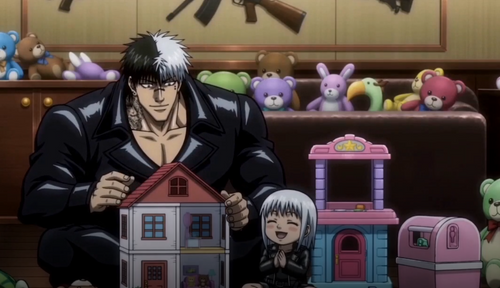
The Doll Festival arc crystallizes this tension. The Festival itself a Halloween-adjacent event on October 31st in the city of Andio, where Givers with doll-type Vital Instruments put on a spectacular public showcase looks, on the surface, like a tonal detour into something lighter and more festive. That appearance is deliberately subverted when an antagonist declares himself "Supreme Ruler" during the event, yanking the narrative back into darkness. But the very existence of a brightly-lit festival arc, with its carnivalesque design and expanded lore about Giver subtypes, signals that Urana is building a world with more registers than the grim survival horror of the Ground Wanderer arc.
⚠️ Spoiler Note: This article discusses story arc structures and thematic content through Chapter 162. Specific plot resolutions are kept vague, but readers who want a completely fresh experience should note that arc titles and general conflict setups are mentioned throughout.
The closest analogy in the series' own lineage is what happened in Fire Force Ohkubo's work that Urana assisted on when it transitioned from firefighting procedural to cosmic apocalypse mythology. That transition fractured Fire Force's fanbase almost exactly as Gachiakuta's later arcs are beginning to divide its own. The difference is timeline: Fire Force made its mythology pivot after nearly 300 chapters. Urana appears to be seeding hers significantly earlier, around Chapter 82 onwards.
Is the Tone Shift Real? A Structural Analysis
The word "tone" is doing a lot of heavy lifting in this debate, and it's worth splitting it into its components: visual register, thematic focus, stakes architecture, and villain typology.
Visual Register
Urana's art never abandoned its dense, graffiti-adjacent paneling style. The character designs in the Doll Festival arc are, by multiple accounts, some of the most visually ambitious she's produced. Readers on ResetEra specifically called out character redesigns in the arc as standout work. Visually, the series has not softened.
Thematic Focus
This is where legitimate concern lives. The early arcs kept Gachiakuta's class-war metaphor tight. The Ground was a material place, its politics were rooted in scarcity and labor, and its violence felt like a consequence of systemic dehumanization. As the mythology deepens, that clarity risks being diluted by worldbuilding abstraction. When you start explaining who built the system and why, the sociological becomes cosmological and that's a trade-off, not inherently a failure.
Stakes Architecture
Early Gachiakuta ran on personal stakes Rudo's revenge, survival, the bonds formed in the Ground. The mythology arcs introduce a more macro threat: if someone claiming godlike authority over the Ground can declare himself Supreme Ruler mid-festival, the stakes have shifted from personal to existential. This is textbook shonen escalation, and it's not automatically bad but it does require the author to keep the personal stakes tethered to the macro conflict, or the emotional resonance evaporates.
Villain Typology
Perhaps the most telling structural signal. Early Gachiakuta antagonists were defined by their relationship to the Ground's economy their power felt plausible within the world's established rules. Later antagonists begin carrying an aura of exception: their power levels and motivations increasingly exceed what the established world logic prepared us for. That's a quiet form of power creep, even if individual fight scenes remain inventive (the gun-beats-magic moment in Season 1 Episode 18 was praised precisely because it maintained the world's internal logic).
The Pacing Problem: Flashbacks, Monologues, and Incomplete Chapters
Here's where the structural critique gets concrete and where even fans who love the mythology expansion will often concede a genuine problem. The weekly serialization format of Weekly Shōnen Magazine produces chapters of roughly 10–15 pages. When Urana needs to introduce new lore, new characters, and resolve ongoing battle mechanics simultaneously, the chapters suffer from what ResetEra forum readers succinctly called chapters that are "90% yapping and maybe two pages of Rudo actually doing something."
"The flashbacks and the new characters introduced one after the other have really made the pace wonky... the incompleteness of some of these chapters are hurting it, no question about it."
The pacing critique and the tone-shift critique are related but distinct. You can embrace the mythological expansion and still find the delivery mechanism extended flashbacks cutting into active battle chapters, new characters introduced without adequate runway frustrating. The problem isn't ambition; it's execution under industrial constraints. Urana is building a more complex world than weekly serialization comfortably accommodates.
This has a human dimension too. The series went on hiatus in February 2026 due to Urana's health a reminder that the weekly format's punishing demands can affect the creative work directly. Even dedicated forum readers noted they would rather see Urana given a release schedule that fits her natural pace than watch the story suffer under commercial pressure.
💡 Pro Tip: If you're reading the Doll Festival arc week-to-week and finding the pacing frustrating, consider volume-reading it. Multiple readers note that an entire fight or flashback sequence that feels drawn out over weeks reads in under five minutes as a collected volume the pacing problem is partly a serialization artifact, not purely a writing failure.

What Fans Are Actually Saying About Gachiakuta's Direction
The fan reception is more nuanced than "pro-shift" versus "anti-shift." On TikTok, a May 2025 video from @animegreenly captioned "Gachiakuta pullin out all the stops for the Doll Festival" accumulated over 100,000 likes positive excitement about the arc's visual ambition. On the same platform, commentary videos framed the arc as evidence that Gachiakuta was "lowkey good writing." The hype was real.
The more critical voices are concentrated in long-form discussion spaces ResetEra's manga thread and Reddit where readers who have been with the series since Chapter 1 have more context to notice the structural changes. The critique isn't "this is bad"; it's "I trust Urana to cook, but the execution of the lore delivery is bumpy right now."
One X (formerly Twitter) post by a fan account put it neatly: "I like the Doll Festival arc. But something about the pacing I don't know if I like it or don't." That ambivalence is the defining fan mood: invested enough to keep reading, uncertain enough to keep complaining.
📊 Key Stat: Gachiakuta was Crunchyroll's most-viewed anime in July 2025 after the final season of My Hero Academia — and by March 2026, it was outselling Jujutsu Kaisen on U.S. Circana book charts. The commercial evidence suggests the audience growth is accelerating, not contracting, despite the tone-shift debate.
How Does Gachiakuta's Tone Shift Compare to Other Shonen Pivots?
Shonen manga history is dense with examples of series that successfully navigated tonal expansion and some that didn't. Situating Gachiakuta within that context matters.
Bleach: The Cosmological Overreach Problem
Bleach began as a grounded ghost-hunting procedural before expanding into Soul Society mythology and, eventually, divine warfare. The expansion worked until the Thousand-Year Blood War arc, when the sheer volume of new lore and character introductions overwhelmed character coherence. Gachiakuta is not there but the Doll Festival arc's rapid introduction of new Giver subtypes and antagonist motivations is an early warning bell in that direction.
Jujutsu Kaisen: The Controlled Escalation Model
JJK is instructive because it seeded its cosmological stakes early and maintained a tight thematic throughline (the value of human life in a world that doesn't value it) across escalating power levels. The result was a series that felt coherent even at maximum spectacle. Urana's challenge is to do the same: keep Rudo's personal stakes — his rage, his grief, his chosen family central as the world expands around him.
Hell's Paradise: The Successful Pivot Playbook
Hell's Paradise: Jigokuraku transitioned from gory survival horror to body-horror mythology and back without losing its emotional core because every lore expansion was filtered through Gabimaru's evolving self-understanding. It's the closest structural model for what Gachiakuta could and should do: use mythology as a mirror for the protagonist's internal journey, not as a backdrop to fight increasingly powerful antagonists.
My Verdict: Strategic Expansion or Dangerous Drift?
When I first picked up Gachiakuta in early 2023, I came in skeptical. I'd been burned by the New Gen shonen cycle before gorgeous debut arcs followed by bloated mythology and power levels that leave the original world's logic behind like a discarded trash bag. What kept me reading wasn't the fight choreography (though it's excellent) or even the Vital Instrument system. It was the specific weight of that opening image: a kid labeled as garbage, thrown into the garbage. The visual metaphor was doing real emotional work.
Reading through the Information Broker and Doll Festival arcs, I noticed my attachment to that core image being tested but not broken. The mythology is there the seeds of a "who designed this world and why" answer are being planted but Urana hasn't abandoned the class-war substrate. The Doll Festival, for all its carnivalesque energy, is still a story about power: who gets to perform joy publicly, and who has it taken from them mid-performance. That thematic continuity is reassuring.
My actual concern isn't the tone shift itself. It's the pacing delivery mechanism under weekly serialization. The flashback-heavy chapters, the incomplete feeling of individual issues these are structural problems that could undermine an otherwise sound long-term plan. The good news: Urana is only 30–40% through her story. There's substantial runway to course-correct. And the multimedia investment Season 2 in production at Bones, a stage play opening in Tokyo in May 2026, an RPG in development suggests the commercial infrastructure to give her that runway exists.
The "Gods controversy" isn't really about gods. It's about whether a series built on material deprivation and bodily survival can absorb divine mythology without losing its soul. Based on what I've read: the answer is a cautious yes if Urana keeps the Ground's specific gravity at the center.
Frequently Asked Questions
Is Gachiakuta manga finished in 2026?
No. As of early 2026, Gachiakuta is still ongoing at 18 volumes and 162+ chapters. The series is on a temporary hiatus due to Kei Urana's health since February 2026. Most analysts estimate the story is only 30–40% complete, with a Season 2 anime, a stage play, and a video game all in production.
What is the "Gods" concept in Gachiakuta?
Gachiakuta doesn't introduce literal deities. "Gods" refers loosely to the mythology introduced in later arcs about who designed the Ground's power system, the Vital Instruments, and the Sphere's social hierarchy. Certain antagonists in the Doll Festival arc operate at power scales that suggest an unseen structural authority the series' version of cosmological stakes.
Does Gachiakuta suffer from power creep?
To a degree. Later antagonists carry power levels that exceed the established world logic of the early arcs, a quiet form of escalation. However, the series also produces moments like a character defeating a powered-up opponent with a plain gun that actively resist power-creep logic, suggesting Urana is conscious of the pitfall.
How many arcs does the Gachiakuta manga have?
Ten arcs as of early 2026: Ground Wanderer, Workplace Observation, Raiders Trap, Successor Spellcaster, The Lady of Penta, Trash Storm, Heritage Mural, Information Broker, First Job, and the ongoing Doll Festival arc beginning at Chapter 131. The Trash Storm arc (Chapters 44–81) is generally considered the first major structural escalation.
Is Gachiakuta worth reading in 2026?
Yes emphatically. Its art, power system, and class-commentary themes remain among the most distinctive in the current shonen landscape. The pacing in later manga arcs is uneven week-to-week, but volume-reading smooths this significantly. The anime adaptation on Crunchyroll (Season 1, 24 episodes) is an excellent entry point.
The Bottom Line
Gachiakuta is shifting. That's not a flaw every long-form manga must evolve or calcify. The question is whether Kei Urana can execute the mythology expansion with the same structural discipline she brought to the early arcs, and whether the weekly serialization format will allow her the breathing room to do it properly. The hiatus due to her health is a reminder that the human cost of the industry's pace is real, and that a great story deserves a creator who isn't running on empty.
The "Gods controversy" is, at its core, a compliment disguised as a critique. It exists because readers care enough about what Gachiakuta is to worry about what it might become. That's a better problem for a series to have than indifference.
Watch the Doll Festival arc's resolution. That's where we'll know whether Urana is threading the needle or crossing a line she can't come back from.
📚 Sources & References
- Gachiakuta — Wikipedia (Series overview, volumes, anime production details)
- All Gachiakuta Arcs in Order — Beebom, August 2025
- Is Gachiakuta Manga Finished in 2026? — Mystiqora, January 2026
- Jujutsu Kaisen Loses Again as New Shonen Hit Steals Its Throne — Screen Rant, March 2026
- Gachiakuta Manga OT — ResetEra Community Thread, October 2025
- Gachiakuta Fixes an Outdated Trope Fans Hate — CBR, November 2025
- Gachiakuta Release Schedule — Popverse, March 2026
- Everything We Know About Gachiakuta Season 2 — February 2026
- Gachiakuta Season 1 Review — Moonlit Media Room, January 2026
- Gachiakuta Series Page — Kodansha USA (Official)