

Sora Tanka
As a lifelong otaku and pop culture enthusiast, Sora spends time exploring underground animation, vintage cinema, and the hidden gems of streaming media — hunting rare retro VHS tapes when not blogging about niche anime.
Published: September 6, 2026 | 9 min read | Last updated: September 6, 2026
What if the hero you've been rooting for 50 episodes straight suddenly becomes the biggest threat in the room? Protagonist turned villain anime shows are some of the most gut-punching, rewatch-worthy entries in the medium — and they're having a serious moment. While most anime stick to a clear hero-versus-bad-guy formula, a rare breed of series flips the script so hard it leaves you questioning everything you thought you knew. Whether it's a justice crusade that quietly becomes a god complex, or a freedom fighter who crosses a line he can't uncross, these shows hit different. In this list, we're counting down the 10 best anime where the main character goes full villain — ranked by how well the fall from grace is written, how much it hurts, and how long it sticks with you.
⚡ Quick Answer
The best protagonist turned villain anime include Attack on Titan, Death Note, Code Geass, and Berserk. These shows feature morally complex leads who begin as heroes and spiral into full antagonists through trauma, power, or ideology — making them essential viewing for binge-watchers who crave dark, layered storytelling.

Why Does the Protagonist Turned Villain Anime Trope Hit So Hard?
The short answer? Betrayal of expectation. When you've spent hours rooting for someone, watching them train, struggle, lose people they love — and then they become the monster — it activates a completely different emotional circuit than a standard villain reveal. You're not just watching a bad guy do bad things. You're watching your guy do bad things.
You might also like


The best versions of this trope also make the fall feel inevitable in hindsight. That's the real skill. When you go back and rewatch Death Note from episode one knowing what Light becomes, the transformation feels seeded in every scene. Same with Eren. Same with Griffith. These aren't characters who flipped a switch — they were always heading somewhere dark; the author just had the patience to show you the journey.
📊 Key Stat: According to CBR's ongoing rankings, anime featuring morally gray or villainous protagonists consistently rank among the most-discussed and revisited titles on MyAnimeList — with Death Note and Attack on Titan each logging millions of list entries worldwide.
There's also a cultural angle. Anime has a long tradition of moral ambiguity — it's one of the few mainstream storytelling formats that regularly asks: what if the protagonist is wrong? That question is the engine behind every entry on this list.
The 10 Best Protagonist Turned Villain Anime Shows, Ranked
Ranked by writing quality, emotional impact, and how fully the protagonist commits to the dark side. Mild spoilers ahead — consider yourself warned.
1. Attack on Titan — Eren Yeager
No list starts anywhere else. Attack on Titan pulls off the longest, most patient hero-to-villain arc in modern anime. Eren starts as a screaming kid who wants to kill every Titan and protect his people. He ends as the architect of the Rumbling — a global genocide that wipes out roughly 80% of all life beyond his home island. What makes it devastating is how much you understand his reasoning even as you're horrified by it. The writing never lets Eren off the hook, but it also never lets you write him off as simply evil. He believed he was saving the remnants of his people; the cost was everyone else.
You might also like
Where to watch: Crunchyroll, Funimation | Episodes: 87 (4 seasons)
2. Death Note — Light Yagami
Death Note is the fastest, cleanest descent into villainy in the list. Light finds a notebook that kills anyone whose name is written in it, starts using it on criminals, and tells himself it's justice. By the midpoint of the series, he's killing innocent people to protect himself and enjoying it. What separates Light from a generic villain is how the show lets you watch the corruption happen in real time. The moment he kills Lind L. Tailor on live TV — and then discovers the man was a criminal anyway — is the pivot where you see something break inside him. After that, Kira doesn't just overtake Light. Kira is Light.
"Light Yagami's journey in Death Note is the most grounded and darkest hero-to-villain arc in anime."
Where to watch: Netflix, Crunchyroll | Episodes: 37
3. Code Geass — Lelouch Lamperouge
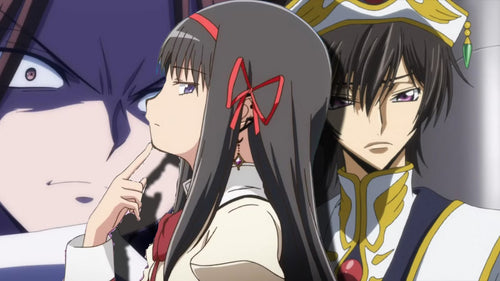
Code Geass complicates the formula by making Lelouch's villainy deliberate and strategic. He's not corrupted by power — he plans to be the villain. The Zero Requiem arc is one of the most ambitious "protagonist becomes villain as a sacrifice" plots ever executed. What keeps Lelouch just below the top two is that his evil was mostly performative; the question of whether he ever truly crossed a moral line is one fans still argue about. What's not debatable is how well-written his manipulation, his brutality, and ultimately his downfall are. Lelouch is the anti-hero who dared to follow the logic of his convictions all the way to the end.
Where to watch: Funimation, Crunchyroll | Episodes: 50 (2 seasons)
4. Berserk — Griffith
Technically Griffith starts as a secondary protagonist, but his arc is so central and so catastrophic that excluding him would be criminal. Berserk builds Griffith as the most charismatic, capable, magnetic leader imaginable — and then shows you what happens when a person like that hits rock bottom. His transformation into Femto during the Eclipse is one of the most disturbing, irreversible villain origins in all of fiction. He doesn't become evil gradually. He makes a single choice — sacrificing everyone who followed him — and that's it. The weight of that betrayal is what Berserk's entire narrative rests on.
Where to watch: Crunchyroll (1997 series), Netflix (2016 film trilogy) | Episodes: 25 (1997 series)
5. Puella Magi Madoka Magica — Homura Akemi
Madoka Magica is a masterclass in recontextualizing a character across a single series. Homura starts cold, mysterious, borderline hostile — and by the end of the main series, you understand why every version of her became that way. The Rebellion film pushes her into outright villainy, as she essentially steals divinity and rewrites reality for the sake of one person. It's one of the saddest examples of this trope in anime — love as the engine of darkness rather than hate or power.
Where to watch: Crunchyroll, HIDIVE | Episodes: 12 + film
💡 Sora's Take: In my experience, the shows that hit hardest are the ones that make you argue with yourself. I remember finishing Madoka Rebellion absolutely furious at Homura — and then spending a week realizing I couldn't actually say I'd have done anything differently. That tension between "this character is wrong" and "I completely understand why" is what separates a great villain arc from just shock value.
6. Tokyo Ghoul — Ken Kaneki
Tokyo Ghoul gives us a protagonist who starts as a shy, bookish college student and becomes a monster — not because he wanted power, but because the world kept breaking him until something different came out the other side. Kaneki's transformation after being tortured is one of the most viscerally effective protagonist collapses in anime. His iconic white-hair moment is burned into the brain of an entire generation of anime fans for a reason.
Where to watch: Crunchyroll, Funimation | Episodes: 48 across all seasons
7. Psycho-Pass — Shogo Makishima (and the argument for the protagonist)
Psycho-Pass works differently — here, it's not the protagonist who becomes the villain, it's that watching Makishima forces protagonist Akane Tsunemori to confront how much of a villain the system she serves already is. By the end of the series, Akane's moral clarity has fractured. She operates inside a machine she can no longer fully defend. It's a slower, more cerebral kind of protagonist-darkening, but deeply effective for viewers who want their moral complexity served at a slow burn.
Where to watch: Funimation, Amazon Prime | Episodes: 22 (Season 1)
8. Vinland Saga — Askeladd (and Thorfinn's arc)
Vinland Saga gives us Thorfinn, who begins consumed by revenge and slowly becomes complicit in more and more violence before eventually breaking free — but not before season one turns him into something his father would not recognize. The series is unique for how it handles this: Thorfinn never fully "goes villain," but the show makes you watch how close he gets, and how ugly the person he's becoming really is. Season two's redemption arc hits harder because of how far he fell first.
Where to watch: Amazon Prime (Season 1), Netflix (Season 2) | Episodes: 48 across two seasons
9. Fullmetal Alchemist: Brotherhood — Roy Mustang's Moment
FMAB pulls off something rarer: a protagonist-adjacent character who briefly becomes the most terrifying person in the show. When Roy Mustang corners Envy, the audience shifts from rooting for him to genuinely fearing what he's about to become. The episode where he methodically incinerates Envy over and over is one of the most disturbing in the series — precisely because it's Roy, the guy you've cheered for all along. He's stopped by the skin of his teeth, but the show makes sure you saw how close he came.
Where to watch: Crunchyroll, Funimation | Episodes: 64
10. Shakugan no Shana — Yuji Sakai
Less famous but worth watching, Shakugan no Shana features a protagonist whose fall is driven not by rage or power but by love and ideology. Yuji's turn in season three — revealing he's been working with the enemy the entire time — is a genuine shock, and his justification for it is surprisingly coherent. It's not the most polished show on this list, but as an underrated example of the "protagonist was playing a long game as a villain" twist, it earns its spot.
Where to watch: Crunchyroll | Episodes: 72 (3 seasons)
Quick Comparison: Protagonist Turned Villain Anime at a Glance
| Anime | Character | Trigger | Point of No Return |
|---|---|---|---|
| Attack on Titan | Eren Yeager | Discovering the truth of the outside world | Initiating the Rumbling |
| Death Note | Light Yagami | Finding the Death Note | Killing Lind L. Tailor on live TV |
| Code Geass | Lelouch Lamperouge | Geass power; betrayal by family | Massacre of Japanese civilians |
| Berserk | Griffith | Capture and torture; broken body | The Eclipse sacrifice |
| Madoka Magica | Homura Akemi | Endless time loops; love and loss | Rewriting reality in Rebellion |
| Tokyo Ghoul | Ken Kaneki | Torture and forced transformation | Accepting and embracing his ghoul nature |
What Separates a Great Protagonist-Villain Arc from a Bad One?
Not every "hero goes evil" story works. Some feel like shock value grabs. Others feel like the writer backed themselves into a corner and needed an arc. The ones that land have three things in common:
- Seeds planted early. The best villain arcs feel inevitable on rewatch. The darkness was always there; the story just waited for the right moment to water it.
- Coherent internal logic. The character's fall has to make sense on their own terms, even if it's objectively wrong. Eren's reasoning is coherent. Light's is coherent. That's what makes them uncomfortable — you can't dismiss them.
- Consequences that stick. If the show walks back the villain arc with an easy redemption or hand-waves the damage, it undercuts everything. The best entries on this list live with what they've done.
⚠️ Important: Spoilers are basically unavoidable when discussing protagonist-villain arcs. If you're new to any show on this list, consider watching before reading the deeper breakdowns — especially for Attack on Titan and Berserk.
Frequently Asked Questions
Which anime has the best protagonist turned villain story?
Attack on Titan is widely considered the gold standard. Eren Yeager's arc spans over 80 episodes and ends with him committing global genocide — but the writing makes his reasoning devastatingly understandable. Death Note is a close second for how quickly and completely Light Yagami's corruption unfolds.
What makes an anime protagonist turn into a villain?
The most common triggers are trauma, power, and ideology. A character experiences a loss or revelation that shatters their worldview, gains power that removes consequences, or follows their beliefs to a logical extreme that crosses a moral line. The best villain arcs blend all three — making the fall feel earned rather than sudden.
Is Eren Yeager actually a villain?
By the final arc, yes — Eren commits a global genocide that kills roughly 80% of all humans outside Paradis Island. Whether he qualifies as a villain by intent is still debated by fans. His stated goal was to protect his people; the method was mass murder. Attack on Titan refuses to settle that argument for you, which is exactly the point.
Are protagonist-villain anime suitable for new anime viewers?
Death Note is actually a fantastic entry point for new viewers — short at 37 episodes, plot-driven, and no prior anime knowledge required. Attack on Titan and Berserk are better for viewers already comfortable with dark, violent narratives. Madoka Magica works as an accessible entry if you go in knowing it's much darker than it first appears.
What is the difference between an anti-hero and a protagonist turned villain?
An anti-hero uses morally questionable methods but remains on the side of the story's "good." A protagonist turned villain actively becomes the antagonist — opposing the goals of other heroes and causing harm on a scale the narrative frames as catastrophic. The key question is whose side the narrative is on: anti-heroes get sympathy from the story; full villains often don't.
Final Thoughts: These Shows Stuck With Me
The reason protagonist-turned-villain anime stays with you longer than most shows is simple: it makes you feel complicit. You cheered for these characters. You wanted them to win. And then the show asks you to sit with the fact that the person you rooted for caused real harm — and often had perfectly coherent reasons for doing so.
That's not comfortable storytelling. It's not supposed to be. It's the kind of storytelling that actually changes how you think — about justice, about power, about what ordinary people are capable of under the right (or wrong) circumstances. Start with Death Note if you want fast and surgical. Go to Attack on Titan if you want to feel it in your chest for a week.
Either way — don't say I didn't warn you.
📚 Sources & References
- Anime Heroes Who Turned Evil — TheGamer (November 2024)
- 4 Anime Series Where a Hero Becomes the Final Villain — CBR (September 2026)
- The Best Anime Protagonists Who Became Villains — Game Rant (January 2025)
- They Fooled Us All: Anime Heroes Who Were Villains the Whole Time — Screen Rant (July 2025)
- 10 Anime Protagonists Who Went From Hero to Villain, Ranked — FandomWire (May 2026)
- The 15 Best Anime Villains of All Time, Ranked (2026) — ComicBookCo
- 10 Corrupt Anime Heroes Who Turned Into Total Villains Fans Love to Hate — Screen Rant (September 2025)