

Sora Tanka
I bring a keyboard to a comment-section swordfight and use eyeliner sharp enough to cut glass. When the internet misreads a sweet little rom-com, I grab my blending brush and paint over the chaos.
Published: June 23, 2026 | 10 min read | Last updated: September 27, 2026
I Think I Turned My Childhood Friend Into a Girl: Potions, Curses, or Just Mascara?
Okay, deep breath, because the timeline is feral right now. The I Think I Turned My Childhood Friend Into a Girl anime was confirmed on June 22, 2026, and within hours people who had never read a single page were writing essays about a story they invented in their heads. Cursed transformation? Forced girlhood? A magic compact mirror from a back-alley witch? Babe, no. It is a makeup brush and a very flustered teenage boy. In the next few minutes you will learn what the show is actually about, why the title sets off alarm bells it should not, where the trans rumor really came from, and whether any of the discourse holds up once you wipe off the assumptions.
⚡ Quick Answer
No potions, no curses. It is a wholesome otokonoko rom-com where a makeup-obsessed boy practices cosmetics on his childhood friend, who discovers he loves presenting femininely while still being a boy. Most of the online uproar traces back to an early English translation slip, not the story itself.
So What Is This Show Actually About?
Here is the setup, no spoilers, no drama. Mido Kenshiro is the tall, sporty, stupidly popular kid who has a secret: he is obsessed with makeup. He learned it from his three older sisters and he is genuinely gifted, but he keeps it hidden because high school is cruel. The only person who knows is his quiet, introverted childhood friend, Hiura Mihate. One day Mido begs Hiura to be his practice model. Hiura says yes. Mido does the makeup. And the result short-circuits both of their brains, because Hiura looks gorgeous and, more importantly, Hiura likes it.
That is the whole engine. No spell, no science experiment, no shadowy transformation. The original Japanese title, Koisuru (Otome) no Tsukurikata, translates closer to "how to make a girl fall in love," which already tells you the vibe is sweet rom-com, not body horror. The series began as a web comic on creator Azusa Banjo's Twitter account in December 2019 before getting picked up for serialization, according to its Wikipedia entry.

📊 Key Stat: Before it was ever a manga volume, the web comic pulled over 120,000 likes on Twitter by January 2020, which is what convinced a publisher to serialize it (Wikipedia).
Why the Title Makes Everyone Panic Before Reading a Page
Let us be fair to the panickers for one second. "I Think I Turned My Childhood Friend Into a Girl" is a chaos-gremlin of a title. Read it cold and it sounds like one person did something to another person. It sounds non-consensual. It sounds like a transformation trope where the protagonist holds all the power and the friend is just along for the ride. That is the trap.
The story flips that reading almost immediately. Hiura is not a victim of a makeover. He is a willing participant who quietly realizes that this version of himself feels right, gains confidence, starts wearing the girls' uniform, and keeps choosing it. And here is the part the title hides on purpose: a later chapter, told from Hiura's perspective, reveals he had his own motivations from the very beginning. The "I think I turned him into a girl" framing is Mido's clueless, panicked narration. It is a punchline, not a thesis.
| What the Title Makes People Assume | What the Story Actually Does |
|---|---|
| A magical or forced transformation | Just makeup, fashion, and a confidence glow-up |
| One boy imposing girlhood on another | Hiura choosing his own presentation, with his own reasons |
| A creepy fetish premise | A gentle, supportive world with no bullying or slurs |
| A trans coming-out arc | An otokonoko story (more on that below) |
The Trans Rumor: How a Translation Slip Lit the Fuse
This is the big one, and it is where the loudest fights come from. A lot of Western readers will swear up and down that this is a trans story, and others will angrily insist it absolutely is not, and they are basically arguing about two different books.
Here is what happened. When Seven Seas Entertainment released Volume 1 in English in 2022, the translation used she/her pronouns for Hiura and shifted the dialogue to frame him as a girl discovering her true self. In the original Japanese, Hiura keeps male pronouns and a male identity; he simply loves feminine presentation. The English Volume 1 was criticized for rewriting a feminine male character as a trans woman, and the publisher revised the text for later volumes and for reprints, as documented on Wikipedia and recapped by Niche Gamer.
⚠️ Important: If you read an old first-printing copy versus a corrected reprint, you may have literally read two different versions of Hiura. A huge chunk of the "is it trans or not" war online is really an argument between two editions.
So when someone says the discourse is "jumping to conclusions," this is the smoking gun. People are not wrong that the framing got muddy. They are just blaming the source material for an editing decision that the author did not make.
What Otokonoko Actually Means
If you keep hearing the word otokonoko and nodding politely without knowing it, you are not alone. It is the single most important piece of context for this show, and it does not map cleanly onto Western gender vocabulary.
Otokonoko refers to a boy who enjoys a feminine appearance and demeanor while still being a boy. It is not the same as transgender, not the same as nonbinary, and deeper than the word crossdressing usually implies. It is its own culturally specific concept. Hiura fits it precisely: he likes the clothes, the makeup, and how he feels, and he is still himself. Banjo has talked about being drawn to characters who defy gender roles, which is exactly the lane she built this story in.
"Seeing Hiura move and speak will make her even cuter."
As someone who does faces for a living, I will say this part out loud. The first time I ever did a full beat on a friend who had never worn makeup, I watched their whole posture change in the mirror. Shoulders back, chin up, this little stunned smile. Nothing about them was different except how they felt allowed to be seen. That is the exact emotional beat this series is built on, and it is why "potions and curses" misses the point so badly. The transformation is permission, not magic.
💡 Pro Tip: If you want to actually understand Hiura before the anime drops, read the corrected reprint or the digital edition rather than a battered first-printing Volume 1. The pronoun handling is night and day.
Is It Problematic? What Readers Actually Say
Short version: the people who actually read it tend to love it. The series and Hiura in particular have been praised by readers and critics, and reviewers repeatedly call it wholesome, sweet, and refreshingly low on cruelty. There are no slurs, no homophobia, no whispering behind anyone's back. The fictional school just accepts Hiura, which is honestly the fantasy a lot of readers are there for.
The numbers back up the warmth too. Seven Seas pitches it as a romance where, in their words, "nobody is quite what they seem," and the audience clearly agreed early.
📊 Key Stat: In the 2020 Web Manga General Election, where 813,000 people voted, the series landed 7th most popular, and it later placed 4th in AnimeJapan's 2024 poll for the manga fans most wanted to see animated (Wikipedia).
Does that mean zero valid criticism exists? No. Some readers in the queer community genuinely debate whether otokonoko stories celebrate gender freedom or lean on femininity as a gag, and that is a real, good-faith conversation worth having. The difference is that those readers finished the book first. The hot-take crowd reacting to a title screenshot did not.

When Does the Anime Come Out and Who Is Making It?
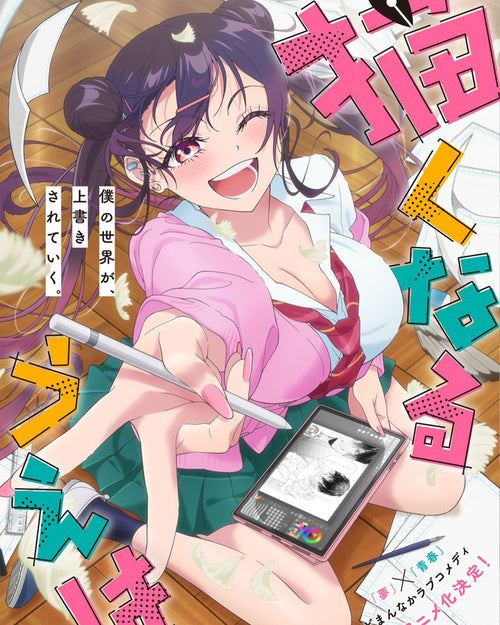
Brace yourself, because this is the funniest part of the whole frenzy: almost nothing has been confirmed. The adaptation was announced on June 22, 2026 through the series' verified account on X, paired with a celebratory illustration drawn by Banjo herself. That is it. No studio, no director, no voice cast, and no premiere date have been revealed, per Anime Corner and Anime News Network.
In other words, the internet had a full-blown meltdown back in June over a show that, at the time, consisted of one drawing and a press release. The source manga is well past 12 volumes, so there is plenty of material to adapt, as Anitrendz notes. Here is the update as of late September 2026: more than three months after the announcement, a studio, director, cast, and release window still have not been revealed. That is a genuinely long silence for a title this buzzy, and it is worth bookmarking this page rather than trusting whatever "leaked staff list" is currently going around nothing here has actually checked out yet. Until an official reveal drops, anyone telling you what the anime "is going to do" is still just reading tea leaves.
Frequently Asked Questions
Is the main character trans?
In the original Japanese, Hiura is an otokonoko, a boy who loves feminine presentation while staying a boy. The trans reading mostly comes from the early English Volume 1, which the publisher later revised. So the confusion is real, but it started in translation, not the source.
Is there magic or a transformation in the story?
None at all. Despite a title that sounds like a fantasy plot, the only "magic" here is makeup, fashion, and a confidence boost. It is a grounded high school rom-com, not a supernatural or body-swap story.
When does the anime come out?
There is still no release date. The adaptation was announced in June 2026 with only a commemorative illustration, and as of late September 2026 more than three months later studio, staff, cast, and a premiere window remain unrevealed. Check back for updates; there is genuinely nothing official to report yet.
Is the series problematic?
Most readers call it wholesome, with a supportive world and no bullying or slurs. There is a fair, ongoing debate about how otokonoko stories handle femininity, but that critique comes from people who read it, not from the title-only reactions driving most of the noise.
Where can I read the manga in English?
Seven Seas Entertainment publishes it in English in print and digital, with releases running since June 2022. If you want the cleanest version of Hiura's characterization, grab a corrected reprint or a digital copy rather than an early first printing.
The Bottom Line
Strip away the screenshots and the rage-bait and you are left with a soft, funny story about two awkward teenagers, a makeup kit, and the quiet thrill of being seen the way you want to be seen. The title is bait. The discourse is mostly people fighting about a translation footnote. And the show itself is, by the accounts of everyone who actually read the thing, a genuine sweetheart. So before the next viral take crosses your feed, do the cute thing: read the book, then form the opinion. Blend, do not smear.
📚 Sources & References
- I Think I Turned My Childhood Friend into a Girl, Wikipedia
- Azusa Banjo's Manga Gets TV Anime, Anime News Network, June 22, 2026
- Anime Adaptation Announced, Anime Corner, June 2026
- Gets Anime, Anitrendz, June 22, 2026
- Anime Announced, plus creator comment, Niche Gamer, June 2026
- Series page, Seven Seas Entertainment