


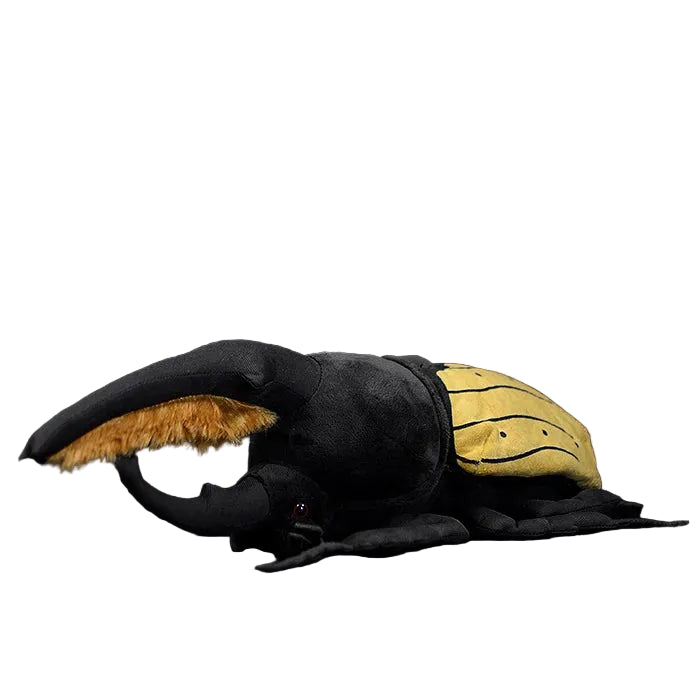
Rhinoceros Beetle Plush 25cm | Hercules, Atlas and Elephant Beetle Stuffed Animal Collectibles
Rhinoceros Beetle Plush 25cm | Hercules, Atlas and Elephant Beetle Stuffed Animal Collectibles
Auf Lager
- Kostenloser Versand
- 30 Tage Rückgaberecht (AGB gelten)
- Kundenbetreuung
Verfügbarkeit für Abholungen konnte nicht geladen werden
Lifelike Hercules Beetle Plush, Elephant Beetle Plushie and Atlas Beetle Plush Toy | Rhinoceros Beetle Stuffed Animal Collection 25cm
Bring the rainforest into your home with this extraordinary collection of lifelike beetle plush toys. Modeled after three of the most spectacular insects on Earth, the Hercules, Atlas, and Elephant beetles, each rhinoceros beetle stuffed animal in this set is crafted to replicate the unique horns, body proportions, and striking appearance of its real world counterpart. At a generous 25cm, these plushies are equal parts display piece and cuddly companion, making them the ultimate bug lover gift for collectors, nature enthusiasts, and insect admirers of every age.
These are not ordinary stuffed toys. Each insect plush collectible is designed with anatomical care, capturing the defining features that make each beetle species instantly recognizable to anyone who loves the natural world. Whether you are drawn to the colossal horns of the Hercules, the trident formation of the Atlas, or the elephant trunk silhouette of the Megasoma, this collection has something to fascinate every fan of the animal kingdom's most armored warriors.
The Story Behind Each Rainforest Beetle Toy
The Hercules Beetle: The Longest Beetle on Earth
The Hercules beetle plush is inspired by Dynastes hercules, officially recognized as the longest beetle species ever recorded. Named after the legendary Greek and Roman hero celebrated for his supernatural strength, this beetle more than earns its mythological title. Male specimens in the wild can reach up to 17.3cm from horn tip to body end, making them the undisputed giants of the beetle world and one of the largest flying insects anywhere on the planet.
Native to the tropical rainforests stretching from southern Mexico through Central and South America all the way to Bolivia, the Hercules beetle inhabits the lush, humid lowland forests and montane cloud forests of the Neotropics. Adults feed on rotting fruit that falls to the forest floor, while larvae spend up to two years burrowing through dead wood, breaking it down and returning nutrients to the soil. This role as a decomposer makes the beetle essential to the health of its entire ecosystem.
The enormous forked horn of the male is the beetle's most famous feature and was the inspiration behind its legendary name. During the breeding season, males engage in spectacular combat, locking horns and attempting to lift rivals off branches or feeding trees with remarkable force. This Hercules beetle plush captures every detail of this legendary creature, from its spotted elytra to its iconic curved horn, bringing the myth of the rainforest to life in your hands.
The Atlas Beetle: The Three Horned Titan of Southeast Asia
The Atlas beetle plush toy pays tribute to Chalcosoma atlas, a spectacular species native to the tropical forests of Malaysia, Indonesia, Thailand, and surrounding countries across Southeast Asia. Named after the Titan Atlas from Greek mythology, condemned to bear the weight of the heavens on his shoulders, this beetle carries its name with unmistakable authority. Its three pronged horn arrangement, one large central horn and two curved lateral horns, forms one of the most distinctive and visually striking silhouettes in the entire insect world.
First formally described to Western science by the British naturalist Alfred Russel Wallace in 1858 during his landmark expeditions through the Indonesian archipelago, the Atlas beetle quickly became one of the most prized specimens among Victorian naturalist collectors. Males can reach up to 12cm in length and are notoriously fierce competitors. Their trident horn structure functions as a highly effective gripping and prying tool, allowing males to lever rivals off tree trunks and feeding sites with remarkable mechanical advantage. The Atlas beetle plush toy is a stunning tribute to one of Asia's most iconic insects and represents a genuinely exceptional entomology gift for anyone fascinated by arthropod biology or wildlife from Southeast Asia.
The Elephant Beetle: The Heavyweight Champion of the Americas
The Elephant beetle plushie brings to life Megasoma elephas, one of the heaviest and most voluminous beetles anywhere on the planet. The species gets its memorable name from the large central horn on the male's thorax, which bears a striking visual resemblance to an elephant's trunk, a feature so distinctive and so perfectly descriptive that naturalists named the entire species after it.
Found in the rainforests of Central and South America across countries including Mexico, Colombia, Venezuela, Peru, and Brazil, the Elephant beetle is a true heavyweight of the insect world. The larvae are among the most massive of any beetle species, capable of growing to over 100 grams before metamorphosis, heavier than many small vertebrates. Adults feed on tree sap and rotting fruit, using their powerful legs and body mass to gain access to the best feeding sites in the forest canopy. This Elephant beetle plushie captures the sheer presence and prehistoric power of this extraordinary creature in a form that is satisfyingly soft and entirely safe to handle.
Why This Giant Beetle Stuffed Animal Collection Is a Must Have
The demand for high quality realistic insect plush toys has grown steadily alongside a broader cultural appreciation for entomology, wildlife education, and nature inspired collectibles. These insect stuffed animals for adults and collectors fit perfectly at the intersection of science and play, appealing to everyone from primary school children discovering the natural world for the first time to veteran entomology enthusiasts and educators who want tactile, visually accurate teaching tools in their collections.
Each exotic bug plush in this trio is built to the same consistent 25cm standard, making them ideal for side by side display on a bookshelf, desk, or display cabinet. As a nature lover plush gift, this collection requires no special care, no feeding schedule, and no habitat setup, just pure beetle appreciation in its most accessible and huggable form. Whether you are shopping for a passionate young naturalist, a seasoned insect collector, or anyone who finds beauty in the more unusual corners of the animal kingdom, this giant beetle stuffed animal set delivers an experience that is genuinely one of a kind.
Product Highlights and Features
- Three iconic rhinoceros beetle species: This collection includes the Hercules beetle plush, the Atlas beetle plush toy, and the Elephant beetle plushie, each representing one of the world's most celebrated beetle species from the Dynastinae subfamily.
- Lifelike anatomical accuracy: Each lifelike beetle plush replicates the distinctive horn structure, body shape, and species specific proportions of its real world counterpart, making each piece both a toy and an educational display item.
- Impressive 25cm size: At 25cm, this beetle plush toy 25cm is large enough to display proudly on any shelf while remaining perfectly sized for hugging and handling.
- Premium PP Cotton filling: Soft and resilient PP Cotton fill ensures these rhinoceros beetle stuffed animals hold their three dimensional shape while remaining wonderfully squeezable and comfortable.
- High quality plush exterior: The smooth, durable plush material gives each realistic insect plush a satisfying texture and long lasting finish that holds up beautifully over time.
- Perfect for all ages: While designed as a nature lover plush gift and collector piece for adults and teens, these toys are equally safe and appealing for younger bug enthusiasts aged 3 and up.
- Outstanding gift for insect fans: As a bug lover gift and entomology gift, this collection is guaranteed to delight anyone passionate about the natural world, from casual admirers to dedicated entomologists.
- Collectible and educational: Each insect plush collectible and exotic bug plush sparks genuine curiosity about real rainforest ecosystems, making these beetle stuffed toys as educational as they are fun.
- Great for display or gifting: These insect stuffed animals for adults make beautiful shelf or desk displays and arrive ready to gift with no additional packaging required.
- Unique collector appeal: This beetle plush toy 25cm collection fills a niche that is genuinely underserved in the plush toy market, offering something truly original for collectors who want to go beyond the usual animals.
Size Guide
| Variant | Overall Length | Filling | Exterior Material | Recommended Age |
|---|---|---|---|---|
| Hercules Beetle Plush | 25cm (approx. 9.8 in) | PP Cotton | Plush | 3 years and up |
| Atlas Beetle Plush Toy | 25cm (approx. 9.8 in) | PP Cotton | Plush | 3 years and up |
| Elephant Beetle Plushie | 25cm (approx. 9.8 in) | PP Cotton | Plush | 3 years and up |
All measurements are approximate. The 25cm length is measured from the tip of the horn to the rear of the body, following the natural curve of the plush form.
Care Instructions
- 🦺 Hand wash recommended in cool water using a mild detergent to protect the plush exterior and PP Cotton filling.
- 🚫 Do not machine wash or tumble dry. Heat and aggressive agitation can distort the shape and affect the quality of the filling over time.
- 💨 Air dry only. Lay the plush flat on a clean dry towel away from direct sunlight to preserve color vibrancy and shape.
- ✋ Spot cleaning for minor marks: Use a damp cloth with a small amount of gentle soap and blot the affected area carefully without rubbing.
- 🚫 Do not iron or bleach. Both heat and chemical bleaching agents will permanently damage the plush material.
- 📦 Store in a cool dry place away from prolonged direct sunlight to maintain the plush material quality and color over time.
FAQ: Hercules, Atlas and Elephant Beetles
The Hercules beetle is widely considered one of the strongest creatures on Earth relative to its own body weight. Research suggests it can carry loads up to 850 times its own body mass, a feat that would be equivalent to a human lifting several large cars simultaneously. This extraordinary muscle to mass ratio is concentrated in the beetle's legs and thorax, the same structures it uses to flip rival males during mating season combat. To directly answer the popular question: no, a Hercules beetle cannot lift a human, but no other animal on the planet comes close to matching its strength to weight ratio. This remarkable biology has made the Hercules beetle a recurring subject in viral science content, nature documentary discussions, and insect enthusiast communities online.
Yes, rhinoceros beetles including various Hercules and Atlas species are kept as exotic pets in many countries, most famously in Japan where the Japanese rhinoceros beetle known as kabutomushi has been a beloved companion insect for generations. Keeping a live rhinoceros beetle requires a secure enclosure with deep substrate for burrowing, a food source such as commercial beetle jelly or rotting fruit, and carefully managed humidity and temperature conditions replicating their tropical forest habitat. Import and ownership regulations vary significantly by country, so it is essential to check local laws before acquiring any exotic insect. For many insect enthusiasts who cannot legally or practically keep live beetles, a high quality insect plush collectible like this collection offers a wonderful and entirely maintenance free way to celebrate a love of these remarkable insects.
The three horns of the Atlas beetle consist of one large horn projecting forward from the head and two curved horns extending from the thorax, forming a trident shaped clamping structure used almost exclusively for combat between males. During battles over feeding sites or mating access on tree trunks and sap rich branches, males lock horns with rivals and attempt to get underneath them, using the trident formation to grip and topple opponents off their perch. The horn arrangement creates a highly effective mechanical lever, almost like a pair of locking tongs, giving the Atlas beetle its fearsome fighting ability. Females of the species lack horns entirely, since the trait evolved specifically through sexual selection for intraspecies competition rather than predator defense. This spectacular combat behavior has made the Atlas beetle a popular subject of nature documentaries, insect keeping communities, and viral wildlife content across social media platforms worldwide.
The Elephant beetle (Megasoma elephas) gets its unforgettable name from the large central horn on the male's thorax, which so closely resembles an elephant's trunk in both shape and downward curve that naturalists found the comparison irresistible. Beyond its iconic name, the Elephant beetle is unique among beetles for its sheer mass. The larvae are among the heaviest of any beetle species anywhere in the world, capable of reaching body weights exceeding 100 grams during their development inside decaying rainforest wood. This makes them one of the heaviest insects by mass during any part of their life cycle. Adults are also notably large and dense, with a thick layer of fine hairs covering much of the body that gives them a velvety texture. Found across the rainforests of Central and South America, the Elephant beetle plays an important role as a decomposer and nutrient recycler within its forest ecosystem.
Most rhinoceros beetle species including the Hercules, Atlas, and Elephant beetles are not currently classified as endangered, but they face meaningful and growing pressures in the wild. The most significant threat is habitat destruction. Deforestation across the tropical rainforests of Central America, South America, and Southeast Asia is steadily reducing the old growth forest that these beetles depend on for the entire duration of their life cycle. As larvae, rhinoceros beetles rely on decomposing deadwood deep inside intact mature forests, a resource that disappears rapidly with logging and land clearing. Climate change is also altering the precise temperature and humidity conditions within which these beetles evolved over millions of years. The broader scientific and conservation community has increasingly recognized that insects as a group are under severe global decline, and the loss of rhinoceros beetle habitat is part of that larger story. Learning about and celebrating these insects through insect plush collectibles and collector products helps build awareness of the irreplaceable rainforest ecosystems they call home.


Wird oft zusammen gekauft
-
Azumanga Daioh Handmade Ayumu Kasuga 10cm Osaka Plushie Keychain |
Normaler Preis $52.95 AUDNormaler PreisStückpreis pro$0.00 AUDVerkaufspreis $52.95 AUD -
Giant Cockroach Plush Stuffed Animal Body Pillow | Funny Gag Gift | Realistic Bug Plush 55cm 75cm
Normaler Preis Von $63.95 AUDNormaler PreisStückpreis pro$0.00 AUDVerkaufspreis Von $63.95 AUD -
Slay the Spire 2 Plush | Regent Ironclad Silent Defect StS2 Stuffed Doll
Normaler Preis Von $52.95 AUDNormaler PreisStückpreis pro$0.00 AUDVerkaufspreis Von $52.95 AUD -
Rhinoceros Beetle Plush 25cm | Hercules, Atlas and Elephant Beetle Stuffed Animal Collectibles
Normaler Preis $52.95 AUDNormaler PreisStückpreis pro$0.00 AUDVerkaufspreis $52.95 AUD


Vorgeschlagene Blogbeiträge:
Alle anzeigen-

Realistic Ragdoll MMA Guide: Controls, Combos &...
Learn every Realistic Ragdoll MMA control, combo and stamina trick, plus how ranked unlocks and how fights are scored. Read the full guide and win more.
Realistic Ragdoll MMA Guide: Controls, Combos &...
Learn every Realistic Ragdoll MMA control, combo and stamina trick, plus how ranked unlocks and how fights are scored. Read the full guide and win more.
-

Godfall Roblox: Everything You Need to Know
Can’t find Godfall Roblox? It’s a superpowered city-destruction game by VANTA Interactive Co. Get the game ID, how it plays, and what’s still unconfirmed.
Godfall Roblox: Everything You Need to Know
Can’t find Godfall Roblox? It’s a superpowered city-destruction game by VANTA Interactive Co. Get the game ID, how it plays, and what’s still unconfirmed.
-

Non-Human Complex Manhwa Read Here
Sora Tanka As a lifelong otaku and pop culture enthusiast, I spend my time exploring underground animation, vintage cinema, and the hidden corners of gaming. Instagram | Facebook | X...
Non-Human Complex Manhwa Read Here
Sora Tanka As a lifelong otaku and pop culture enthusiast, I spend my time exploring underground animation, vintage cinema, and the hidden corners of gaming. Instagram | Facebook | X...
-

Roblox The Takeback Event: How to Get Every Fre...
Get every free Roblox The Takeback event item: Elbe Jewels Diamond Chain, Gold Metallic Comedy Mask, and Diamond Duffel Bag. Full steps, dates, and tips.
Roblox The Takeback Event: How to Get Every Fre...
Get every free Roblox The Takeback event item: Elbe Jewels Diamond Chain, Gold Metallic Comedy Mask, and Diamond Duffel Bag. Full steps, dates, and tips.


Verifizierte Google-Rezensionen
Das sagen unsere Kunden