


Kangaroo Plush 23cm Stuffed Animal | Soft Australian Wildlife Toy
Kangaroo Plush 23cm Stuffed Animal | Soft Australian Wildlife Toy
Auf Lager
- Kostenloser Versand
- 30 Tage Rückgaberecht (AGB gelten)
- Kundenbetreuung
Verfügbarkeit für Abholungen konnte nicht geladen werden
Kangaroo Plush 23cm Stuffed Animal | Soft Australian Wildlife Toy
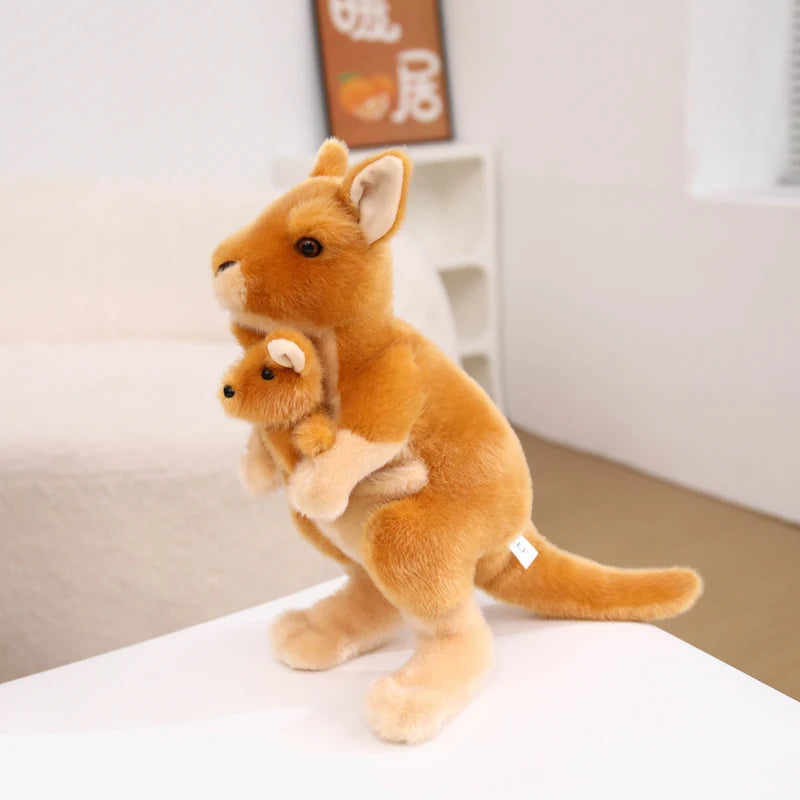
Bring a little piece of the Australian outback into your home with this charming kangaroo plush. Standing at a perfect 23cm, this soft kangaroo toy is full of warmth, character, and genuine quality. Whether you are searching for a unique gift, a display piece for your collection, or simply a comforting companion to keep on your desk, this kangaroo stuffed animal delivers on every front.
Crafted from soft plush fabric and filled with quality PP Cotton, this realistic kangaroo plush is designed to be both visually appealing and satisfying to hold. Its gentle texture and lovable proportions make it a standout representation of one of the most iconic animals on Earth.
The Kangaroo: Australia's Most Iconic Animal and a Global Cultural Phenomenon
Few animals on the planet carry the cultural weight of the kangaroo. As Australia's most recognized national symbol, the kangaroo appears on the country's coat of arms, its currency, and the logo of its national airline. Belonging to the family Macropodidae, meaning "large foot," kangaroos have called the Australian continent home for tens of millions of years. The four main species are the Red Kangaroo, the Eastern Grey Kangaroo, the Western Grey Kangaroo, and the Antilopine Kangaroo. The Red Kangaroo holds the distinction of being the largest living marsupial on Earth.
Kangaroos are known for their powerful hind legs, long muscular tails, and the remarkable ability to reach speeds of up to 70 km/h through hopping alone. They are also one of the only large animals whose locomotion becomes more energy efficient the faster they move, thanks to a spring like tendon system in their legs. Female kangaroos carry their young, called joeys, in a front pouch where the tiny newborns continue to develop after birth. A newborn joey is no larger than a jelly bean and may remain in the pouch for up to 12 months.
Kangaroos have also become beloved internet icons. Viral videos of kangaroos boxing each other, curious joeys peeking out of their mother's pouch, and kangaroos casually wandering through Australian suburbs have been viewed hundreds of millions of times across YouTube, TikTok, and Instagram. The boxing kangaroo became one of Australia's most recognizable international symbols long before the internet era, and it remains one of the most searched and shared wildlife subjects today. Growing interest in Australian wildlife, driven by landmark nature documentaries and social media, has fueled a steady global demand for Australian animal plush collectibles. The marsupial stuffed animal has risen to the top of the wildlife plush category as a result, beloved by children, adults, and collectors around the world. A stuffed kangaroo toy is no longer simply a novelty but a lasting tribute to one of nature's most extraordinary animals.
Product Highlights
- Adorable kangaroo plush standing at 23cm tall, ideal for display and gifting
- Premium PP Cotton filling for a full, satisfying, and consistently soft feel
- Crafted from high quality plush fabric that is smooth and gentle to the touch
- A faithful and endearing representation of Australia's most beloved animal in plush animal toy form
- Lightweight and compact, perfect for shelves, desks, and bedroom décor
- A standout kangaroo collectible for wildlife enthusiasts and plush lovers
- Makes a thoughtful and memorable gift for fans of Australian fauna
- A wonderful Australian wildlife toy that doubles as a charming decorative accent
- Well constructed design built to hold its shape beautifully over time
Why This Kangaroo Plushie Deserves a Spot in Your Collection
Not every stuffed animal manages to be both genuinely charming and well made. This kangaroo plushie does exactly that. The PP Cotton fill gives it a consistent shape that does not flatten over time, while the soft outer fabric remains pleasant to touch through years of display and gentle handling. As a kangaroo soft toy, it sits perfectly between decorative and cuddle ready, making it as appealing to a serious collector as it is to someone who simply wants something lovely on their shelf.
For anyone building a themed collection of Australian animal plush figures, this kangaroo is a natural centerpiece. It pairs beautifully with other wildlife pieces and gives any display a more adventurous and nature inspired feel. If you are searching for an affordable and genuinely high quality plush animal toy with real character, this is a wonderful choice.
Whether you call it a kangaroo stuffed animal, a kangaroo plushie, or simply the most lovable soft kangaroo toy you have come across, this piece delivers lasting charm and real quality. It is the kind of kangaroo collectible that looks equally at home on a display shelf or wrapped up as a gift for someone special. With its PP Cotton fill and premium plush exterior, this realistic kangaroo plush is built to be enjoyed for years to come. Add this kangaroo soft toy to your collection and bring the spirit of Australia home with you.
For wildlife enthusiasts who appreciate the extraordinary appeal of Australian fauna, this marsupial stuffed animal is a perfect and meaningful addition to any collection. The stuffed kangaroo toy also makes an ideal choice for wildlife education displays, themed gift sets, and nature inspired room décor. As a truly versatile Australian wildlife toy, it carries the beauty of the outback in a compact and cuddly form.
Size Guide
| Specification | Detail |
|---|---|
| Height | 23cm (approximately 9 inches) |
| Fill Material | PP Cotton |
| Outer Material | Soft Plush Fabric |
| Product Type | Stuffed and Plush Toy |
Care Instructions
How to Keep Your Kangaroo Plush Looking Its Best
- Surface clean only using a soft, damp cloth or gentle sponge
- Do not machine wash or place in a tumble dryer
- Avoid extended exposure to direct sunlight to protect color and fabric quality
- Do not bleach or apply heat directly to the surface
- For spot cleaning, use mild soap with warm water and allow to air dry fully before displaying
- Store in a clean, dry area away from moisture when not on display
FAQ: Everything You Want to Know About Kangaroos
Kangaroos are marsupials, which means they give birth to extremely undeveloped young. A newborn joey is roughly the size of a jelly bean, completely hairless, and blind at birth. Using instinct alone, it crawls from the birth canal into the mother's front pouch, where it attaches to one of four nipples and begins nursing. The pouch provides warmth, nutrition, and protection while the joey continues to grow over the following months. By around four months, its eyes open and fur begins to appear. By eight to ten months, it starts making short trips outside the pouch. A joey may continue returning for warmth and feeding until it is around 12 months old. This incredible adaptation has helped marsupials thrive on the Australian continent for tens of millions of years.
Kangaroos are remarkably fast and athletic animals. Red Kangaroos, the largest species, can reach top speeds of around 70 kilometers per hour in short bursts, making them among the fastest land animals relative to their body size. Their typical cruising speed is between 20 and 25 km/h, which they can sustain over long distances. What makes kangaroo movement so unique is that their elastic tendon system stores and releases energy with each hop, meaning they actually use less energy the faster they travel. In terms of jumping, kangaroos can clear obstacles nearly 3 meters high and cover up to 8 meters in a single horizontal leap. These extraordinary physical capabilities have made kangaroos popular subjects in sports science research and wildlife documentaries around the world.
Kangaroos are herbivores that feed primarily on grasses, leaves, and shrubs. They are most active in the early morning and late afternoon, resting in shaded areas during the hottest parts of the day to conserve energy and water. Like cows, kangaroos regurgitate and rechew their food to maximize nutritional absorption. Remarkably, kangaroos produce very little methane compared to other large grazing animals, which has led researchers to study their digestive microbiome as a potential model for reducing greenhouse gas emissions from livestock. In times of drought, kangaroos can travel great distances in search of food and water, relying on their powerful legs to cover vast stretches of the Australian landscape with impressive efficiency.
Kangaroos are generally not aggressive toward humans and will typically retreat when approached. However, large male kangaroos can be unpredictable when they feel cornered or threatened. The boxing behavior associated with kangaroos is entirely real and is used primarily during competition between males for dominance and mating rights. Males lock forelimbs and use powerful hind leg kicks aimed at the opponent's abdomen. This behavior has become one of the most viral and widely shared aspects of kangaroo culture online, with boxing kangaroo videos consistently racking up millions of views. A large male Red Kangaroo can weigh over 90 kilograms and stand nearly 2 meters tall, making it a formidable animal that commands respect in the wild.
Kangaroos and wallabies both belong to the same family, Macropodidae, and are closely related marsupials. The most straightforward difference between them is size. Kangaroos are significantly larger, with adult Red Kangaroos reaching up to 1.8 meters in height and weighing over 90 kilograms. Wallabies are smaller and more compact, and they tend to live in denser bush or rocky terrain, while kangaroos prefer open grasslands and plains. Their teeth also differ slightly based on their respective diets and habitats. The term "kangaroo" generally refers to the four largest species in the Macropus genus, while "wallaby" is applied more broadly to the dozens of smaller species within the same family. Both animals are quintessentially Australian and remain beloved by wildlife fans all around the world.


Wird oft zusammen gekauft
-
Rubber Ducky Isopod Plush Realistic Pillbug Roly Poly Stuffed Animal Lifelike Woodlouse Unique Insect Stuffed Animal Plush
Normaler Preis $53.95 AUDNormaler PreisStückpreis pro -
Snow Leopard Plush 23cm | Lifelike Snow Panther Plushie | Cute Big Cat Stuffed Animal
Normaler Preis $52.95 AUDNormaler PreisStückpreis pro$0.00 AUDVerkaufspreis $52.95 AUD -
Kangaroo Plush 23cm Stuffed Animal | Soft Australian Wildlife Toy
Normaler Preis $52.95 AUDNormaler PreisStückpreis pro$0.00 AUDVerkaufspreis $52.95 AUD -
Takato Saijo and Junta Azumaya Takato Plush Set | Handmade BL Anime 10cm Cotton Doll Collectible
Normaler Preis $47.25 AUDNormaler PreisStückpreis pro$0.00 AUDVerkaufspreis $47.25 AUD


Vorgeschlagene Blogbeiträge:
Alle anzeigen-

How to Get Fake Headless in Roblox (Headless Au...
Skip the 31,000 Robux Headless Horseman. Here's how the Headless Aura animation trick fakes the headless look for a fraction of the price.
How to Get Fake Headless in Roblox (Headless Au...
Skip the 31,000 Robux Headless Horseman. Here's how the Headless Aura animation trick fakes the headless look for a fraction of the price.
-

No Heaven for Demons Anime: The Full Story Is Here
No Heaven for Demons is streaming on Trimz. Watch here for Shadow's dark fantasy about a young demon defying a holy crusade, every episode, no account needed.
No Heaven for Demons Anime: The Full Story Is Here
No Heaven for Demons is streaming on Trimz. Watch here for Shadow's dark fantasy about a young demon defying a holy crusade, every episode, no account needed.
-

DOORS: The Stairwell Expanded & Evolved Full Wa...
A complete DOORS Access Granted walkthrough: how to survive Monument and Meld, use the Starlight Jug, and reach the end of The Stairwell.
DOORS: The Stairwell Expanded & Evolved Full Wa...
A complete DOORS Access Granted walkthrough: how to survive Monument and Meld, use the Starlight Jug, and reach the end of The Stairwell.
-

Break and Steal an Egg Roblox Guide: How to Hat...
Break and Steal an Egg Roblox guide: Auto-Swing tips, guard zones, pickaxe and Treadmill upgrades, pet companions, and the latest codes status.
Break and Steal an Egg Roblox Guide: How to Hat...
Break and Steal an Egg Roblox guide: Auto-Swing tips, guard zones, pickaxe and Treadmill upgrades, pet companions, and the latest codes status.


Verifizierte Google-Rezensionen
Das sagen unsere Kunden