


Traffic Cone, Stop Sign, Traffic Light & Tire Plush Pillows, Handmade 40cm
Traffic Cone, Stop Sign, Traffic Light & Tire Plush Pillows, Handmade 40cm
Auf Lager
- Kostenloser Versand
- 30 Tage Rückgaberecht (AGB gelten)
- Kundenbetreuung
Verfügbarkeit für Abholungen konnte nicht geladen werden
Traffic Cone, Stop Sign, Traffic Light and Tire Plush Pillows (40cm)
Bring the road home with soft plush pillows shaped like four icons everyone recognizes on sight: an orange traffic cone, a red octagon stop sign, a three lamp traffic light and a 3D car tire. Each one stands 40cm tall, is filled with fluffy PP cotton and is made by hand, so every traffic cone plush, stop sign pillow, traffic light plush and tire pillow in this collection feels soft enough to hug and bold enough to set the mood of a whole room.
Whether you are building a car themed bedroom for a little driver, finishing off your racing room decor, or hunting for gifts for car lovers who already own every model car on the shelf, these road sign pillows add personality, a little humor and a lot of comfort.
Choose Your Road Icon: 4 Variants
Pick your favorite from the variant menu, or collect all four and build a full street scene on your bed or sofa.
Traffic Cone
The internet's favorite piece of street furniture, now soft enough to nap on. This traffic cone pillow keeps the classic tapered shape and bright orange color that turned the cone into a meme, from a famous statue in Glasgow to landmarks all over Boston. It looks great on a shelf, a gaming chair or the corner of a bed.
Tire
A favorite for motorsport fans. This 3D tire cushion recreates the round shape and tread look of a real car tire, so it doubles as a wheel plush pillow for hugging, a back cushion on the couch or a statement piece in a garage lounge.
Stop Sign
Choose Stop in the variant menu for the red octagon that needs no explanation. This stop sign plush is a cozy reading cushion, a funny "do not disturb" signal on a desk chair and a handy prop for little ones learning road safety.
Traffic Light
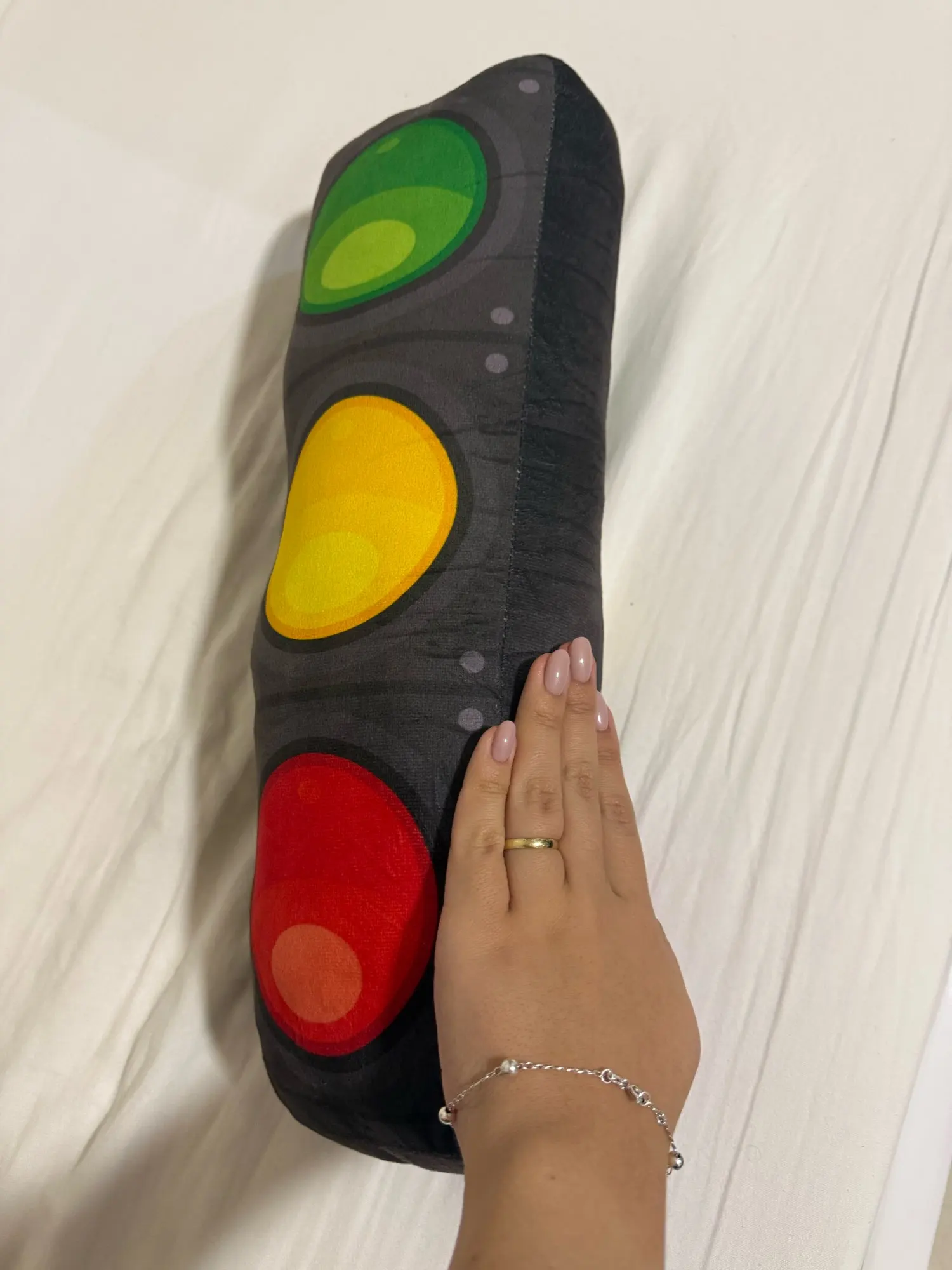
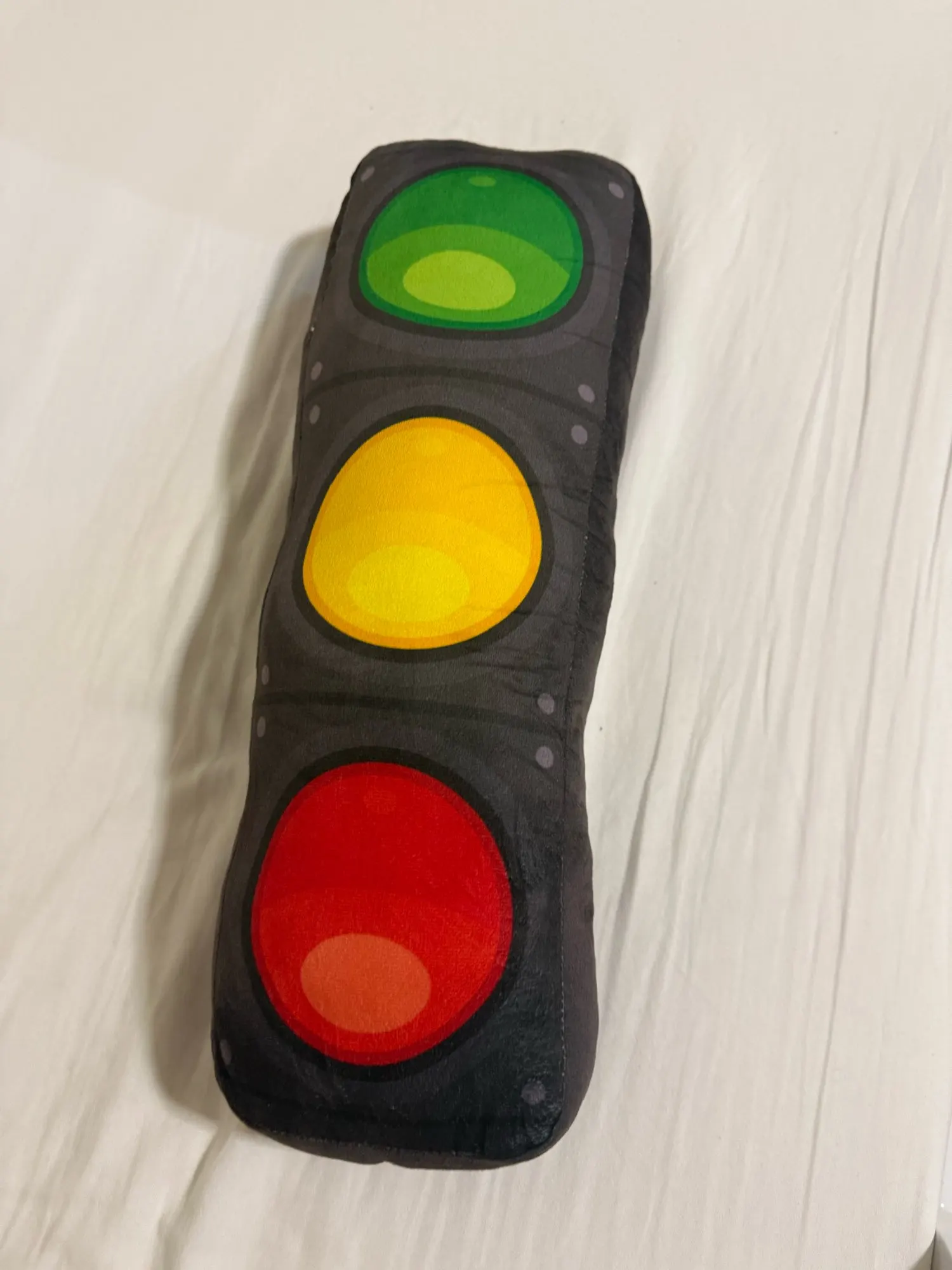
Red, amber and green stacked in one cuddly column. The traffic light plush is a cheerful pick for kids room decor, playrooms and nurseries with a vehicle theme, and it pairs naturally with the cone and stop sign for a full intersection look.
Product Features and Highlights
- Four variants: Traffic Cone, Tire, Stop and Traffic Light. Mix and match or collect the whole set.
- 40cm tall: big enough to hug and to stand out on a bed, sofa or shelf, small enough to carry anywhere.
- PP cotton filling: soft, springy and lightweight, and it bounces back after every squeeze.
- Made by hand: these are handmade plushies, cut, stitched and stuffed one piece at a time.
- Real shapes, not square cushions: each pillow follows the outline of the real object, and the tire is a full 3D design.
- Many uses: a novelty throw pillow, a cuddle buddy, a shelf display piece or a fun photo prop.
- Gift ready: a traffic cone plush for the meme lover, a tire pillow for the racing fan and a stop sign pillow for the little one learning road rules. Great for birthdays, holidays and new drivers.
Room Ideas for Racing Fans and Little Drivers
Line up the tire and the traffic light on a bed for instant racing room decor, put the traffic cone pillow next to a sim racing rig or gaming desk, and let the stop sign plush guard the reading nook. In a nursery or playroom, the set adds soft color and a gentle road safety lesson to kids room decor. For grownups, the cone and the tire bring a playful touch to a garage lounge, a workshop office or any car room decor setup.
Because they are handmade plushies with a light PP cotton fill, they are easy to move around, easy to reshape and easy to pair with posters, model cars and checkered flag bedding in a car themed bedroom. Give one as a novelty throw pillow or give all four as a complete street scene.
The Story Behind the Icons: Where Each Design Comes From
The Traffic Cone: From Wet Paint Guard to Glasgow Legend
Road crews once relied on heavy wooden or concrete markers that could damage cars. Around 1940, Charles D. Scanlon, a painter with the Los Angeles streets department, designed a hollow, weighted cone shaped "safety marker" made from a flexible material to keep drivers away from freshly painted lines, and he was granted a patent for it in 1943. Some histories name a New Yorker, Charles P. Rudabaker, as the maker of a concrete cone in 1914, but no patent under that name has been found. Rubber and then plastic cones spread around the world, and orange became the standard color because it stands out against almost any background and tells drivers a hazard is temporary.
The meme began in Glasgow. In the 1980s, late night revellers started climbing the 1844 equestrian statue of the Duke of Wellington outside the Gallery of Modern Art and crowning him with a traffic cone. Locals replaced the cone every time it was removed, and the coned Duke slowly became a symbol of Glaswegian humor. In 2026 the joke went global when Scotland fans placed cones on statues across Boston. That story is a big part of why a traffic cone plush feels like a pop culture piece and not just road gear.
The Stop Sign: How It Became a Red Octagon
Detroit put up America's first stop sign around 1915, and it was a plain white square with black letters. In 1923, a group of Midwestern state highway departments matched sign shapes to danger levels and gave the stop sign the octagon, the shape with the most sides, which also lets drivers recognize it from behind. It stayed yellow for about thirty years because a durable red that would not fade was hard to produce, until the 1954 national traffic manual switched it to white letters on red. That red octagon is exactly what you get on this stop sign pillow.
The Traffic Light: Gas Lamps, Buzzers and the Amber Light
The first traffic signal went up outside the Houses of Parliament in London in December 1868. Designed by railway engineer J.P. Knight, it used semaphore arms by day and a gas lamp at night, and it exploded within weeks, injuring the police officer who operated it. The first electric signal lit up Cleveland, Ohio, on August 5, 1914, using only red and green plus a buzzer to warn of a change. In 1920, Detroit police officer William Potts borrowed amber from railroad signals and built the first four way, three color light, and in 1923 Cleveland inventor Garrett Morgan patented a T shaped signal with a stop position for every direction. All of those ideas live on in the red, amber and green of this traffic light plush.
The Tire: A Tricycle, a Patent Race and Carbon Black
Scottish engineer Robert William Thomson patented an air filled tire in 1845, but his idea faded away. In 1887, John Boyd Dunlop, a Scottish vet living in Belfast, wanted a smoother ride for his young son's tricycle on rough streets, so he fitted the wheels with inflated rubber tubes and patented the design in December 1888, only to learn later that Thomson had beaten him to it. Early tires were white, the natural color of rubber, until makers began adding carbon black for strength around the time of World War I. The round profile and tread look of this tire pillow pay tribute to that long history.
How Road Icons Became Plush Decor
Car culture has always found its way into bedrooms through posters, diecast models and checkered flag bedding. As racing found a younger audience through streaming and sim racing games, fans went looking for softer ways to show off their passion, and the 3D wheel plush pillow and the road sign cushion became popular picks for car room decor. At the same time, the traffic cone kept going viral, turning everyday road gear into something people actually want to hug. These road sign pillows sit right where those two trends meet, which also makes them some of the most fun gifts for car lovers you can find.
Size Guide
| Variant | Shape | Height | Filling |
|---|---|---|---|
| Traffic Cone | Tapered cone | 40 cm (about 15.7 in) | PP cotton |
| Tire | Round 3D tire | 40 cm (about 15.7 in) | PP cotton |
| Stop | Octagon sign | 40 cm (about 15.7 in) | PP cotton |
| Traffic Light | Upright three lamp signal | 40 cm (about 15.7 in) | PP cotton |
Each 3D tire cushion and road icon is measured by hand, so please allow a small difference of 1 to 2 cm.
Care Instructions
- Spot clean small marks with a damp cloth and a drop of mild soap.
- For a deeper clean, hand wash in cool water with a gentle detergent. Do not bleach.
- Press out water gently. Do not wring or twist, so the PP cotton keeps its shape.
- Air dry flat, away from direct sunlight and heaters. Avoid tumble drying.
- Once dry, fluff and reshape by hand to bring back the full shape.
- Brush the plush surface lightly with a soft clothes brush to keep it looking fresh.
- Keep away from open flames and sharp objects.
FAQ: Traffic Cones, Stop Signs, Traffic Lights and Tires
The bronze equestrian statue by Carlo Marochetti has stood outside Glasgow's Gallery of Modern Art since 1844. In the 1980s, late night revellers began climbing it and placing an orange traffic cone on the Duke's head, and locals kept putting a new cone back every time one was taken down. For years officials treated it as vandalism, and in 2013 the council proposed raising the plinth to stop it, but public backlash got the plan dropped. Since then the coned Duke has been listed among the world's most bizarre monuments, praised by the street artist Banksy as his favorite work of art, and turned into a true city emblem: the official mascot of Glasgow's 2026 multi sport Games, a unicorn called Finnie, has a traffic cone for a horn.
When tens of thousands of Scotland supporters, known as the Tartan Army, based themselves in Boston during the summer 2026 international football tournament, they brought the Glasgow coning tradition with them. Orange cones appeared on landmarks such as the Samuel Adams statue near Faneuil Hall, the Bill Russell statue outside City Hall and the beloved duckling sculptures in the Public Garden, and videos of the coned statues spread quickly across social media. The friendship lasted beyond the matches. In July 2026 a traffic cone was flown from Glasgow to Boston in a first class seat and welcomed at Logan Airport by a bagpiper, diplomats, the governor and Mayor Michelle Wu, while Glasgow launched a tourism campaign inviting Americans to come and see the original.
Yes, they were yellow for decades. The first stop sign, put up in Detroit around 1915, was a white square with black letters. In 1923, highway officials gave the stop sign the octagon, the shape with the most sides, to mark the highest level of danger and to make it recognizable even from the back. Those early octagons were yellow with black lettering, mainly because a fade resistant red that could be seen at night was not yet practical. The 1954 revision of the national traffic manual changed the stop sign to white letters on red to match the red of traffic lights, and that red octagon became the version most of the world recognizes today.
It took several inventors. London tested the first signal in December 1868, a gas lit semaphore designed by railway engineer J.P. Knight that exploded within weeks. Cleveland installed the first electric traffic signal on August 5, 1914, based on James Hoge's red and green design, with a buzzer to warn of a change. Detroit police officer William Potts is credited with the amber caution light, and in 1920 he built the first four way, three color signal using colors borrowed from railroad signals. In 1923, Garrett Morgan, a Black inventor and businessman from Cleveland, patented a T shaped signal with a position that stopped traffic in every direction, which is why his name often comes up as the inventor too.
Natural rubber is a milky off white, and the earliest car tires were light colored too, often with zinc oxide added for strength. Around the time of World War I, tire makers began mixing in carbon black, a fine powdered form of carbon that makes rubber much tougher and better at handling heat. Tires without it were good for roughly 5,000 miles, while tires with it could last 50,000 miles or more. Whitewall tires came out of that switch, when some makers added carbon black only to the tread to save money. Today nearly every tire is black, which also helps hide road dirt.


Wird oft zusammen gekauft
-
Room Plush (30cm) | Boisvert & MONOCHROME | Analog Horror Handmade Collectible Stuffed Toy
Normaler Preis $62.95 AUDNormaler PreisStückpreis pro$0.00 AUDVerkaufspreis $62.95 AUD -
Don't Splash Plush | Blind Pumpkin Monster Stuffed Toy | 30cm Fan-Made DONT SPLASH Collectible
Normaler Preis $62.95 AUDNormaler PreisStückpreis pro$0.00 AUDVerkaufspreis $62.95 AUD -
Traffic Cone, Stop Sign, Traffic Light & Tire Plush Pillows, Handmade 40cm
Normaler Preis $57.25 AUDNormaler PreisStückpreis pro$0.00 AUDVerkaufspreis $57.25 AUD -
Lord Verity Plush | Buff Verity | Horror Skunx It's Me Verity | Handmade Horror Plushie
Normaler Preis Von $52.95 AUDNormaler PreisStückpreis pro$0.00 AUDVerkaufspreis Von $52.95 AUD


Vorgeschlagene Blogbeiträge:
Alle anzeigen-

Roblox The Takeback Event: How to Get Every Fre...
Get every free Roblox The Takeback event item: Elbe Jewels Diamond Chain, Gold Metallic Comedy Mask, and Diamond Duffel Bag. Full steps, dates, and tips.
Roblox The Takeback Event: How to Get Every Fre...
Get every free Roblox The Takeback event item: Elbe Jewels Diamond Chain, Gold Metallic Comedy Mask, and Diamond Duffel Bag. Full steps, dates, and tips.
-

DERELIKT Walkthrough: Codes, Tips & Complete En...
Complete DERELIKT walkthrough — all codes, puzzle fixes, survival tips, and the full ending guide for this new PS1 cosmic horror FPS.
DERELIKT Walkthrough: Codes, Tips & Complete En...
Complete DERELIKT walkthrough — all codes, puzzle fixes, survival tips, and the full ending guide for this new PS1 cosmic horror FPS.
-

Run a Christmas Tree Lot Codes & Guide
All active Run a Christmas Tree Lot codes for November 2026 — free cash, reputation boosts & the OG Golden Plaque. Plus lot setup tips to earn fast.
Run a Christmas Tree Lot Codes & Guide
All active Run a Christmas Tree Lot codes for November 2026 — free cash, reputation boosts & the OG Golden Plaque. Plus lot setup tips to earn fast.
-

Best Project Slayers 2 Breathing Styles After U...
Project Slayers 2 breathing styles ranked after Update 1: Flower and Beast debut, Water takes a hit, Wind speeds up. See which style to main right now.
Best Project Slayers 2 Breathing Styles After U...
Project Slayers 2 breathing styles ranked after Update 1: Flower and Beast debut, Water takes a hit, Wind speeds up. See which style to main right now.


Verifizierte Google-Rezensionen
Das sagen unsere Kunden