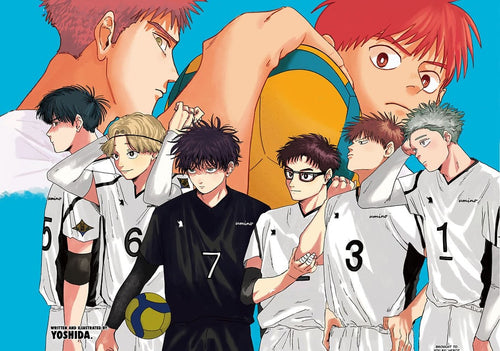


Hina Chono confessed to a guy who was already in love with someone else, helped set them up, watched it happen from front-row seats, and still got rejected in one of the most gut-wrenching scenes of the 2024–25 anime season. If you watched the Blue Box Season 1 finale dry-eyed, I have questions about your humanity. With Blue Box Season 2 officially confirmed for October 2026 on Netflix, the fandom is back to relitigating its biggest debate: did the show actually treat Hina Chono fairly — or did the anime adaptation stack the deck against her from the start? Let's break it down, both sides, no sugarcoating.
⚡ Quick Answer
The Blue Box manga handles Hina's arc with careful balance, but the anime's pacing gave her significantly more screentime and emotional depth than Chinatsu, making Taiki's rejection feel jarring. Whether that's a storytelling flaw or brilliant tragedy-craft depends on which side of the debate you land on.
You might also like



Who Is Hina Chono, and Why Does Everyone Love Her?
Hina Chono is Taiki Inomata's childhood friend — a fourth-ranked national rhythmic gymnast, effortlessly popular, and by most conventional rom-com metrics, the girl who should win. She is funny, emotionally vulnerable, deeply loyal, and voiced by Akari Kito (Nezuko from Demon Slayer), which, let's be honest, gave her a built-in advantage in the court of public opinion before a single episode aired.
What makes her stand out in a genre full of stock love rivals is that she has no malice. She encouraged Taiki to pursue Chinatsu. She buried her own feelings, watched him fall harder for someone else, and still showed up as his friend. When her true feelings finally surface, there's no scheming — just raw, desperate, very human love. And then she got rejected anyway.

📊 Key Stat: Blue Box Season 1 logged 18.1 million hours viewed on Netflix in the second half of 2025, confirming a large and invested global audience heading into Season 2.
The Case That the Show Did Hina Dirty
Let's be real: this argument has legs, and it's not just fangirl grief talking.
The Screentime Imbalance Problem
One of the most consistent criticisms of the Blue Box anime adaptation — as opposed to the source manga — is how unevenly it distributes character development. Hina gets episode after episode of interiority: her gymnastics pressures, her father's Olympic legacy bearing down on her, her internal monologues about love and identity. We understand exactly why she loves Taiki.
Chinatsu, by contrast, remains frustratingly opaque for much of the season. As one widely-cited MAL review put it, the show gave viewers every reason to root for Hina while giving Chinatsu almost no comparable depth — making Taiki's ultimate choice feel emotionally unearned to a significant portion of the audience. The review described the dynamic as the show building up Hina's complexity only to use it as raw material to make her rejection land harder, without ensuring the alternative was equally compelling.
You might also like
"It's rare when a romance anime can make us feel devastated for the rival in a love triangle."
The Timing of the Rejection
Even fans who accepted that Taiki had to choose Chinatsu took issue with how the rejection went down in Episode 24 — during a group trip, surrounded by friends, away from home. A section of the MAL community called this out specifically: however understandable from a narrative tension standpoint, it left Hina isolated at her lowest moment with no safe space to process it. That's not a writing choice that makes you feel good about how the show treated her.
The "Loss Aversion" Setup
There's also a structural critique worth taking seriously. Hina's feelings for Taiki were reportedly triggered, at least in part, by the arrival of Chinatsu as a competitor for his attention — a psychological pattern sometimes described as loss aversion. The show gave her a motivation rooted in not wanting to lose, rather than a longer, quieter love that predated the main romance. That framing, whether intentional or not, subtly tilts the audience toward reading her as reactive rather than foundational — even though their history runs three years deep.
The Counterargument: The Show Was Actually Honest With Hina
Here's where I push back a little — and I say this as someone who ugly-cried through Episode 24.
Taiki Never Wavered — and That's Actually Respectful
One of the things Blue Box does that most romance anime absolutely refuses to do is have the male lead stay decided. Taiki doesn't flirt with Hina while keeping Chinatsu on the line. He doesn't string Hina along with ambiguous moments. He likes Chinatsu. He's always liked Chinatsu. And when Hina confessed, he didn't wait for plot-convenient chaos to make the choice for him — he made it himself, clearly and directly, even knowing it would hurt. That's not a protagonist doing Hina dirty. That's a protagonist treating her with enough respect to be honest.
"Instead of leaning into the love triangle and making Taiki play with both girls' emotions, he stays firm on his intentions to be with Chinatsu while also navigating how to reject Hina while still being a good friend."
Episode 25 Gave Hina a Proper Landing
The finale didn't abandon Hina after the rejection — it followed her through the immediate aftermath, showing Ayame helping her cope, giving her friendship and a future arc, and setting up that her story isn't finished. That matters. Too many shows drop their rival heroines the moment they serve the plot. Blue Box stuck around to show Hina at her most raw, and in doing so affirmed her as a full character, not just a narrative obstacle.
💡 Pro Tip: If you're a Hina fan going into Season 2 in despair, the manga from Chapter 81 onward gives her significant continued development — including new relationships and a genuinely moving moment of personal clarity around Chapter 234.
The "inoshikacho" Design Is a Feature, Not a Bug
The show's creators embedded their intentions into the character names themselves. Inomata (boar), Kano (deer), Chono (butterfly) — the inoshikacho card combination in traditional Japanese card games, used in anime to signal a trio bound together. None of the three is designed to be a villain or an afterthought. Hina's role is structurally essential to the show's thesis: that love without reciprocation can still be noble, and that losing at love doesn't mean losing yourself.
My Honest Take After Watching Season 1 Twice
I want to be straight with you: I binged the last six episodes of Blue Box on a Tuesday night and immediately started over from Episode 1 to figure out if I'd missed something. The second watch broke me worse than the first. Because here's what I noticed: every time Hina interacted with Taiki, she was fully present. She saw him — the actual him, the nervous hard-worker who didn't believe in himself yet. Chinatsu admired him too, but from a more distant, idealized angle early on. And yet the show was never lying to me. Taiki's feelings for Chinatsu were visible from Episode 1. I just kept hoping the underdog would pull off the upset, because that's what being a Hina fan feels like: choosing to root for something the show told you wasn't going to happen.
That's not the show doing her dirty. That's the show doing something genuinely rare — making you feel the full weight of a loss that was always coming.
What Blue Box Season 2 Actually Means for Hina's Story
Here's the genuinely good news for anyone who couldn't let Hina go: Season 2 is not the end of her arc. It's arguably where her real story begins.
Blue Box Season 2 is set to premiere on October 4, 2026 on TBS in Japan, with Netflix's global rollout in the same month. The season will adapt the "Confession Arc" from the manga — primarily focused on Taiki and Chinatsu's relationship becoming concrete — but based on the manga's trajectory, Hina remains a significant presence through and beyond the chapters Season 2 will cover.
📊 Key Stat: Anime viewership on Netflix grew 10.6% in 2025, reaching 8.9 billion hours — more than ten times the growth rate of all other content categories combined. Blue Box Season 2 arrives into one of the most active anime audiences Netflix has ever had.
The incoming Season 2 also brings new character Yumeka Kido (voiced by Yoshino Aoyama), who adds fresh dynamics to the story. For Hina specifically, the manga introduces a new romantic interest in later chapters — a development the fandom is split on, with some reading it as a well-deserved fresh start and others seeing it as a cheap consolation prize. That debate will reignite the moment it shows up on screen.
⚠️ Important: Season 2 adapts the Confession Arc, which is heavily Taiki × Chinatsu focused. Manga readers report that Hina's next major storyline plays out in later chapters — likely in a hypothetical Season 3 if the show continues at its current pace.
The Verdict: Did the Show Do Hina Dirty — a Quick Breakdown
| Argument | Verdict |
|---|---|
| Hina got more screentime and depth than Chinatsu | TRUE — a legitimate adaptation criticism |
| The show misled viewers into thinking Hina could win | DEBATABLE — Taiki's feelings for Chinatsu were always clear |
| Taiki was cruel or inconsistent in rejecting Hina | FALSE — he was firm, respectful, and honest |
| The show abandoned Hina after her rejection | FALSE — Episode 25 and the manga both give her meaningful continuation |
| Hina's pain felt real and was treated with care | TRUE — this is where the show genuinely earned its reputation |
Final Word Before Season 2 Drops
Did Blue Box do Hina dirty? The honest answer is: the anime's pacing did her no favors compared to how the manga balances the triangle — but the story itself never betrayed her. She was given real feelings, real depth, a real rejection, and a real path forward. What the show did brilliantly — and maybe a little cruelly — was make you fall for a character it never intended to reward, so that when the inevitable came, it hit with the weight of something real.
Season 2 arrives in October 2026 with the Confession Arc locked and loaded. Team Chinatsu is about to get their victory lap. But if you're still carrying the grief of Team Hina, know this: her story isn't over. The manga has more to say about her, and if Blue Box gets the seasons it deserves, so will the anime.
Frequently Asked Questions
Why did Taiki reject Hina in Blue Box?
Taiki rejected Hina because his feelings for Chinatsu Kano were sincere and long-standing. Despite caring deeply for Hina as a childhood friend, he chose honesty over ambiguity and rejected her directly to avoid misleading her further, making his decision one of the most emotionally mature moments in the series.
Does Hina end up with someone in the Blue Box manga?
In the manga, a new character named Haruto Yusa eventually develops feelings for Hina and confesses to her. She rejects him with a smile, suggesting she is choosing her own happiness and independence rather than jumping into a rebound relationship — a moment widely read as significant character growth.
Will Hina appear in Blue Box Season 2?
Yes. While Season 2 focuses primarily on the Confession Arc between Taiki and Chinatsu, Hina remains part of the ensemble. Her post-rejection recovery and evolving friendships — particularly with Ayame — are expected to continue as significant subplot threads throughout the new season.
When does Blue Box Season 2 release on Netflix?
Blue Box Season 2 begins broadcasting in Japan on October 4, 2026 on TBS. Netflix has confirmed a global streaming release in October 2026, though an exact international date has not yet been announced. The season is expected to run for 24–25 episodes, covering events through March 2027.
Who is the love rival in Blue Box — Hina or Chinatsu?
Technically, Hina Chono is the love rival and Chinatsu Kano is the main love interest. However, because the anime develops Hina's character so thoroughly, many viewers feel more emotional investment in Hina — making the "rival" label feel reductive. Both characters are written without malice, which is what sets Blue Box apart from typical romance anime.
📚 Sources & References
- Netflix's Blue Box Hypes Season 2 Return With New Trailer — ComicBook.com, March 2025
- Blue Box Took Love Triangles to the Next Level — FandomWire, May 2025
- Blue Box's Rejection Scene Is One for the Ages — Game Rant, April 2025
- Blue Box Season 2 Premieres This October on Netflix — Anime.com, July 2026
- Blue Box Season 2 Will Adapt the Confession Arc — Screen Rant, December 2025
- Netflix H2 2025 Report: Top 10 Most-Watched Anime — Outlook Respawn, January 2026
- What Netflix's 2025 Tells Us About Their Evolving Anime Strategy — Anime By The Numbers, January 2026
- Blue Box Season 2: Will Hina and Taiki Stay Friends? — TweaksPH, April 2026