

Kenji "Kai" Sato
I write about character writing, genre trends, and the unspoken rules fandom enforces on storytelling. I've been watching anime since before legal streaming was a thing and have the backlog to prove it.
Published: April 26, 2026 | 11 min read | Last updated: April 26, 2026
Wish Fulfillment Fatigue: Are We Drowning in Mediocre Anime Protagonists?
Thirty-four new isekai titles aired in 2024. Thirty-four. And if you watched even a quarter of them, there's a decent chance you can't name the lead character of more than three without checking your watch history. That's the wish fulfillment fatigue problem in a single uncomfortable statistic. Anime has always leaned into power fantasies, from early shonen heroes punching their way to the top to the salaryman reborn in a fantasy world with a conveniently broken skill set. But somewhere between the truck that kills protagonist number four hundred and the harem that assembles itself by episode two, a pattern became a formula, the formula became a rut, and the rut became an industry. This piece isn't an obituary for escapist fiction. It's a dissection of why so many anime protagonists feel interchangeable, what the genre's best outliers are doing differently, and whether wish fulfillment as a narrative engine is finally running out of fuel.
⚡ Quick Answer
Wish fulfillment fatigue in anime refers to viewer exhaustion caused by an oversaturation of protagonists who are effortlessly powerful, emotionally blank, and built to flatter the audience rather than challenge it. The problem isn't the fantasy itself. It's the creative laziness that hides behind it.
What Is Wish Fulfillment in Anime, Exactly?
Wish fulfillment, as a narrative device, is not a dirty word. Every compelling story grants its audience something to desire vicariously. Harry Potter lets you believe you might be secretly special. Haikyuu makes you feel every spike in your own joints. Wish fulfillment is the engine of fiction. The problem specific to anime, and particularly to isekai, is the degree to which the fantasy has been industrialized to the point of self-parody.
In classic wish fulfillment, the protagonist earns their power through struggle, failure, and growth. The fantasy is aspirational. In the modern isekai variant, the protagonist simply arrives with power. They are chosen not because of anything they've done or become, but because of who the story needs them to be for the audience to feel good. They don't grow into significance. They are declared significant from frame one. That shift, from earned fantasy to gifted fantasy, is what separates a satisfying power trip from a hollow one.
📊 Key Stat: Isekai made up 15% of all new TV anime in 2024, with 34 titles airing across the year. Over half of all isekai ever produced have been released since 2020. (Anime News Network, 2025)

The Narou Pipeline and the Birth of the Blank Slate Hero
To understand where the blank slate protagonist came from, you have to understand Shousetsuka ni Narou, the Japanese web novel publishing platform that functions as the upstream source for a staggering number of isekai adaptations. Narou is a free-to-read self-publishing site where reader engagement, not editorial gatekeeping, determines what gets traction. And what gets traction on Narou is what makes readers feel immediately validated.
The result is a feedback loop. Stories that give readers an overpowered protagonist who is beloved by everyone, given power effortlessly, and never meaningfully wrong attract more clicks. More clicks attract more publishers scouting for adaptable IP. Those stories get turned into light novels, then manga, then anime. The protagonist formula doesn't evolve because the pipeline punishes evolution. Editors and studios aren't selecting for craft. They're selecting for what already proved it could find an audience, even if that audience is niche and the bar is deliberately low.
"A lot of isekai are thinly veiled male power fantasies, and their ubiquity today gives both anime and video games a bad rap. Fiction is a world where you can do anything. You could make these new worlds whatever you want."
The Narou platform is directly responsible for the long-title trend in light novels: those endlessly descriptive titles that spoil the premise and the protagonist's power in one breath. "I Was Reincarnated as the Seventh Prince So I Can Take My Time Perfecting My Magical Ability." That title is not storytelling. It's a product label. It tells the target reader precisely what kind of power trip they're about to consume so they never have to risk being surprised.
34 Titles a Year and Why Volume Is the Enemy of Craft
Volume is the real culprit. Not wish fulfillment as a concept, but the sheer industrial production scale at which it's being deployed. When you produce 34 isekai series in a single calendar year, you are not making art by the title. You are managing output. The incentive structure stops rewarding risk because risk, by definition, requires time and creative investment that a seasonal release pipeline doesn't have budget for.
Think about it this way. If a studio greenlights twelve titles per year in a genre, they need twelve sets of character designs, twelve worlds, twelve scripts, and twelve production teams in various stages of completion at any given moment. The protagonist template that requires the least design work, the least backstory, and the least tonal nuance is going to survive the pipeline more intact than one that demands careful handling. The blank slate hero isn't just a narrative choice. It's a production shortcut wearing a narrative costume.
📊 Key Stat: The volume of isekai TV anime grew by 143% over just five years (2020 to 2024), according to data compiled and analyzed by Anime News Network. The genre has effectively leveled off at roughly one in seven new anime titles per year. (Anime News Network, 2025)
What's particularly telling is how the best performers in the genre almost never appear in the top ten anime of any given year by pure viewership. Mushoku Tensei, widely considered one of isekai's stronger recent entries, clocked in at rank eleven in 2024's English-language viewership data. The titles that dominate year-end conversations, the ones that become cultural events, are almost always shows with protagonists who break the template rather than embody it.
What a Mediocre Protagonist Actually Looks Like
Let's be specific, because the critique gets slippery when it stays abstract. A mediocre wish fulfillment protagonist in 2025 shares most of the following traits:
- No meaningful pre-existing identity. They are defined by their new world's reaction to them, not by who they actually are as people. Remove them from the plot and the story collapses, not because they're compelling, but because the plot is built around flattering them.
- Power comes without cost. There is no trade-off, no limitation that the story takes seriously for more than one episode before it's resolved or circumvented.
- Everyone likes them immediately or comes around quickly. Antagonism toward the protagonist is temporary and always proven wrong. The world bends to validate their existence.
- Emotional flatness disguised as calm. Many of these protagonists are written as stoic or collected, but the effect is that they register nothing meaningfully. There's no internal conflict, no real fear, no actual grief when things go wrong.
- The harem assembles without effort. Supporting characters orbit the protagonist and compete for their attention, but none of them have needs or arcs that exist independently of the protagonist's story.
I remember the specific moment this clicked for me. I was three episodes into a seasonal isekai a few years back and realized I could not name a single thing the protagonist wanted beyond winning the next fight and impressing the girl who'd just joined his party. Not a fear. Not a personal failing they were trying to overcome. Not even a hobby. They were a function dressed in a character's clothing. That emptiness isn't accidental. It's designed so the viewer can slot themselves in without friction.
⚠️ Important: Calling out wish fulfillment isn't the same as calling out the people who enjoy it. Escapism is legitimate. The critique is directed at the laziness of execution, not the audience's desire to escape.
What Good Looks Like: Re:Zero, Frieren, and the Power of Consequence
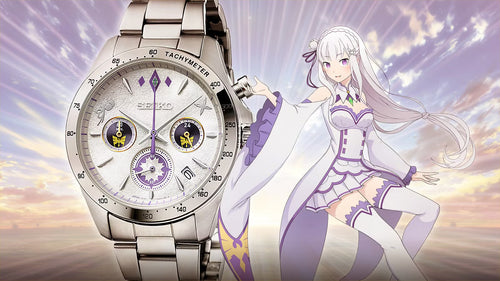
The most instructive case study in how to break the mold is Re:Zero, and it's instructive specifically because author Tappei Nagatsuki designed Subaru Natsuki as a deliberate anti-thesis to the blank slate hero. Nagatsuki has spoken openly about his frustration with the overpowered, universally beloved isekai lead, and Subaru is the result of that frustration. Subaru is weak, frequently wrong, emotionally explosive, and often the direct cause of his own suffering. His only superpower is dying and coming back, which is less a gift than a psychological torture mechanism.
That design choice cost Re:Zero its casual audience and gained it a devoted one. Viewers who came expecting a power fantasy left frustrated. Viewers who stayed got one of the most genuinely uncomfortable psychological portraits in recent anime. The show works because Subaru's failures have weight. When he dies, it matters. When he gets something wrong, the story doesn't immediately excuse him. Consequence is the ingredient the formula leaves out, and Re:Zero's entire identity is built on it.

What These Shows Have in Common
Re:Zero and Frieren share something more fundamental than good writing. Their protagonists exist as full people with pre-existing values, limitations, and blind spots that the narrative takes seriously rather than conveniently forgets. In both cases, the audience is asked to sit with discomfort, uncertainty, and the possibility that the protagonist will fail in a way that actually costs them something. That ask is what the wish fulfillment formula explicitly removes. And removing it is exactly what makes those shows feel hollow in comparison.
💡 Pro Tip: If you're burned out on seasonal isekai, try Frieren, Vinland Saga, or Hunter x Hunter. All three have protagonists whose power is not the point of the story. Their inner lives are.
So Why Do We Keep Watching?
This is where honesty gets uncomfortable. The answer isn't "because studios keep producing it." Studios produce what viewers consume. The answer is that there is a genuine and understandable human need being met by even the most formulaic wish fulfillment anime, and dismissing that need doesn't make it go away.
Isekai's core premise, an ordinary person transported to a world where they matter, taps into something real. The appeal of a story where your choices have visible consequences, where your skills are valued, where you can build something from scratch without the invisible ceiling that real-world hierarchies impose, is not trivial. For viewers dealing with burnout, social anxiety, or the specific despair of feeling stuck in a life that doesn't fit, that fantasy serves a function closer to comfort food than to art, and comfort food isn't something you critique out of existence.
The issue is that the genre, at its worst, has started to confuse comfort with quality. A warm blanket is useful. But a warm blanket that's the same as every other warm blanket produced in the last five years, with the exact same texture and the exact same weight, eventually stops being comforting and starts being just... the default.
Is the Genre Fixable, or Are We Just Complicit?
There are signs that the market is beginning to self-correct, though slowly. Female-led isekai and stories with more emotionally complex protagonists are gaining ground. The slow-life subgenre, where the fantasy is not power but peace, proves there's an audience for wish fulfillment that isn't centered on combat dominance. And meta-isekai like "No Longer Allowed in Another World," which explicitly critiques the fantasy being sold to its audience, suggest that the genre is starting to develop a conscience, or at least a sense of irony.
But the honest answer is that genre improvement requires consumer pressure, not just critical essays. Every low-effort wish fulfillment title that gets picked up, watched through, and talked about on social media is a signal to the industry that the template is working. The audience's frustration is loud online. Their behavior as consumers is considerably quieter.
That's not a judgment. Selection is hard when thirty new isekai drop in a season and you have a limited number of evenings. But the shows that get remembered, the ones that become genuine conversation pieces and not just seasonal noise, are almost always the ones that dared to give their protagonist an actual interior life. Wish fulfillment that makes you feel something beyond validated is still wish fulfillment. It just costs the creator more to make. And right now, the pipeline doesn't reward that cost.
Maybe that's where the real pressure needs to land. Not on viewers for enjoying escapism, but on the upstream pipeline that decided blank and palatable was a business model worth industrializing. Narou's feedback loop created the blank slate hero. A different set of incentives could unmake it. Whether the industry chooses to build those incentives is a different question entirely, and one the next thirty-odd isekai titles of 2025 will answer more clearly than any think piece can.
Frequently Asked Questions
What is wish fulfillment in anime?
Wish fulfillment in anime refers to stories built around fantasies that allow the audience to vicariously experience power, social success, or significance they desire in real life. At its best it's aspirational. At its worst it's a lazy substitute for actual character writing, where the protagonist exists purely to be validated by the world around them.
Why are isekai protagonists always overpowered?
Overpowered isekai protagonists are partly a product of the Narou web novel pipeline, where reader engagement determines what gets adapted. Stories featuring instantly powerful heroes attract more clicks, which attracts publishers. The result is a self-reinforcing cycle where power without cost is rewarded at the source before a single frame of animation is drawn.
Is the isekai genre oversaturated in 2025?
By raw numbers, yes. Isekai peaked at 34 new TV titles in 2024 and makes up roughly 15% of all new anime produced annually. Whether that constitutes oversaturation depends on your tolerance for repetition. The genre is consistent rather than dominant, which means it supports a stable audience while rarely producing titles that break into the cultural mainstream.
What anime have the best written protagonists?
Among recent titles, Frieren: Beyond Journey's End, Re:Zero, Vinland Saga, and Hunter x Hunter are widely cited for protagonists with genuine interiority, meaningful failure, and arcs that demand something of the viewer. What they share is a willingness to make the audience uncomfortable rather than consistently comfortable.
Why do people still enjoy isekai if it's repetitive?
Because the fantasy being sold, that an ordinary person can be transported somewhere they genuinely matter and can build something meaningful, addresses a real emotional need. Repetition doesn't eliminate need. It just makes the product that meets that need feel more like background noise than an event. Comfort and quality are different things, and isekai has become very good at the former.
The Bottom Line
Wish fulfillment fatigue is real, but it's not a death sentence for a genre. It's a signal. When viewers start struggling to name protagonists from shows they watched three months ago, the industry has a character writing problem. When the most memorable moment in a seasonal isekai is the opening animation rather than anything the protagonist actually does or chooses, something has gone wrong at the concept stage.
The antidote isn't less escapism. It's escapism with texture. Give the protagonist something to lose beyond a fight. Give them a contradiction they can't resolve in one episode. Give them a past that shapes how they move through the present. Let the world push back in ways that actually stick. That's it. That's all the formula needs. The production pipeline will catch up eventually, or viewers will vote with their time and it'll be forced to. Either way, the blank slate hero's reign is not infinite. Thirty-four titles a year is not sustainable as a creative statement. It's only sustainable as commerce. And commerce, historically, follows what people actually want to talk about the next morning.