

Echo Mitsuki
I write about anime, manga, and fandom culture, with a soft spot for ensemble-cast rom-coms and the quiet art of a well-written side character. I have been following seasonal simulcasts since the Horimiya era and I keep a running list of every time a confession actually happens in episode one.
Published: April 23, 2026 | 11 min read | Last updated: April 23, 2026
You and I Are Polar Opposites: The Reiwa Rom-Com Finally Beating Horimiya
When Season 1 of You and I Are Polar Opposites wrapped on March 29, 2026, my group chat broke. Not in a bad way. In the way a group chat breaks when everyone is typing at once because Seihantai na Kimi to Boku had just pulled off what Horimiya couldn't: it stuck the ensemble landing. A Season 2 announcement dropped the same day, premiering July 5, 2026, and r/anime threads filled up faster than Suzuki sprinting home after a successful date. Fans are not just watching this show. They are arguing about it, editing it, quoting it, and staging small civil wars in reply threads over whether Yamada-Nishi or the TairAzuma slow burn is the real heart of the series. This is what a genuine Reiwa-era rom-com hit looks like, and I want to walk through why.
⚡ Quick Answer
You and I Are Polar Opposites is a 2026 Lapin Track rom-com adapting Koucha Agasawa's Shonen Jump+ manga. Fans are calling it the best Reiwa-era romance because it confesses in episode one, then invests the remaining 11 episodes in ensemble side couples like TairAzuma and Yamada-Nishi instead of dragging out tension.
You might also like

What Is You and I Are Polar Opposites, and Why Is Everyone Posting About It?
Here are the bones. You and I Are Polar Opposites, or Seihantai na Kimi to Boku, is a 12-episode Winter 2026 anime produced by Lapin Track and directed by Takakazu Nagatomo. It aired on the Nichi-5 block on MBS, TBS, and 26 affiliate stations from January 11 to March 29, 2026, with a same-day English dub on Crunchyroll. The source is Koucha Agasawa's Shonen Jump+ manga, which ran from May 2022 to November 2024 and wraps up in eight tankobon volumes.
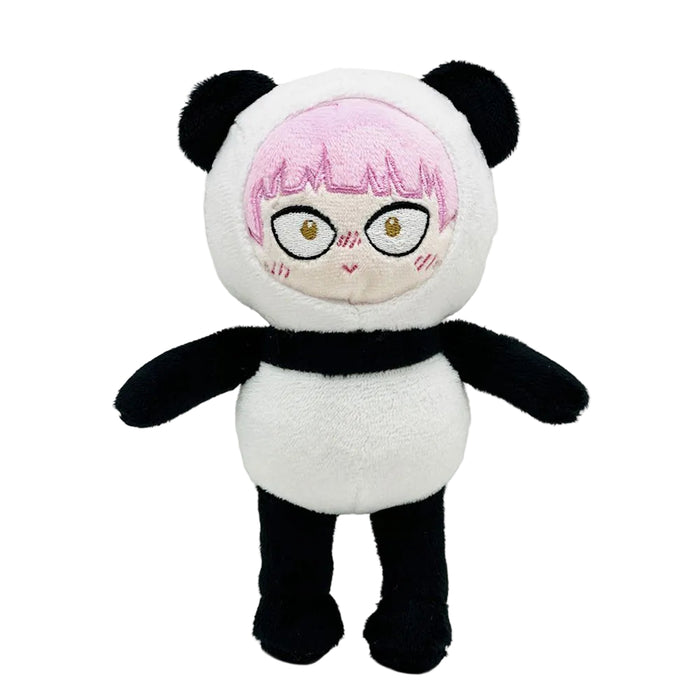
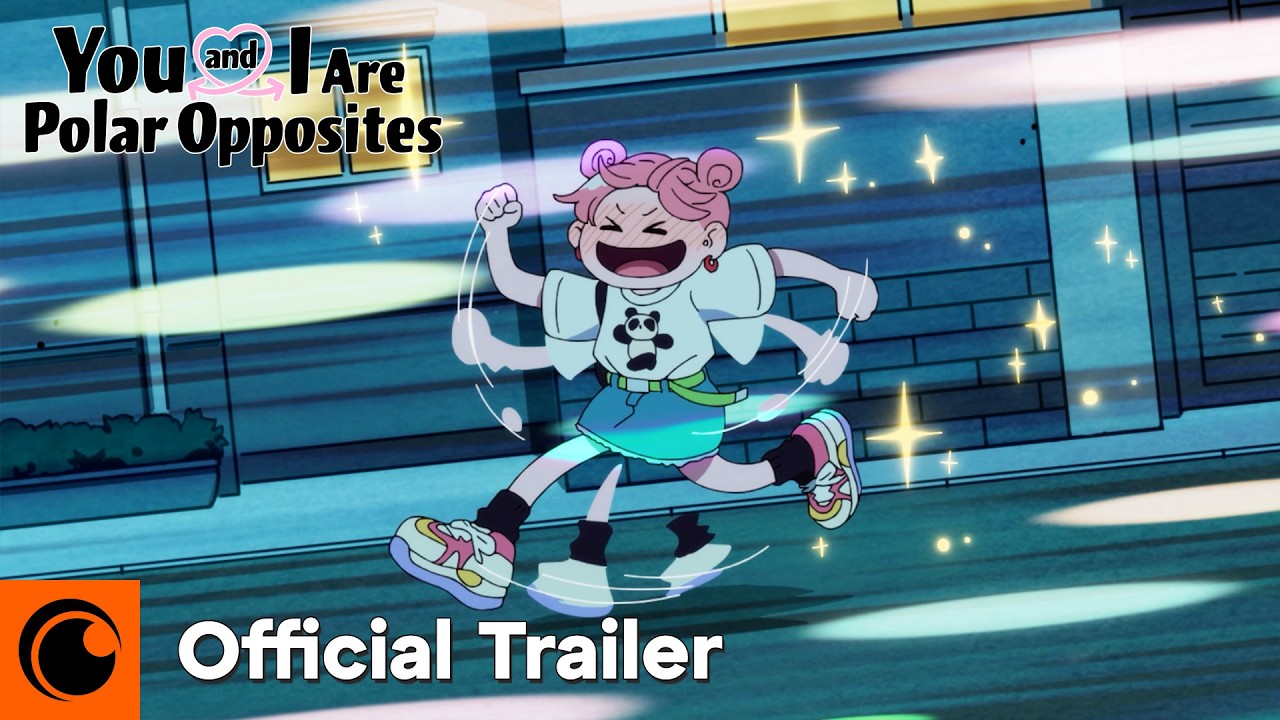
The premise sounds like every other high school rom-com. Miyu Suzuki is a loud pink-haired gyaru who goes along with whatever the crowd is doing. Yusuke Tani is the quiet boy next to her in class, glasses, no filter, speaks in three-word sentences. She has a crush on him. He has a crush on her. But here is where the show quietly sets itself apart. Both of them confess and start dating by the end of episode one, leaving eleven full episodes to do something almost no rom-com ever does: actually watch a couple be a couple.
What has fans losing their minds is how confidently the show uses that freed-up runway. The buzz has been loud enough that Lapin Track and the production committee greenlit Season 2 for a July 5, 2026 premiere, announcing it at AnimeJapan 2026 on the exact same day the Season 1 finale aired. That is an unusually short turnaround and a very clear signal from the production side: the numbers are working.
📊 Key Stat: You and I Are Polar Opposites currently holds an 8.8 IMDb user rating, outscoring every other new romance anime from the Winter 2026 lineup on the same tracker.
Why the Horimiya Comparison Actually Holds Up
Horimiya comparisons get thrown at every rom-com where two opposites start dating early and the story spends time with their friends. Usually the comparison is lazy. This time it is not. The structural DNA is genuinely similar: a fast-confession main couple, a cast of side characters who each get real interiority, and a school setting that feels lived-in rather than decorative.
But here is where I have to push back on the hottest take in the fandom right now, which is that Polar Opposites is straight up "better" than Horimiya. That reads, to me, like recency bias talking. Horimiya did something in 2021 that nobody had really pulled off at that scale, and it cleared a path this show gets to walk on. What Polar Opposites does, and what I think is the honest version of the hot take, is fix the one thing Horimiya couldn't: the ending pacing. Horimiya rushed its final stretch because the anime had to cram dozens of chapters. Polar Opposites, with a completed eight-volume manga to adapt and a Season 2 already booked, does not have that pressure.
"While Tani is an interesting lead, and the ensemble continues to grow, shining a light on more distinctive personalities such as the walking storm cloud Shuji Taira and the popular but awkward Shino Azuma, it's Suzuki who steals the whole show."
One extra note for Horimiya refugees: this show is a shonen rom-com, serialized in Shonen Jump+, but it reads and watches much more like a shojo. But Why Tho grouped it alongside Tamon's B-Side and Journal With Witch as part of what they called the shojo/josei renaissance of 2026, which is a framing I think is more accurate than "the next Horimiya."
The Ensemble Cast Is Doing the Heavy Lifting
Here is my personal take, which is mildly controversial in the r/anime threads: if you removed Suzuki and Tani entirely and just made a show about the supporting cast, I would still watch it weekly. That is not a dig at the main couple. It is a compliment to how dense the ensemble writing is.
Let me break the clique down, because this is genuinely the part fans keep posting about:
- Kentaro Yamada: Suzuki's childhood friend, easygoing blonde himbo energy, has an imaginary friend named Gapacho nobody else has ever met, drawn to people who laugh in unexpected ways.
- Natsumi Nishi: Quiet, anxious library helper who muffles her laughter, eventually ends up dating Yamada. Their pairing is the "tooth-rotting sweet" option, per But Why Tho.
- Shuji Taira: Self-loathing, cynical, works part-time at a convenience store, thinks in social hierarchies. Fans on the official wiki compare him to Ishigami from Kaguya-sama and Hachiman from OreGairu, which tells you exactly what register he's operating in.
- Shino Azuma: Introduced as the world-weary pretty girl who keeps dating bad boys because nice ones can't hold a conversation. That premise alone is doing more character work than most entire rom-coms.
- Manami Watanabe: The airheaded mischief engine, one of Suzuki's closest friends, provides most of the chibi-mode chaos.
- Rikako Honda: Nishi's beautiful best friend who actively dislikes anyone she hasn't met. This is the realest character trait in the show and I will not be taking questions.
The show rotates focus between these characters in a way that feels organic. When I sat down to re-watch Episode 4, I realised I had actually been paying closer attention to Taira's posture in the background than to Suzuki's outfit of the day, which, given the quality of the outfit-of-the-day work in this show, is saying something. That kind of background-first loyalty is a sign the ensemble is earning its screentime.
| Pairing | Energy | Status by End of Season 1 |
|---|---|---|
| Suzuki and Tani | Confessed Ep 1, soft and devoted | Long-term couple, navigating firsts |
| Yamada and Nishi | Bright, wholesome, chaotic | Official couple |
| Taira and Azuma (TairAzuma) | Bruised, cynical, emotionally real | Will-they-won't-they, slow burn |
The TairAzuma Debate and Azuma's Ex-Boyfriend Problem
This is the section where I am going to plant my flag. The biggest discourse flashpoint of Season 1 was Episode 8, when Azuma's ex-boyfriend resurfaces and the show shifts tonally into something more melancholy than anyone was braced for. I saw the "I'm dropping this because my rom-com got serious" takes roll in within hours of the episode going up, and I want to be honest: I think that reaction is bad-faith and it misunderstands what the show is doing.
Azuma's dating history is not a gotcha. It is the entire point of her character. She was introduced as someone who caves to bad boys because nice guys, in her experience, are introverts who cannot keep a conversation going. That framing only works if she has actually had boyfriends before. When Taira starts getting close to her, it lands precisely because he is not trying to win her over, he is just self-deprecating enough to accidentally give her good advice and treat her like a person. FandomWire's Episode 8 review called them two emotionally bruised people slowly learning how to show up for each other, which is the cleanest read I've seen on this pairing.
There is a separate, smaller discourse about Suzuki and Tani's own past, which is not really discourse so much as a few people mistaking "Tani overthinks tips on how to be a good boyfriend" for "Tani is her second boyfriend." He is not. This is the first relationship for both of them, and the entire thing Tani obsesses over is that any date is fun because of how much he loves her. The "Tani is not her first boyfriend" take that briefly circulated on anime Twitter is pulled from a very confused misreading of the manga appendix chapters and you can safely ignore it.
What is worth debating is whether the TairAzuma arc gets room to breathe in Season 2, or whether the pacing pushes them into a premature confession. The manga handles it more patiently than most fans are expecting. I will leave it at that because I promised not to spoil.
💡 Pro Tip: If you want to get ahead on TairAzuma without spoiling the anime, Viz Media publishes the English manga digitally, and the pairing's best beats start around the middle volumes.
The Gapacho Phenomenon: Fandom's Favourite Invisible Character
Gapacho is not a love interest. Gapacho is not even a real person. Gapacho is a running joke where Yamada constantly references a friend named Gapacho who nobody else has ever met or seen. Tani, famously, has no idea who Gapacho is and has stopped asking. This is the single most posted-about joke in the show, which tells you everything you need to know about fandom priorities in 2026.
I searched "Gapacho" on TikTok earlier this week expecting maybe a couple of fan edits. Instead I got a wall of "who is Gapacho" explainer videos, Gapacho headcanons, Gapacho tier lists, and at least three separate "Gapacho is real and his name is Echo" discourse spirals. One TikTok alone, a Yamada-focused edit tagged #gapacho, has cleared 81,000 likes. For a running gag about a fictional character's imaginary friend, that is a genuinely wild level of cultural penetration.
The reason Gapacho works, I think, is that the show plays the joke completely straight. Nobody ever breaks and goes "wait, who is Gapacho actually?" The cast just accepts Yamada at his word and moves on with their day, the same way real friend groups accept each other's weirder bits without interrogating them. It's a tiny piece of writing that tells you how seriously the show takes its own tone.
The English Dub and That Lobster Line Everyone Is Quoting
Okay, yes, the dub. You have seen the clips. "My lobster is too buttery, my steak is too juicy." It is the line of the season. It is, somehow, the only line anybody who watched the dub can stop quoting. It has colonized TikTok. A single compilation pairing the Gen-Z slang dialogue with Debussy's Clair de Lune on a wistful anime edit cleared 170,000 likes essentially on the strength of people being baffled by the writing choice.
The English dub was scripted by Macy Anne Johnson and voice-directed by Emily J. Fajardo, and it is divisive in a very healthy way. I happen to love it. I watched both versions back to back on a few episodes and the dub kept making me laugh in places the sub, through no fault of its own, couldn't land the same way. The tradeoff is that anybody who hates Gen-Z slang in their anime dubs has a perfectly fair gripe. Words like "chud" and "goofmaxxing" and "lobster is too buttery" are all present and unapologetic.
⚠️ Important: The last two episodes of the Season 1 dub were delayed past their original airing window because of pipeline issues, so if you started dubbed and hit a Japanese-only episode, that is why. Crunchyroll has since patched them in.
You might also like
One thing the dub discourse undersells: beyond the meme slang, the performances are genuinely tight. Sarah Roach's Azuma reads cooler than the sub's Shimabukuro performance in a way that works specifically for the English version of the character, and Mauricio Ortiz-Segura's Taira is doing something incredibly subtle with vocal defeatism that I don't think has been appreciated enough. Dub reviews usually flatten these performances into "the memes are funny," and that undersells what's happening.
Where It Fits in the Reiwa Rom-Com Lineup
The Reiwa era, for anybody who hasn't been tracking the term, refers to the Japanese imperial era that began in May 2019. "Reiwa rom-com" as a fandom label has come to mean post-2019 romance anime that feel structurally different from the Heisei-era will-they-won't-they default. Skip and Loafer, My Dress-Up Darling, Insomniacs After School, The Invisible Man and His Soon-to-Be Wife, Tamon's B-Side, and now You and I Are Polar Opposites are the core cohort most people point at.
What ties this cluster together is honesty about feelings, a willingness to confess early, and ensemble writing where side characters are allowed to be people. Polar Opposites is arguably the purest expression of all three. Skip and Loafer leans more character-study, MDUD leans more craft-focused, Insomniacs leans melancholy. Polar Opposites just wants to show you a group of kids being kind to each other, and then occasionally pause to note that Suzuki cannot smile for photos without looking possessed.
"It is easily the funniest anime of the year so far, laden with physical gags, one-liners, and devastatingly brutal observations."
If I'm being honest about my own bias, I have been waiting for a rom-com this emotionally literate since the Horimiya finale aired. The fact that Polar Opposites not only delivered but got Season 2 greenlit within hours of its finale feels like a small course correction for the genre. We were promised ensemble rom-coms a decade ago, and they mostly never materialized. This one did.
Frequently Asked Questions
Where can I watch You and I Are Polar Opposites?
You and I Are Polar Opposites streams on Crunchyroll worldwide, with both the original Japanese audio and an English dub available. In Japan, it airs on MBS, TBS, and 26 affiliate stations on Sundays at 5:00 PM JST, and simulcasts on ABEMA at 5:30 PM JST.
When does You and I Are Polar Opposites Season 2 premiere?
Season 2 premieres on July 5, 2026. The announcement dropped at AnimeJapan 2026 on March 29, the same day the Season 1 finale aired. Lapin Track returns as the animation studio, with Takakazu Nagatomo directing and Teruko Utsumi on series composition. Crunchyroll will stream it worldwide.
Is the manga finished?
Yes, Koucha Agasawa's manga completed its run in November 2024 on Shueisha's Shonen Jump+ platform. It collects into eight tankobon volumes, plus a spin-off novel titled Sunny and Rainy. Viz Media and Manga Plus publish the English version digitally and in print.
Who is Gapacho?
Gapacho is a running gag in the series. Yamada frequently mentions a friend named Gapacho that no other character has ever met or seen. The joke is that nobody questions Gapacho's existence, they just accept it. Gapacho has become one of the anime's most shared memes on TikTok and Twitter.
Is You and I Are Polar Opposites better than Horimiya?
The fair answer is that it builds on what Horimiya pioneered without rushing its final act. Horimiya broke new ground in 2021 for early-confession ensemble rom-coms, but had to compress its ending. Polar Opposites benefits from a finished manga and a confirmed Season 2, giving the story room to breathe.
Does the English dub use modern slang?
Yes, extensively. The dub, scripted by Macy Anne Johnson and voice-directed by Emily J. Fajardo, incorporates current Gen-Z terms including "chud," "goofmaxxing," and the widely quoted "my lobster is too buttery, my steak is too juicy." Reception has been largely positive, with some fans preferring the sub for a more neutral tone.
The Reiwa Rom-Com Era Is Real, and This Show Is Proving It
If you finish Season 1 of You and I Are Polar Opposites and still think it's just another school rom-com, I would gently suggest watching Episode 8 again and then coming back to me. This is a show that has quietly done the homework on character interiority, ensemble pacing, and genre expectation management that most of its peers skip. The TairAzuma arc alone is doing more complex relationship writing than several full-length seasonal romances I have sat through this year. Gapacho is thriving. The dub is polarizing in a fun way. Season 2 arrives July 5, and I have my re-watch schedule ready. See you in the afterglow.
📚 Sources and References
- You and I Are Polar Opposites, Wikipedia entry, updated April 2026
- You and I Are Polar Opposites TV Anime Gets 2nd Season in July, Anime News Network, March 29, 2026
- You and I Are Polar Opposites Review, InBetweenDrafts, January 28, 2026
- You and I Are Polar Opposites Season 1 Review: An Instant Mood Booster, But Why Tho, March 2026
- You and I Are Polar Opposites Episode 8 Review: Did Taira and Azuma Just Become the Series' Most Emotional Pair?, FandomWire, March 2026
- If You Don't Like This Show, YOU AND I ARE POLAR OPPOSITES, Magic Planet Anime, April 2, 2026
- Crunchyroll's You and I Are Polar Opposites Was So Good It's Already Returning for Season 2, CBR, April 2026