


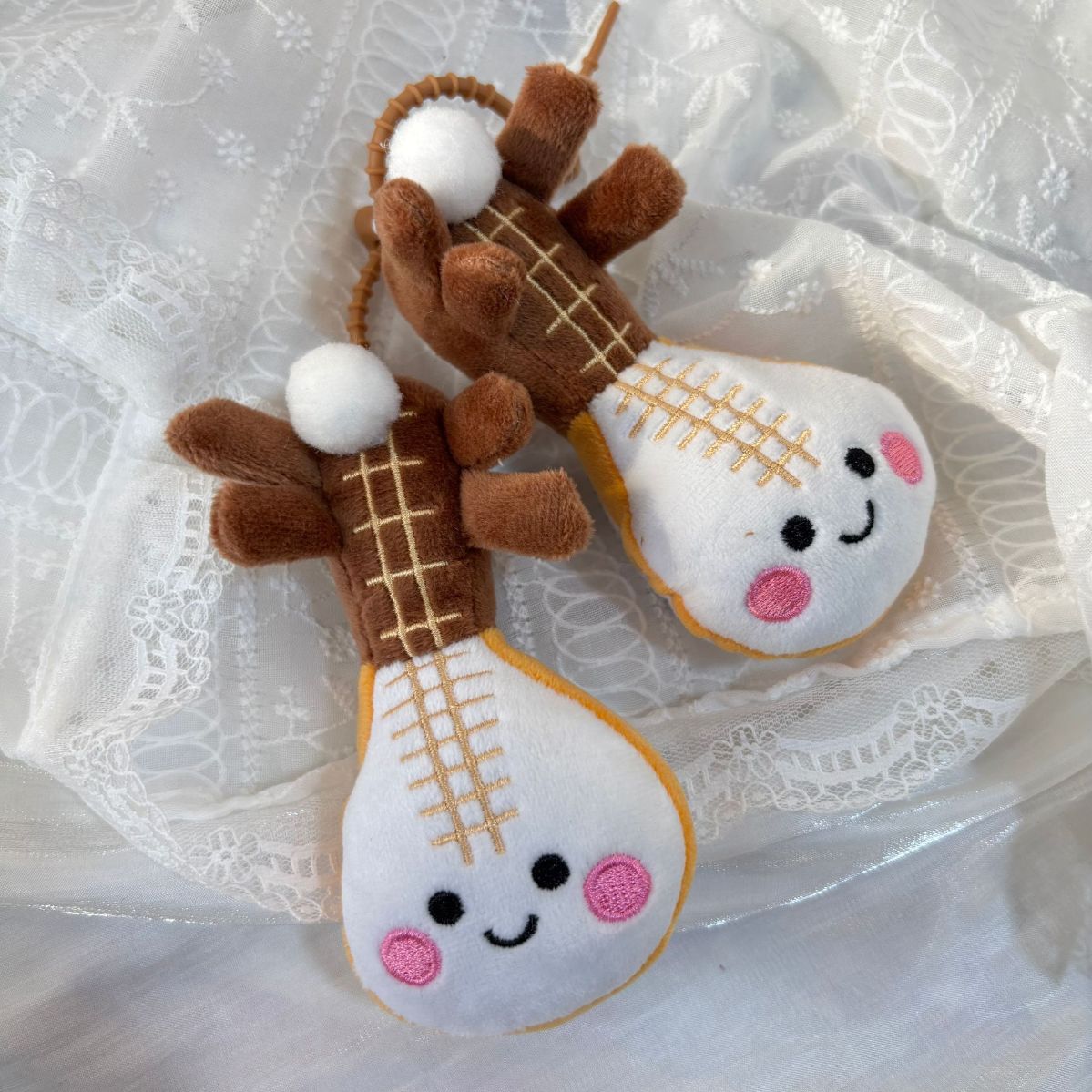
Adorably Unique Stuffed Pipa Lute Plush Handmade Keyring 15cm
Adorably Unique Stuffed Pipa Lute Plush Handmade Keyring 15cm
En existencias
- Free Shipping
- 30 Days Return(T&C applies)
- Customer Support
No se pudo cargar la disponibilidad de retiro
Adorably Unique Pipa Plush Keychain | Handmade Chinese Lute Plushie | 15cm Kawaii Keyring
A Handcrafted Tribute to a 2,000-Year-Old Musical Legend
Meet the pipa plush keychain that music lovers, history enthusiasts, and collectors cannot stop talking about. Modeled faithfully after the iconic pipa lute, this 15cm handmade Chinese instrument plush captures the pear-shaped silhouette and four-string detail of one of China's most celebrated traditional instruments. Whether you clip it to your bag, hang it from your keys, or display it on your shelf, this kawaii pipa keyring is a tiny masterpiece that carries centuries of cultural heritage in the softest form imaginable.
The pipa, sometimes called the Chinese lute, has enchanted audiences for over 2,000 years. Its bright, resonant sound and expressive fingering techniques have made it a cornerstone of traditional Chinese music. Now that same iconic silhouette lives on as a pipa lute plushie you can carry with you everywhere.
The Ancient Story Behind the Pipa Lute
The pipa is a four-stringed plucked instrument with a distinctive pear-shaped wooden body and frets that can range from 12 to 31 depending on the era and design. Its history stretches back to the Han dynasty (206 BCE to 220 CE), with some accounts suggesting it arrived in China from Central Asia and India along the legendary Silk Road. The very name "pipa" echoes the forward and backward plucking motions used to play it: "pi" described a forward stroke while "pa" described a backward one, and so all plucked chordophones of ancient China came to be called by this name.
One of the most poetic origin stories links the pipa lute to the Han Chinese Princess Liu Xijun, who was said to have played the instrument while riding on horseback to soothe her homesickness after being sent to marry a foreign king. By the Tang dynasty (618 to 907 CE), the pipa had cemented its place as one of the most beloved instruments in all of China, inspiring virtuosic solo compositions, orchestral arrangements, and storytelling traditions that are still alive today. The instrument was so influential that related versions of it traveled across Asia, giving rise to the Japanese biwa, the Korean bipa, and the Vietnamese dan ty ba.
Today, the pipa Chinese lute enjoys renewed global attention thanks to contemporary musicians blending classical pipa technique with jazz, rock, and electronic music, viral performances on platforms like YouTube, and its growing presence in international concert halls. This pipa lute plushie is a celebration of that enduring legacy.
Product Highlights
- Pipa plush keychain modeled after the iconic four-stringed traditional Chinese lute
- 15cm height, compact and lightweight, ideal for bags, backpacks, keys, and zipper pulls
- Faithfully designed pear-shaped body with string and fret detailing
- Handmade with care using soft, huggable plush materials
- Kawaii pipa keyring style, perfect for music lovers, anime fans, and culture enthusiasts
- Durable metal clip keyring attachment for everyday carry
- Makes an excellent gift for students learning the pipa lute, traditional music fans, or collectors of Chinese instrument plush items
- Unique and original design, not mass-produced factory merchandise
- Ideal as a traditional music plush toy display piece or accessory
Size Guide
| Dimension | Measurement |
|---|---|
| Height | 15cm (approximately 5.9 inches) |
| Width | Approximately 6cm at the widest point |
| Keyring Chain Length | Approximately 3cm |
| Style | Hanging keychain plush |
Care Instructions
- Spot clean only with a damp cloth and mild soap. Do not machine wash.
- Do not submerge in water or soak.
- Keep away from direct sunlight for extended periods to preserve colors.
- Do not use bleach or harsh chemical cleaners.
- Allow to air dry completely if any moisture is applied.
- Not suitable for children under 3 years of age due to small keyring parts.
- Store in a cool, dry place when not in use.
Why This Pipa Lute Plushie Is the Perfect Gift
Whether you are shopping for a music student, a fan of Chinese culture, or someone who loves one-of-a-kind accessories, this pipa plush keyring checks every box. It pairs the timeless elegance of the traditional Chinese lute with the soft, collectible charm of modern kawaii plush design. This is not just a keychain. It is a conversation starter, a collector's item, and a small piece of living cultural history you can take with you everywhere.
As interest in traditional East Asian music continues to grow worldwide, from viral pipa lute performances to its appearances in games, films, and streaming content, the demand for Chinese music plush collectibles is rising. Be ahead of the trend with a pipa lute plushie that is as educational as it is adorable.
FAQ: Everything You Want to Know About the Pipa
The pipa is a four-stringed plucked instrument with a pear-shaped wooden body that has been played in China for over 2,000 years. It is commonly called the Chinese lute in Western contexts because of its structural similarities to the European lute, though the two instruments developed independently. The pipa belongs to the chordophone family and is held vertically on the player's thigh during performance. Its name is onomatopoeic, echoing the forward ("pi") and backward ("pa") strokes used to play it. Since the Song dynasty, the term pipa has referred specifically to this pear-shaped instrument, distinguishing it from earlier round-bodied versions.
The origin of the pipa is a richly debated topic. The pear-shaped design that defines the modern instrument is believed to have traveled into China from Central Asia, Gandhara, and possibly India along the Silk Road during the Han dynasty period. As it took root in China, it absorbed local cultural symbolism: the instrument's traditional length of three feet five inches was said to represent the three realms of heaven, earth, and humanity, and its four strings symbolized the four seasons. By the Tang dynasty its influence had spread across East and Southeast Asia, giving rise to the Japanese biwa, the Korean bipa, and the Vietnamese dan ty ba. Today the pipa lute is celebrated as one of the most important instruments in the history of Asian music.
Yes, the pipa has experienced a remarkable resurgence in popular culture in recent years. Contemporary musicians have fused classical pipa lute technique with jazz, electronic music, and rock, earning millions of views on platforms like YouTube. The instrument has appeared in video game soundtracks and cinematic scores where Chinese cultural aesthetics are featured, including productions drawing on East Asian mythology and history. Its distinctively bright and expressive tone makes it immediately recognizable, and its visual silhouette, with the elegant pear-shaped body and long neck, has become a popular design motif in merchandise, anime, and fan art communities. The rise of interest in traditional East Asian instruments among younger global audiences has made the Chinese lute more visible than ever.
The pipa, guqin, and guzheng are three of the most iconic traditional Chinese string instruments, but they are quite different from one another. The pipa lute is a four-stringed plucked instrument held vertically, known for its dynamic range, virtuosic finger technique, and ability to evoke dramatic scenes through sound. The guqin is a long, flat seven-stringed zither associated with scholarly and meditative traditions, often played solo in intimate settings. The guzheng is a much larger horizontal zither with movable bridges and up to 21 strings, commonly associated with flowing, lyrical melodies. Among the three, the pipa Chinese lute is perhaps the most versatile, equally at home in classical solo repertoire, folk ensembles, and modern fusion performances.
The growing interest in traditional Asian aesthetics across anime, mobile games, and fantasy media has brought the pipa lute into the spotlight for a new generation of fans. Characters in popular RPGs, xianxia (Chinese fantasy) dramas, and animated series are frequently depicted playing the pipa, often using it as a weapon, a magical instrument, or a symbol of scholarly and artistic refinement. Viral moments from these series, as well as real-world musicians demonstrating the instrument's incredible expressiveness on social media, have sparked widespread curiosity. Fan communities have embraced the Chinese lute as both a cultural symbol and a collectible motif, leading to growing demand for merchandise, art, and accessories inspired by the pipa, including keychains, plushies, and decorative items.


Frequently Bought Together
-
Toothless Dancing Meme Plush 25cm | Night Fury Black & Light Fury White | How to Train Your Dragon Stuffed Animal
Precio habitual $52.95 AUDPrecio habitualPrecio unitario por$0.00 AUDPrecio de oferta $52.95 AUD -
Cursed Plankton Meme Plush Squeaker Keychain | Screaming Face Bag Charm 12cm
Precio habitual $47.25 AUDPrecio habitualPrecio unitario por$0.00 AUDPrecio de oferta $47.25 AUD -
Giant Realistic Giant Realistic Snake Plush 120cm | Python Stuffed Animal Body Pillow and Prank Toy in 6 Colors
Precio habitual $73.25 AUDPrecio habitualPrecio unitario por$0.00 AUDPrecio de oferta $73.25 AUD -
Lifelike British Shorthair Cat Plush 30cm | Realistic Stuffed Animal | Yellow Gray Black White
Precio habitual $53.95 AUDPrecio habitualPrecio unitario por$0.00 AUDPrecio de oferta $53.95 AUD


Suggested Blog posts:
Ver todo-

How to Get the Mimic Hoodie in The Hollow Event...
Get the free Mimic Hoodie in Roblox The Hollow: full Animal Hospital quest route, Hazmat NPC, slime photos, slide puzzle and how to claim it
How to Get the Mimic Hoodie in The Hollow Event...
Get the free Mimic Hoodie in Roblox The Hollow: full Animal Hospital quest route, Hazmat NPC, slime photos, slide puzzle and how to claim it
-

How To Get All Day 6 Prizes in The Hollow Roblo...
Get every Day 6 prize in Roblox The Hollow: solve the Floor 6 cauldron, clear the Banana Eats cake hunt, and finish both Animal Hospital shifts.
How To Get All Day 6 Prizes in The Hollow Roblo...
Get every Day 6 prize in Roblox The Hollow: solve the Floor 6 cauldron, clear the Banana Eats cake hunt, and finish both Animal Hospital shifts.
-

Banana Eats Lolwen Guide: Get the Item, Badge A...
Get the Lolwen item, badge and 10 tickets in Banana Eats. Full Hollow Key, cake slice and Floor 6 maze steps for The Hollow event.
Banana Eats Lolwen Guide: Get the Item, Badge A...
Get the Lolwen item, badge and 10 tickets in Banana Eats. Full Hollow Key, cake slice and Floor 6 maze steps for The Hollow event.
-

How To Get ALL 27 TICKET QUEST BADGES in The Ho...
Roblox The Hollow event guide: every badge quest, fast ticket tips and mistakes to avoid for all 27 games before the event ends November 2.
How To Get ALL 27 TICKET QUEST BADGES in The Ho...
Roblox The Hollow event guide: every badge quest, fast ticket tips and mistakes to avoid for all 27 games before the event ends November 2.


Verified Google Reviews
Hear It from Our Customers