


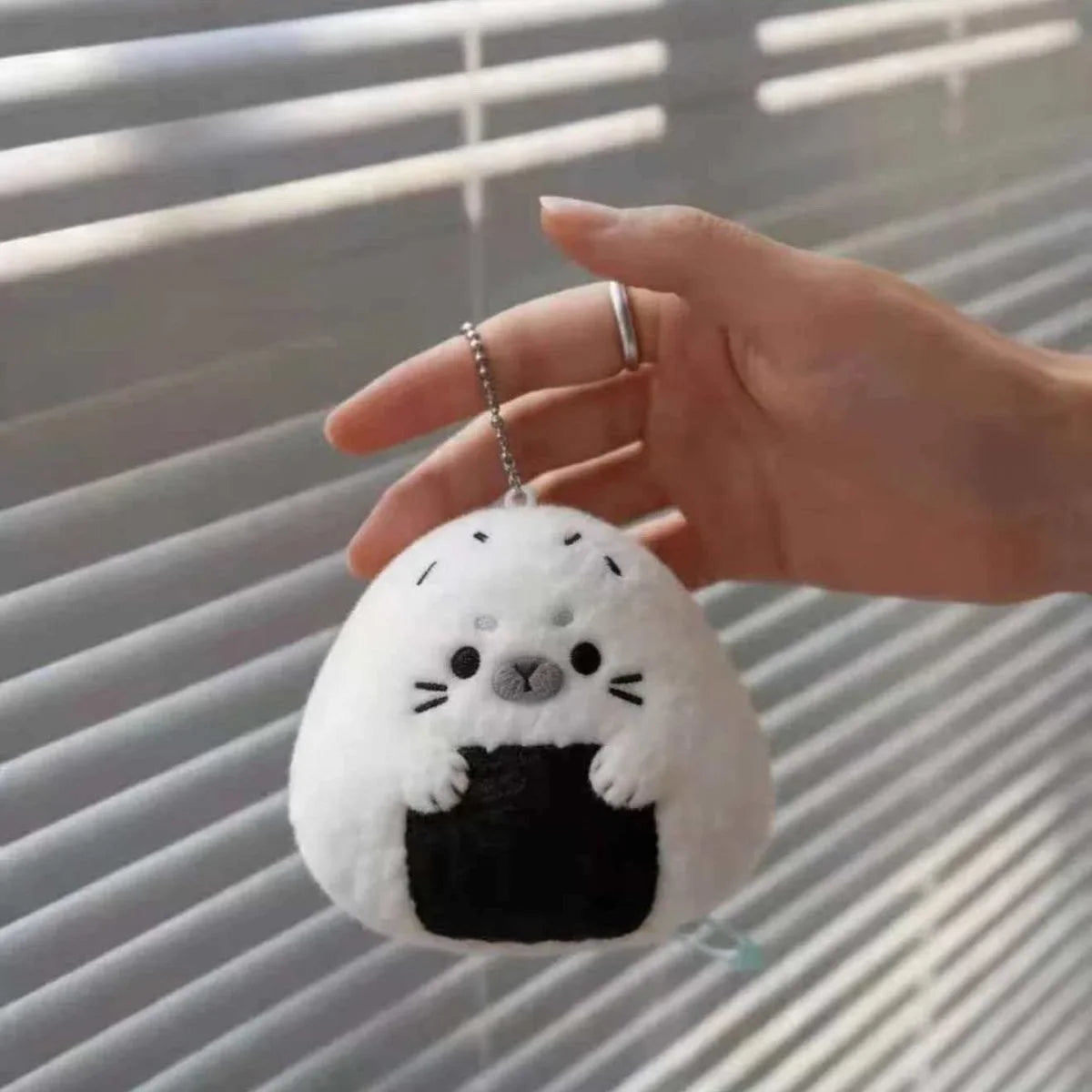
Baby Seal Rice Ball Plushie | Kawaii Japanese Food Animal Keychain | Handmade Plush 10cm
Baby Seal Rice Ball Plushie | Kawaii Japanese Food Animal Keychain | Handmade Plush 10cm
En existencias
- Free Shipping
- 30 Days Return(T&C applies)
- Customer Support
No se pudo cargar la disponibilidad de retiro
Baby Seal Rice Ball Plushie - Kawaii Japanese Food Animal Keychain
Meet the cutest desk companion and bag charm you never knew you needed. This baby seal plushie is sculpted in the shape of a classic Japanese rice ball, bringing together two of the internet's most beloved kawaii aesthetics into one irresistibly soft accessory. Handmade with care and finished at a compact 10cm, this rice ball toy is equal parts collectible, gift-worthy, and everyday carry-ready.
Whether you are a fan of Japanese food culture, a plush collector, or someone who simply cannot resist a round, squishy seal face peeking out from a triangle of fluffy plush, this piece is designed to delight. The design fuses the iconic shape of the Japanese onigiri rice ball with the wide-eyed charm of a kawaii seal plush, creating a cute animal keychain that sits perfectly on a backpack zip, tote bag handle, or beside your keyboard.
The Cultural Roots: Onigiri and Kawaii Animal Design
The onigiri, or Japanese rice ball, has been a staple of Japanese cuisine for over a thousand years. Traditionally hand-shaped into triangles or rounds and wrapped in nori seaweed, onigiri appear in everything from convenience store shelves across Japan to beloved anime lunchbox scenes. Their compact, portable nature made them a symbol of comfort food and everyday life in Japanese culture.
In recent years, the onigiri shape became a dominant motif in kawaii character design, appearing as plushies, keychains, stickers, and phone cases across Japan and globally. The trend of pairing cute animals with food shapes exploded across platforms like TikTok, Instagram, and Pinterest, where creators began designing and sharing animal-food hybrid plush toys as a form of cozy, comforting aesthetic content.
Seals in particular have held a long-standing place in kawaii culture. Their naturally round bodies, large dark eyes, and flippers make them a perfect fit for soft plush interpretation. Combining a baby seal plushie with the triangular silhouette of an onigiri became a natural fusion, and the result is an irresistibly photogenic kawaii plush keychain that resonates deeply with fans of Japanese aesthetics and cute animal merchandise.
The rice ball plushie format in particular took off as a collectible category, with creators on social media documenting entire shelves dedicated to food-shaped plush animals. The rice ball toy genre is now a recognised niche within the broader kawaii merchandise world, appreciated both by casual gift-givers and serious plush collectors alike.
Product Highlights
- Baby seal plushie designed in the shape of a Japanese onigiri rice ball for a charming kawaii fusion aesthetic
- Compact 10cm size, ideal as a cute animal keychain, bag charm, or desk decoration
- Handmade from soft plush material with attention to detail in the seal face and overall silhouette
- Lightweight and portable, perfect for attaching to bags, backpacks, pencil cases, or keys
- A standout kawaii plush keychain that works as a gift for birthdays, holidays, or just because
- Inspired by Japanese food culture and the global kawaii aesthetic movement
- Part of the popular Japanese food plushie collectible trend loved by plush enthusiasts worldwide
- Sold individually, each piece is handmade and may carry subtle natural variation that makes it uniquely yours
- Appeals to fans of anime accessories, Japanese pop culture, and cute character merchandise
Size Guide
| Measurement | Detail |
|---|---|
| Height | 10cm (approximately 4 inches) |
| Form | Triangle onigiri silhouette with seal face |
| Attachment | Keychain loop included |
| Ideal For | Bags, backpacks, keys, desk display |
Care Instructions
Keeping Your Plushie Looking Its Best
- Spot clean only using a lightly damp cloth and mild soap
- Do not submerge in water or machine wash
- Do not tumble dry or expose to direct heat sources
- Store in a cool, dry place away from prolonged direct sunlight to preserve colour
- Keep away from sharp objects that may snag or pull the plush fibres
- Gently reshape by hand after cleaning if needed
Why This Rice Ball Toy Makes the Perfect Gift
Searching for something that stands out from generic gift options? This baby seal plushie ticks every box. It is compact enough to ship easily, distinctive enough to be memorable, and rooted in a cultural aesthetic that has genuine resonance with anyone who loves Japanese food, cute animals, or kawaii design. As a kawaii plush keychain, it adds personality to any bag or keys without adding bulk.
For plush collectors, this Japanese food plushie fits naturally into any kawaii shelf display. For anime fans, it echoes the kind of merchandise found at Japanese character stores and festival booths. For anyone who simply appreciates handmade things, each piece carries the care that only handmade production can deliver.
This listing is for one (1) rice ball plushie keychain. Items are sold separately.
FAQ: Baby Seals and Kawaii Culture
Baby seals, particularly harp seal pups, became global symbols of cuteness due to their naturally round bodies, soft white fur, and large dark eyes. These features align perfectly with the "baby schema" identified by researchers, which describes the set of infantile physical traits that trigger nurturing responses in humans. In kawaii culture, which originated in Japan in the 1970s and spread globally, these traits are deliberately exaggerated in character design to maximise perceived cuteness. Baby seals appeared in early kawaii character art and have remained a popular motif in plush toys, stickers, and collectibles, particularly after viral moments like footage of harp seal pups in Arctic ice fields gained widespread attention on social media platforms throughout the 2010s and 2020s.
Onigiri, the Japanese rice ball, dates back over a thousand years and was historically used as portable food for travellers and soldiers. Its triangular shape became iconic and instantly recognisable. In modern Japanese culture, onigiri appear in virtually every convenience store and hold deep associations with comfort, home cooking, and simple nourishment. Anime popularised the image further by featuring characters eating onigiri in emotional or memorable scenes, reinforcing their cultural resonance. As kawaii merchandise expanded globally in the 2010s, the onigiri shape became a beloved base for character design, used across plushies, pins, keychains, and stationery because its simple, bold triangular silhouette translates beautifully into soft toy form.
Yes. Harp seal pups became one of the most recognisable faces of wildlife conservation efforts from the 1970s onward, after campaigns against commercial seal hunting brought widespread international attention to their plight. Their striking appearance made them effective symbols for environmental organisations seeking to build public empathy. Today, images and representations of baby seals continue to appear in conservation content across social media, often going viral during pupping season when wildlife photographers share footage of pups on Arctic ice. This ongoing public visibility has kept baby seals firmly embedded in popular culture, contributing to their enduring appeal as a subject for kawaii-style plush design and cute merchandise.
The food-shaped animal plush trend grew out of Japan's long tradition of combining food motifs with character design. Brands like San-X and various independent Japanese designers began creating plush animals styled as bread rolls, sushi, onigiri, and other foods from the early 2000s onward. The aesthetic gained massive international traction through platforms like Tumblr, Instagram, and later TikTok, where kawaii food plush hauls and "squishy" toy collections accumulated millions of views. The crossover appeal between food content and cute animal content created a particularly engaging niche that resonated with collectors globally. Today, food animal hybrid plushies are among the most searched categories in the kawaii merchandise space online.
Kawaii is a Japanese word meaning "cute" or "adorable," but it also refers to a broader cultural aesthetic centred on childlike innocence, softness, and charm. The kawaii movement emerged in Japan during the 1970s when young people, particularly young women, began adopting a deliberately childlike style of handwriting and dress as a form of cultural expression and soft rebellion. By the 1980s and 1990s, brands like Sanrio (creators of Hello Kitty) had commercialised the aesthetic on a global scale. Today, kawaii encompasses fashion, art, character merchandise, food presentation, and interior design, and it continues to evolve through internet culture and social media platforms where global communities create and share kawaii-inspired content daily.


Frequently Bought Together
-
Toothless Dancing Meme Plush 25cm | Night Fury Black & Light Fury White | How to Train Your Dragon Stuffed Animal
Precio habitual $52.95 AUDPrecio habitualPrecio unitario por$0.00 AUDPrecio de oferta $52.95 AUD -
Cursed Plankton Meme Plush Squeaker Keychain | Screaming Face Bag Charm 12cm
Precio habitual $47.25 AUDPrecio habitualPrecio unitario por$0.00 AUDPrecio de oferta $47.25 AUD -
Giant Realistic Giant Realistic Snake Plush 120cm | Python Stuffed Animal Body Pillow and Prank Toy in 6 Colors
Precio habitual $73.25 AUDPrecio habitualPrecio unitario por$0.00 AUDPrecio de oferta $73.25 AUD -
Lifelike British Shorthair Cat Plush 30cm | Realistic Stuffed Animal | Yellow Gray Black White
Precio habitual $53.95 AUDPrecio habitualPrecio unitario por$0.00 AUDPrecio de oferta $53.95 AUD


Suggested Blog posts:
Ver todo-

How to Get the Mimic Hoodie in The Hollow Event...
Get the free Mimic Hoodie in Roblox The Hollow: full Animal Hospital quest route, Hazmat NPC, slime photos, slide puzzle and how to claim it
How to Get the Mimic Hoodie in The Hollow Event...
Get the free Mimic Hoodie in Roblox The Hollow: full Animal Hospital quest route, Hazmat NPC, slime photos, slide puzzle and how to claim it
-

How To Get All Day 6 Prizes in The Hollow Roblo...
Get every Day 6 prize in Roblox The Hollow: solve the Floor 6 cauldron, clear the Banana Eats cake hunt, and finish both Animal Hospital shifts.
How To Get All Day 6 Prizes in The Hollow Roblo...
Get every Day 6 prize in Roblox The Hollow: solve the Floor 6 cauldron, clear the Banana Eats cake hunt, and finish both Animal Hospital shifts.
-

Banana Eats Lolwen Guide: Get the Item, Badge A...
Get the Lolwen item, badge and 10 tickets in Banana Eats. Full Hollow Key, cake slice and Floor 6 maze steps for The Hollow event.
Banana Eats Lolwen Guide: Get the Item, Badge A...
Get the Lolwen item, badge and 10 tickets in Banana Eats. Full Hollow Key, cake slice and Floor 6 maze steps for The Hollow event.
-

How To Get ALL 27 TICKET QUEST BADGES in The Ho...
Roblox The Hollow event guide: every badge quest, fast ticket tips and mistakes to avoid for all 27 games before the event ends November 2.
How To Get ALL 27 TICKET QUEST BADGES in The Ho...
Roblox The Hollow event guide: every badge quest, fast ticket tips and mistakes to avoid for all 27 games before the event ends November 2.


Verified Google Reviews
Hear It from Our Customers