


Eldritch Octo-Mermaid Plush | Creepy-Cute Mermaid Plushie | Cthulhu Sea Monster Handmade Doll
Eldritch Octo-Mermaid Plush | Creepy-Cute Mermaid Plushie | Cthulhu Sea Monster Handmade Doll
En existencias
- Free Shipping
- 30 Days Return(T&C applies)
- Customer Support
No se pudo cargar la disponibilidad de retiro
Eldritch Octo-Mermaid Plush: The Creepy-Cute Mermaid Plushie Every Ocean Horror Fan Needs
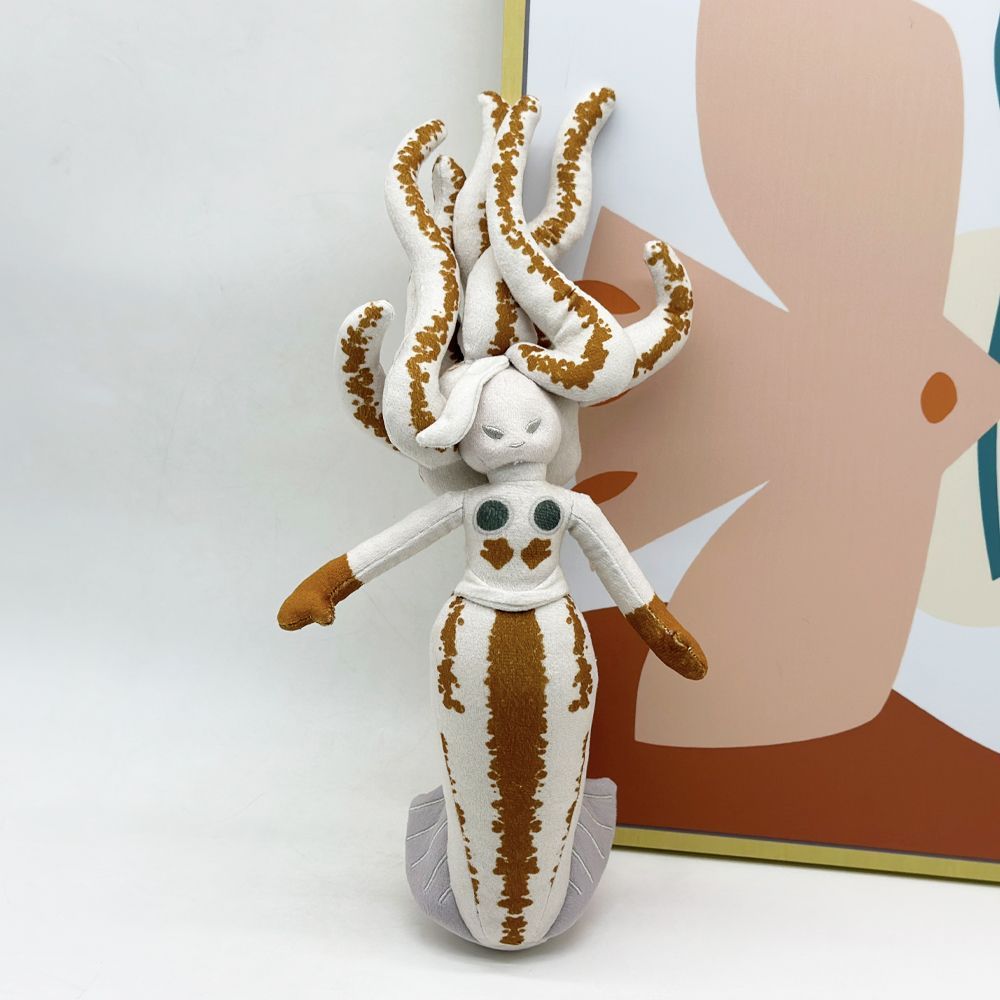
From the deep where sunlight never reaches, she rises. This handmade mermaid plushie reimagines the classic sea spirit as something far stranger and far more captivating. Part ethereal ocean maiden, part Lovecraftian sea creature, the Eldritch Octo-Mermaid is a one-of-a-kind mermaid stuffed toy that sits beautifully at the crossroads of adorable and unsettling. If you are searching for the perfect gift for mermaid lover friends, collectors, or horror-aesthetic fans, you have found it.
Handmade with care, this doll features a stylized human torso flowing into wild, writhing tentacle hair and intricate surface patterns inspired by deep-sea creatures. She is creepy. She is cute. She is completely irresistible.
Product Highlights
- Creepy-cute design: A unique "octo-mermaid" concept combining a stylized human torso with flowing tentacle hair and deep-sea patterning.
- Handmade construction: Every stitch is crafted by hand, making each piece a collectible art doll rather than a mass-produced toy.
- Soft premium plush fabric: Smooth, skin-friendly outer material with a satisfying squish, ideal for display and gentle handling.
- Ideal Cthulhu plush collectible: A perfect crossover piece for fans of cosmic horror aesthetics and ocean mythology.
- Versatile gifting: A standout gift for mermaid lover fans, dark fantasy collectors, desk decor enthusiasts, and anyone who loves the weird and wonderful.
- Trending aesthetic: Bridges the viral "creepy-cute" and dark mermaid aesthetic trends sweeping art communities and social media.
- Unique ocean monster plush: No mass-market equivalent exists. This is the kind of piece people stop and stare at.
- Ships in 2-3 weeks: Handmade to order with care. Please allow 2-3 weeks for your order to be crafted and dispatched.
About This Mermaid Stuffed Toy
The Eldritch Octo-Mermaid does not belong to the shimmering, sun-kissed sea of fairy tales. She belongs to the crushing dark of the hadal zone, where bioluminescent creatures drift and ancient things stir. This mermaid stuffed toy captures that tension perfectly: a face soft enough to love, a body wild enough to fear, and tentacles that seem to move even when they are perfectly still.
Her torso is sculpted in a stylized human form, with surface details stitched in to suggest scales, barnacles, and deep-sea texture. Her hair, which is anything but ordinary, erupts into a crown of fully three-dimensional tentacles, each one individually shaped and positioned. The overall silhouette reads as mermaid immediately, but the details reward a longer look with layer after layer of eldritch strangeness.
This is the kind of mermaid plushie that works equally well sitting on a collector's shelf, displayed as desk decor, gifted to a cosmic horror fan, or handed to someone who loves their cute things with a side of the uncanny.
The Origin of the Octo-Mermaid: Where Mermaids Meet Cosmic Horror
The mermaid is one of humanity's oldest and most persistent mythological figures. Appearing in Babylonian mythology as Atargatis, the fish-tailed goddess of the sea, mermaids have haunted coastal cultures across the globe for thousands of years. In Greek mythology, Sirens lured sailors to their deaths with song. In Japanese folklore, the Ningyo was a fish-human hybrid whose flesh granted immortality. Scottish legend gave us the Selkie, a seal who could shed her skin and walk among humans. Across all these traditions, one theme recurs: the mermaid is beautiful, powerful, and deeply uncanny.
The "octo-mermaid" sub-archetype emerged more recently, blending the mermaid figure with octopus or cephalopod anatomy. This fusion draws heavily from the cosmic horror tradition popularized by H.P. Lovecraft in the early 20th century, whose most iconic creation, Cthulhu, was a towering entity with an octopus-like head, rubbery wings, and vast cosmic indifference toward humanity. Cthulhu entered popular culture gradually, then explosively, becoming a symbol of "the unknowable" that crossed over from horror literature into internet meme culture, art communities, tabletop gaming, and eventually the mainstream collector market.
The Cthulhu plush trend, in particular, was part of a broader "creepy-cute" movement that gained real momentum through the 2010s and accelerated dramatically through platforms like Tumblr, Instagram, and TikTok. Artists and makers began blending horror iconography with softness: plush eldritch horrors, pastel-colored monsters, and adorable interpretations of things that were supposed to frighten. The sea monster stuffed animal occupied a specific niche within this trend, merging the beauty of ocean mythology with the dread of deep-sea unknown.
By the early 2020s, the dark mermaid aesthetic had become its own identifiable subgenre across Pinterest boards, Instagram explore pages, and ArtStation portfolios. Artists reimagined the mermaid not as a gentle figure waiting to be rescued, but as an apex predator of the deep, something ancient and indifferent, beautiful and dangerous. The octo-mermaid sits squarely within this tradition, and this eldritch plush doll brings that concept into tactile, holdable form.
Size Guide
| Measurement | Details |
|---|---|
| Total Height | 37cm (standing upright) |
| Plush Type | Soft-filled display and cuddle doll |
| Construction | Handmade; slight variation between pieces is natural and adds to the charm |
Care Instructions
- Surface clean only: Use a lightly damp cloth with mild soap to spot-clean. Do not submerge in water.
- Do not machine wash or tumble dry: Machine washing can distort the handmade shape and damage surface details.
- Air dry only: If any moisture is used during cleaning, allow to air dry fully away from direct heat.
- Keep away from direct sunlight for extended periods: Prolonged UV exposure may cause fabric color to fade over time.
- Not recommended for children under 3: This product contains small parts and is intended as a collectible display item.
- Store upright or in a dust-free display case to maintain the shape of the tentacle hair details.
FAQ: Mermaids, Cthulhu, and the Dark Ocean Aesthetic
The dark mermaid aesthetic is a visual and cultural movement that reimagines the mermaid not as a gentle, wistful figure but as something ancient, predatory, and deeply strange. Rather than pastel scales and gentle ocean scenes, the dark mermaid draws from deep-sea imagery, cosmic horror, and gothic art. Think bioluminescent creatures, abyssal trench blackness, and a beauty that feels dangerous rather than inviting.
The trend picked up significant momentum on Pinterest and TikTok through 2022 and 2023, driven largely by the "cottagecore to darkcore" aesthetic shift happening across social platforms. Artists began posting reimagined mermaid art blending Lovecraftian elements, deep-sea horror photography, and fantasy illustration. The result was the octo-mermaid archetype: part ocean goddess, part cosmic horror entity. By 2024, it had crossed over into plush and collectible art, with fans seeking tangible versions of the aesthetic they were seeing online.
Cthulhu is a cosmic entity created by author H.P. Lovecraft, first appearing in the 1928 short story "The Call of Cthulhu." Described as a massive, ancient being with a vaguely octopus-like head, a humanoid body, and vast rubbery wings, Cthulhu lies dormant in the sunken city of R'lyeh beneath the Pacific Ocean, waiting to rise. The character represents the concept of "cosmic indifference," the idea that the universe is vast, unknowable, and entirely unconcerned with human existence.
Cthulhu became a cultural phenomenon far beyond horror literature, entering meme culture, tabletop gaming (the iconic "Call of Cthulhu" RPG), merchandise, and art. The Cthulhu plush trend emerged as part of the broader "creepy-cute" movement: fans began making and buying soft, huggable versions of something that was supposed to be terrifying. There is something genuinely funny and delightful about holding a plush version of an entity designed to break the human mind. That tension is exactly what makes the Cthulhu plush and related sea monster stuffed animal designs so appealing to collectors.
Mermaid mythology is one of the most globally distributed folklore traditions in human history. The earliest known mermaid-like figure is Atargatis, a Syrian goddess from around 1000 BCE who was said to have transformed into a fish from the waist down after accidentally killing her human lover. Ancient Assyrian art depicts her as half woman, half fish.
In ancient Greece, sea deities like Triton, the son of Poseidon, were depicted as mer-beings. The Sirens of Greek myth, originally bird-women, were later reimagined as fish-women in medieval European tradition. In Japan, the Ningyo was a fish-human creature whose flesh was said to grant immortality to anyone who ate it. West African and Caribbean traditions feature Mami Wata, a powerful water spirit often depicted as a mermaid who brings both wealth and misfortune. Scottish and Irish folklore gave us the Selkie, who could shed a seal skin to walk on land. The universality of mermaid mythology across completely separate cultures suggests a deep human fascination with the boundary between the known land and the unknown sea. The mermaid plushie tradition taps directly into this ancient, worldwide mythology.
"Creepy-cute" is an aesthetic category defined by the deliberate tension between something that should be disturbing and something that is undeniably adorable. The genre includes characters with too many eyes, unsettling smiles, eldritch anatomy, or horror-adjacent themes rendered in soft colors, plush materials, and cute proportions. It is sometimes called "kawaii horror" in reference to the Japanese concept of cuteness (kawaii) applied to horror imagery.
The aesthetic has roots in Japanese pop culture, particularly in the work of artists and brands like San-X, whose characters such as Tarepanda and later Gudetama walked the line between cute and vaguely melancholic. Western equivalents emerged through web communities, and by the mid-2010s, "creepy-cute" had become a recognized aesthetic category on Tumblr, DeviantArt, and later Instagram and TikTok.
In the plush collector market specifically, creepy-cute items like eldritch plush doll designs, monster plushies, and sea monster stuffed animal figures occupy a premium niche. They appeal to adult collectors who want something that reflects a more complex sense of humor and taste than conventional stuffed animals. The mermaid stuffed toy market has expanded significantly in this direction, with dark and fantastical versions outperforming traditional designs among collector demographics.
The octopus has become one of the defining symbols of modern weird fiction and horror art for several interconnected reasons. Scientifically, octopuses are genuinely among the strangest animals on Earth: they have three hearts, blue blood, distributed intelligence across their arms (each arm has its own neural cluster and can act semi-independently), the ability to change color and texture in milliseconds, and lifespans that seem almost deliberately brief for a creature of such intelligence. They are deeply, verifiably alien in a way that no land animal is.
In art and literature, the tentacle became the shorthand for "something from beyond," largely through H.P. Lovecraft's influence. The visual of a tentacled entity emerging from water became inseparable from the concept of cosmic unknowability. By the 2010s and into the 2020s, the tentacle motif had expanded far beyond horror, appearing in fantasy illustration, fashion design, tattoo art, and the ocean monster plush and collectible market. The octo-mermaid design sits at this intersection: the human form we recognize and the cephalopod anatomy that unsettles us, combined into something that is beautiful and strange in equal measure.


Frequently Bought Together
-
Toothless Dancing Meme Plush 25cm | Night Fury Black & Light Fury White | How to Train Your Dragon Stuffed Animal
Precio habitual $52.95 AUDPrecio habitualPrecio unitario por$0.00 AUDPrecio de oferta $52.95 AUD -
Cursed Plankton Meme Plush Squeaker Keychain | Screaming Face Bag Charm 12cm
Precio habitual $47.25 AUDPrecio habitualPrecio unitario por$0.00 AUDPrecio de oferta $47.25 AUD -
Giant Realistic Giant Realistic Snake Plush 120cm | Python Stuffed Animal Body Pillow and Prank Toy in 6 Colors
Precio habitual $73.25 AUDPrecio habitualPrecio unitario por$0.00 AUDPrecio de oferta $73.25 AUD -
Lifelike British Shorthair Cat Plush 30cm | Realistic Stuffed Animal | Yellow Gray Black White
Precio habitual $53.95 AUDPrecio habitualPrecio unitario por$0.00 AUDPrecio de oferta $53.95 AUD


Suggested Blog posts:
Ver todo-

How to Get the Mimic Hoodie in The Hollow Event...
Get the free Mimic Hoodie in Roblox The Hollow: full Animal Hospital quest route, Hazmat NPC, slime photos, slide puzzle and how to claim it
How to Get the Mimic Hoodie in The Hollow Event...
Get the free Mimic Hoodie in Roblox The Hollow: full Animal Hospital quest route, Hazmat NPC, slime photos, slide puzzle and how to claim it
-

How To Get All Day 6 Prizes in The Hollow Roblo...
Get every Day 6 prize in Roblox The Hollow: solve the Floor 6 cauldron, clear the Banana Eats cake hunt, and finish both Animal Hospital shifts.
How To Get All Day 6 Prizes in The Hollow Roblo...
Get every Day 6 prize in Roblox The Hollow: solve the Floor 6 cauldron, clear the Banana Eats cake hunt, and finish both Animal Hospital shifts.
-

Banana Eats Lolwen Guide: Get the Item, Badge A...
Get the Lolwen item, badge and 10 tickets in Banana Eats. Full Hollow Key, cake slice and Floor 6 maze steps for The Hollow event.
Banana Eats Lolwen Guide: Get the Item, Badge A...
Get the Lolwen item, badge and 10 tickets in Banana Eats. Full Hollow Key, cake slice and Floor 6 maze steps for The Hollow event.
-

How To Get ALL 27 TICKET QUEST BADGES in The Ho...
Roblox The Hollow event guide: every badge quest, fast ticket tips and mistakes to avoid for all 27 games before the event ends November 2.
How To Get ALL 27 TICKET QUEST BADGES in The Ho...
Roblox The Hollow event guide: every badge quest, fast ticket tips and mistakes to avoid for all 27 games before the event ends November 2.


Verified Google Reviews
Hear It from Our Customers