


Kkeomeoksali Plush | The East Palace Joseon Ghost Bag Pendant | Handmade 13cm
Kkeomeoksali Plush | The East Palace Joseon Ghost Bag Pendant | Handmade 13cm
En existencias
- Free Shipping
- 30 Days Return(T&C applies)
- Customer Support
No se pudo cargar la disponibilidad de retiro
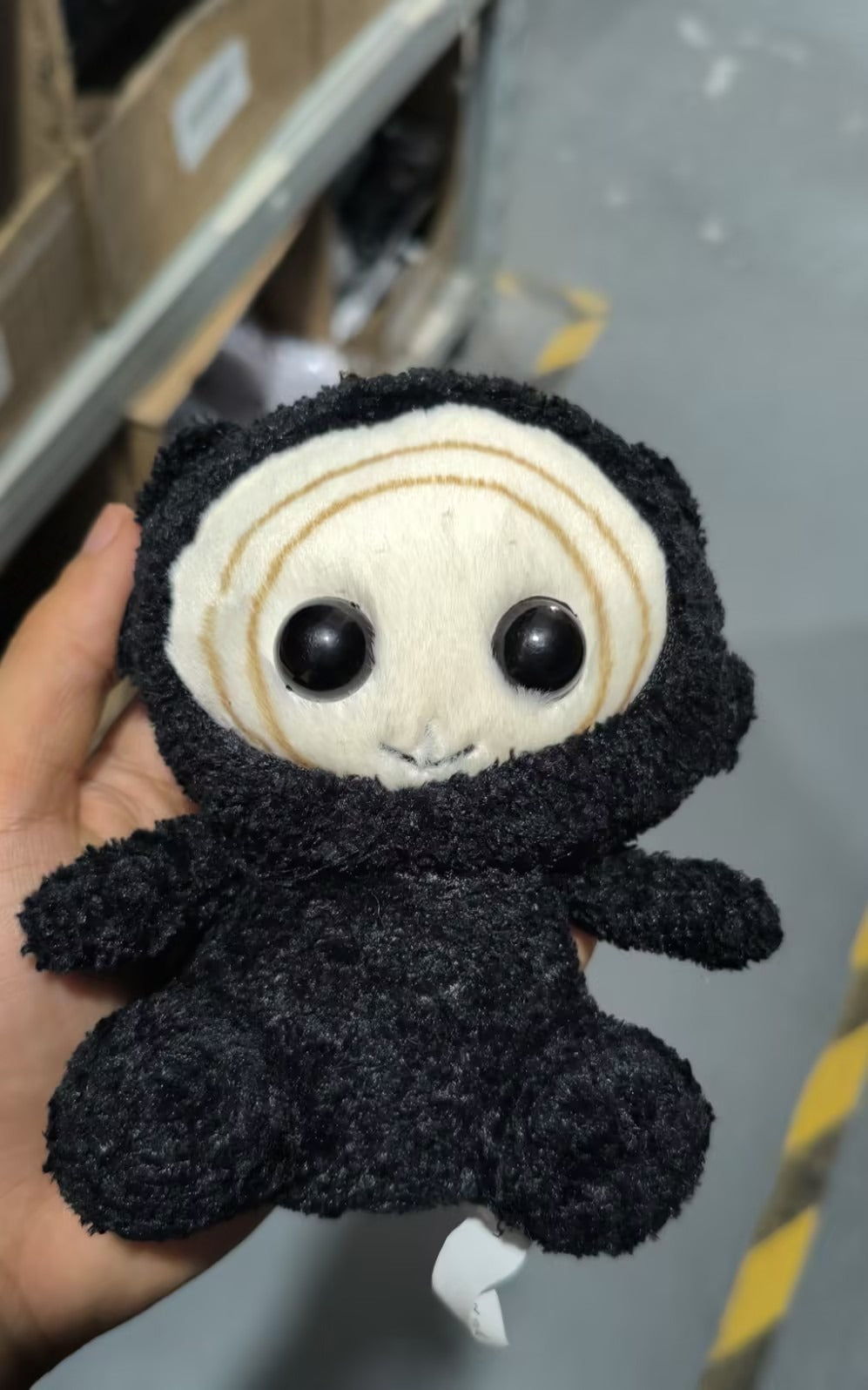
Kkeomeoksali Plush | The East Palace Series | Joseon Ghost Bag Pendant | Handmade Plush 13cm
Step into the shadowy corridors of the Joseon royal court with this irresistible Kkeomeoksali plush, the handmade plush collectible inspired by the breakout creature from Netflix's 2026 dark fantasy blockbuster The East Palace (동궁, Donggung). Known worldwide as Joseon Groot, Kkeomeoksali has captured millions of hearts with its contradiction of adorable looks and a genuinely unsettling soul, and now it belongs in your hands, on your bag, or on your shelf.
This Donggung plush is handcrafted at 13cm, making it the perfect size to carry as a ghost bag pendant or display as a K drama merchandise centrepiece. Whether you're a devoted fan of Nam Joo-hyuk, a collector of Korean drama collectibles, or simply someone who saw Kkeomeoksali trending on your feed and immediately needed one, this plush was made for you.
What Is Kkeomeoksali? The Creature Behind the Donggung Phenomenon
Kkeomeoksali (also spelled Kkeomeoksari or Ggeomeoksali) is a gwi-mae, a spirit creature from the supernatural Realm of Gwi, who appears in The East Palace series. With a jet black body, a round stone like face, and enormous doll eyes, it attaches itself to ghost slayer Gu-cheon (played by Nam Joo-hyuk) and becomes his unlikely companion throughout the drama. Despite feeding on the life energy (yanggi) of the living, Kkeomeoksali repeatedly saves Gu-cheon in critical moments, earning it the Korean nickname banryeo gwi-mae (반려 귀매), meaning "companion spirit" or "pet ghost."
What makes Kkeomeoksali truly remarkable is that it is not simply a screenwriter's invention. The character draws directly from a documented piece of Korean oral folklore: a dark, childlike figure from the Chungcheong region, recorded in a 2009 folklore archive by Professor Shin Dong-heun of Konkuk University. The name itself combines "kkeomeok" (꺼먹), meaning "pitch black darkness," and "sali" (살이), meaning "a living being", together, "the one who lives in darkness." The show's writers, Kwon So-ra and Seo Jae-won (who also wrote the acclaimed Bulgasal), brought this forgotten legend into the global spotlight.
Following the premiere of The East Palace on Netflix on July 17, 2026, fan demand for Kkeomeoksali merchandise exploded almost immediately. TikTok and social media were flooded with fans declaring it their favourite character, comparing it to Labubu and Groot. Korean media branded it "Joseon Groot," and the show entered Netflix's Global TOP 10 Non-English Shows at No. 2 in its second week. Our handmade plush is a fan inspired tribute to this beloved cultural moment.
Product Highlights
- Character: Kkeomeoksali, the iconic gwi-mae companion from The East Palace (동궁 / Donggung) on Netflix, dubbed "Joseon Groot" by Korean media
- Size: 13cm tall, perfectly scaled as a ghost bag pendant, keychain charm, or desk display piece
- Filling: Soft premium cotton for a satisfying, huggable feel
- Material: High quality plush fabric with a velvety finish
- Style: Faithful to the creature's signature jet black body, rounded silhouette, and large expressive eyes
- Attachment: Includes a pendant loop for easy bag or backpack display
- Handmade: Each piece is individually crafted with care
- Collectible: Fan inspired K drama merchandise celebrating one of 2026's most talked about dramas
Why Kkeomeoksali Became a Global Phenomenon
The internet loves a creature that shouldn't be loveable, and Kkeomeoksali is precisely that. Part of what makes it so compelling is the tension between appearance and nature: it looks like the kind of plush you'd find in a toy shop window, yet within the world of Donggung, it genuinely drains the life force of those around it. When Gu-cheon gently offers the injured Kkeomeoksali some of his own yanggi, saying "Here, take a little of my energy," the moment cements one of 2026's most talked about creature relationships on screen.
Fans across TikTok and social platforms immediately began hunting for Kkeomeoksali plush toys and gwi-mae keychain replicas within days of the show's premiere. The creature has been compared to Labubu for its "ugly cute" appeal, and to Groot for the bond it builds with its human companion. As one of the most searchable Korean drama collectibles of the year, owning a Kkeomeoksali is as much a cultural statement as it is a fandom keepsake.
Size Guide
| Dimension | Measurement | Notes |
|---|---|---|
| Height | 13 cm (approx. 5.1 inches) | Measured from base to top |
| Width | Approx. 7 cm | At the widest point |
| Pendant Loop | Included | For bag or keychain attachment |
| Weight | Lightweight | Comfortable for daily bag carry |
At 13cm, this Kkeomeoksali plush is compact enough to clip onto a bag or backpack as a ghost bag pendant while still being large enough to display proudly on a shelf or desk. It makes an ideal gift for any fan of The East Palace, Donggung, or Nam Joo-hyuk.
Care Instructions
How to Care for Your Handmade Plush
- Surface clean only with a soft, lightly damp cloth
- Do not machine wash or submerge in water
- Do not tumble dry or use a dryer
- Keep away from prolonged direct sunlight to preserve colour
- Store in a cool, dry place when not on display
- Keep away from children under 3 years of age (small pendant parts)
- Handle the pendant loop with care to maintain attachment strength
This item is a fan inspired handmade collectible. The pendant attachment is decorative. Handle pendant loop with standard bag-charm care.
FAQ: Kkeomeoksali and The East Palace, Everything Fans Are Asking
Kkeomeoksali is rooted in genuine Korean folklore. The character draws from a documented oral legend from the Chungcheong region of Korea, recorded in a 2009 academic folklore archive edited by Professor Shin Dong-heun of Konkuk University. The story describes a dark, childlike figure said to emerge from the mountains and follow travellers while repeating its own name. The show's writers, Kwon So-ra and Seo Jae-won, drew on this tradition and reinterpreted it as a spirit creature for The East Palace (동궁 / Donggung). The name itself combines the Korean word for "pitch black darkness" and "a living being," giving it a deeply rooted cultural identity.
The nickname "Joseon Groot" originated in Korean media shortly after The East Palace premiered on Netflix on July 17, 2026, and spread rapidly across social platforms. The comparison to Groot from Marvel's Guardians of the Galaxy centres on a shared dynamic: both are small, strange creatures with an unexpectedly deep bond with their main companion, both initially seem threatening but become beloved protectors, and both have a visual simplicity that translates perfectly into fan art and plush form. Kkeomeoksali's jet black, round appearance and its loyal relationship with ghost slayer Gu-cheon (played by Nam Joo-hyuk) matched the Groot template closely enough that the name caught on almost overnight. The creature has also been compared to Labubu for its "ugly cute" aesthetic that fans find irresistible.
In Korean folklore and mythology, gwi (귀) refers broadly to supernatural spirits or ghosts, while mae carries a sense of a bound or attached entity. A gwi-mae as depicted in The East Palace (동궁 / Donggung) is a spirit creature from the Realm of Gwi, a shadow dimension that exists parallel to the world of the living. Kkeomeoksali is specifically classified in the drama as a banryeo gwi-mae (반려 귀매), meaning a "companion spirit" or "companion ghost", a supernatural being that attaches itself to a specific person. Within the show, Kkeomeoksali sustains itself by feeding on yanggi (the life energy of the living), yet despite this nature, it forms a genuine protective bond with Gu-cheon. This blend of threatening spirit and loyal companion reflects real themes from Korean shamanism, where spirits are not simply villainous but complex beings capable of relationship with humans.
Kkeomeoksali attaches itself to Gu-cheon (played by Nam Joo-hyuk) early in The East Palace (동궁 / Donggung) and becomes a constant, scene stealing presence throughout the 8 episode Netflix series. While the drama's central mystery revolves around the Joseon crown prince's palace being haunted by a supernatural curse, Kkeomeoksali functions as Gu-cheon's reluctant companion, saving him at pivotal moments despite being a creature that technically feeds on his life energy. A key scene in which Gu-cheon gently offers Kkeomeoksali some of his own yanggi became one of the most emotionally resonant moments of the series for viewers globally. Fans fell for it quickly because it embodies a tension they find irresistible: something that looks like a toy but carries genuine danger, and something that should be an enemy but chooses loyalty instead.
The creature's name is written 꺼먹살이 in Korean. You will also see it romanized across platforms as Kkeomeoksari, Ggeomeoksali, or Ggeomeoksari, as there is no single agreed-upon official romanization in English yet, part of why international fan communities are still collectively settling on a spelling. According to the writers of The East Palace (동궁 / Donggung), the name draws on two Korean roots: "kkeomeok" (꺼먹), meaning "pitch black" or "the darkness of something jet black," and "sali" (살이), meaning "a being" or "one who lives." Combined, the name translates roughly as "the dark dwelling being" or "the one who lives in blackness", a name that perfectly suits a shadow creature from the Realm of Gwi that survives by absorbing the life energy of others.


Frequently Bought Together
-
Kawaii Birthday Cake Plushie with Dangling Legs | Handmade Kawaii Cake Plush Toy | 25cm
Precio habitual $52.95 AUDPrecio habitualPrecio unitario por -
Border Collie Stuffed Animal | Realistic Handmade Dog Plush Stuffed Puppy 25cm
Precio habitual $52.95 AUDPrecio habitualPrecio unitario por -
Handmade Flower Fairy Plushie Ballerina Doll | Petal Skirt Winged Fairy Stuffed Animal | Sleepy Eye Nursery Decor Plush 31cm 32cm 34cm
Precio habitual $53.95 AUDPrecio habitualPrecio unitario por -
Realistic Opossum Plush 22cm | Handmade Possum Stuffed Toy
Precio habitual $52.95 AUDPrecio habitualPrecio unitario por


Suggested Blog posts:
Ver todo-

ROBLOX HALLOWEEN 2026 EVENT CONFIRMED ALREADY?
Roblox's teaser confirms a Halloween 2026 event is coming. Here's what's official vs. leaked — The Pumpkin, the Riddling Skull, and Orange.
ROBLOX HALLOWEEN 2026 EVENT CONFIRMED ALREADY?
Roblox's teaser confirms a Halloween 2026 event is coming. Here's what's official vs. leaked — The Pumpkin, the Riddling Skull, and Orange.
-

How to Get the Shedletsekkar in Roblox (Complet...
Can you still buy the Shedletsekkar in Roblox? See the resale route, the 30-day holding period, its real-money price, and free Hunt: Roblox 20 alternatives.
How to Get the Shedletsekkar in Roblox (Complet...
Can you still buy the Shedletsekkar in Roblox? See the resale route, the 30-day holding period, its real-money price, and free Hunt: Roblox 20 alternatives.
-

Shinigami's Human Life Anime: Watch the Full Se...
Shinigami's Human Life is streaming on Trimz. Watch here for Linguinistudios' dark fantasy about an exiled reaper juggling shadow magic and barista shifts.
Shinigami's Human Life Anime: Watch the Full Se...
Shinigami's Human Life is streaming on Trimz. Watch here for Linguinistudios' dark fantasy about an exiled reaper juggling shadow magic and barista shifts.
-

How To Get JAILBREAK SECRET BADGE in The Hunt: ...
How to get the Jailbreak secret badge in The Hunt: Roblox 20 — the exact bomb sequence, crater bomb retrieval, and classic obby walkthrough.
How To Get JAILBREAK SECRET BADGE in The Hunt: ...
How to get the Jailbreak secret badge in The Hunt: Roblox 20 — the exact bomb sequence, crater bomb retrieval, and classic obby walkthrough.


Verified Google Reviews
Hear It from Our Customers