


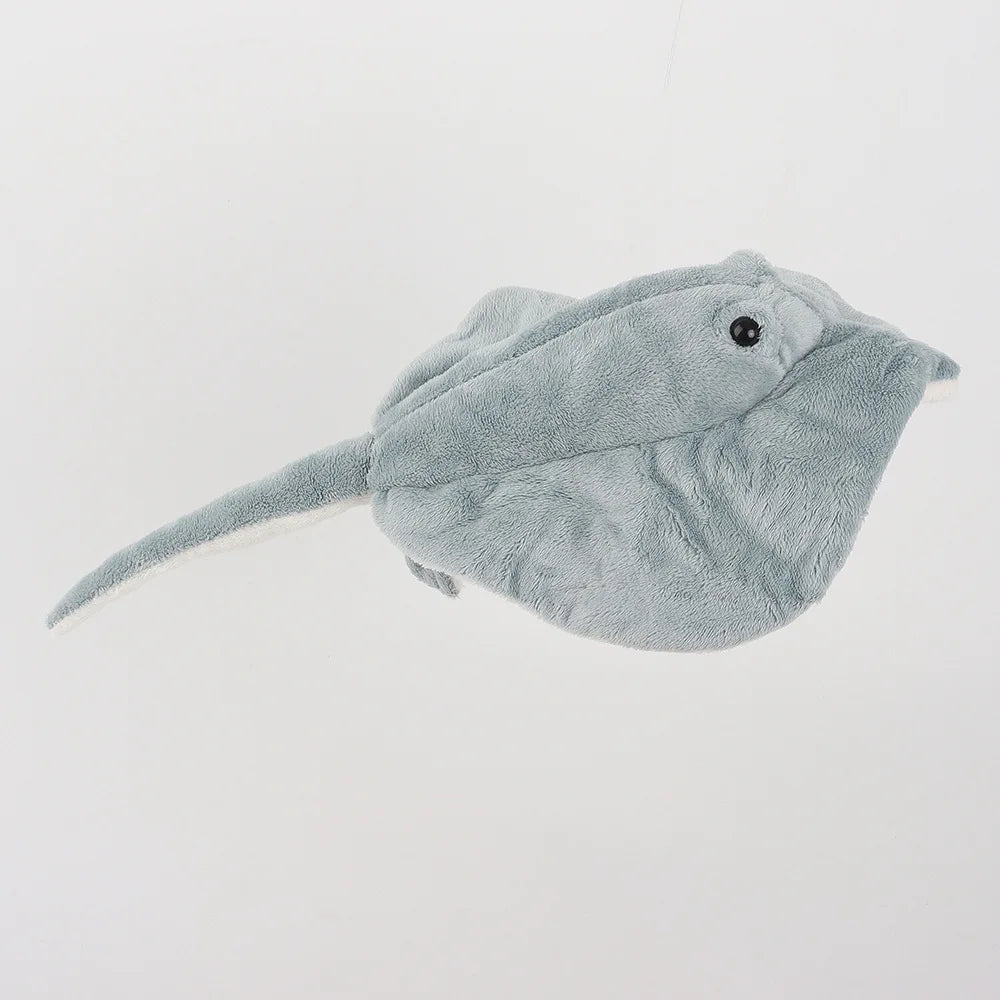
Lifelike Manta Ray Plush Realistic Ocean Stuffed Animal, Soft Manta Handmade Plush 30cm
Lifelike Manta Ray Plush Realistic Ocean Stuffed Animal, Soft Manta Handmade Plush 30cm
En existencias
- Free Shipping
- 30 Days Return(T&C applies)
 Customer Support
No se pudo cargar la disponibilidad de retiro
Lifelike Manta Ray Plush - Realistic Ocean Manta Plush Stuffed Animal (30cm)
Bring the wonder of the deep ocean home with our beautifully crafted manta ray plush. Modelled on the world's largest ray, this realistic manta ray stuffed animal captures every sweeping detail of these magnificent creatures - from their wide, diamond-shaped body to their graceful, wing-like pectoral fins. Made from ultra-soft plush fabric and filled with premium PP Cotton, this manta plush is as huggable as it is lifelike.
Perfect for marine life enthusiasts, ocean-themed collectors, and anyone who has ever been captivated by the effortless glide of a manta ray through open water. Whether displayed on a shelf, gifted to a loved one, or added to an ocean animal collection, this manta ray toy is a standout piece that celebrates one of nature's most iconic sea creatures.
The Manta Ray - Gentle Giant of the Open Ocean
Manta rays are the largest rays on earth, with oceanic species capable of reaching wingspans of up to 23 feet. There are two recognised species: the reef manta ray (Mobula alfredi) and the oceanic manta ray (Mobula birostris). Both are found in tropical and subtropical oceans worldwide, often congregating around coral reefs and coastal cleaning stations where small fish remove parasites from their skin.
Despite their impressive size, manta rays are entirely harmless to humans. They are highly intelligent filter feeders, consuming plankton and microscopic organisms by swimming slowly through the water with their wide mouths open. Scientists have found that manta rays possess the largest brain-to-body ratio of any fish, and research suggests they may be capable of self-recognition, a sign of advanced cognitive ability rare outside mammals.
The nickname "devil fish" - still used in some regions - originates from the two cephalic fins on either side of a manta ray's head, which curl forward and can resemble horns when viewed from the front. Far from demonic, these fins are simply used to funnel plankton-rich water into the animal's mouth during feeding. Manta rays have fascinated cultures across the Pacific, Indian Ocean, and Caribbean for centuries, appearing in indigenous art, folklore, and more recently, in viral wildlife documentaries and ocean conservation campaigns that have brought global attention to their plight. Both species are now considered threatened, with the oceanic manta ray listed as Endangered on the IUCN Red List due to targeted fishing and bycatch. This surge in public awareness has driven strong interest in manta ray merchandise, ocean animal plush toys, and marine life collectibles as fans seek to celebrate and support these remarkable creatures.
Product Highlights
- Lifelike sculptural design - Diamond-shaped body, swept pectoral fins, and realistic proportions true to the real animal
- Ultra-soft plush fabric - Premium quality, smooth to the touch, and gentle against skin of all ages
- Premium PP Cotton filling - Plump, resilient, and shape-retaining for lasting softness and structure
- Handmade construction - Each manta ray plush is carefully handmade with attention to detail
- 30cm size - Ideal for display, cuddling, gifting, or adding to an ocean animal plush collection
- Suitable for all ages - children, teens, and adult collectors of sea creature stuffed animals
- A thoughtful gift for marine biologists, ocean lovers, wildlife enthusiasts, and divers
- Great for home decor, classroom displays, aquarium gift shops, and ocean-themed nurseries
- Pairs beautifully with other deep sea plush toys for a complete ocean animal collection
Size Guide
| Dimension | Measurement |
|---|---|
| Total Length (body) | 30 cm |
Care Instructions
Keeping Your Manta Plush Looking Its Best
- Hand wash only in cool water using a mild detergent
- Do not machine wash, tumble dry, or bleach
- Gently press out excess water - do not wring or twist the plush
- Air dry flat in a well-ventilated space, away from direct sunlight or heat sources
- Spot clean minor marks promptly with a damp cloth
- Avoid prolonged exposure to moisture or humid environments
- Store in a cool, dry place when not on display
The Perfect Manta Ray Gift for Ocean Lovers
Our manta ray plush is more than a soft toy - it is a celebration of one of the ocean's most awe-inspiring animals. Unlike generic ocean animal plush toys, this design is rooted in the real anatomy and character of the manta ray, making it equally appealing to serious collectors and casual ocean fans. The refined shape and quality construction set it apart as a premium marine life plush gift that recipients will treasure.
Looking for something unique for a birthday, holiday, or special occasion? This realistic manta ray stuffed animal makes an unforgettable present for anyone fascinated by the sea. It also works beautifully as decor in ocean-themed rooms, alongside aquarium souvenirs, or as part of a curated display of sea creature stuffed animals. Add this manta plush to your collection today and bring a piece of the deep ocean into your world.
FAQ: Manta Rays - Facts, Conservation, and Ocean Life
No - manta rays are completely harmless to humans. Unlike stingrays, they have no venomous barb on their tail. They are gentle filter feeders that live on plankton and pose absolutely no threat to swimmers or divers. Encounters with manta rays in the wild are considered among the most memorable experiences in ocean diving. The "devil fish" nickname came from the appearance of their cephalic fin horns, not from any dangerous behaviour.
Manta rays have the largest brain-to-body ratio of any fish, and scientific research has found evidence they may be capable of self-recognition in mirrors - a cognitive ability typically associated with highly intelligent animals such as dolphins, elephants, and great apes. They have also been observed displaying problem-solving behaviour and apparent curiosity toward divers. Their intelligence is one of the reasons manta rays have become such beloved subjects in ocean conservation and wildlife education.
Yes - the oceanic manta ray is currently listed as Endangered on the IUCN Red List, while the reef manta ray is listed as Vulnerable. The primary threats include targeted fishing for their gill plates (used in some traditional medicine markets), accidental bycatch in commercial fishing nets, boat strikes, entanglement in fishing lines, and the degradation of reef habitats due to climate change and water pollution. Conservation efforts worldwide are working to establish marine protected areas and international trade restrictions to protect remaining manta ray populations.
Top destinations for manta ray encounters include the Maldives, the Ningaloo Reef in Western Australia, the Great Barrier Reef, the Yucatan Peninsula in Mexico, Isla de la Plata in Ecuador, and the Ogasawara Islands in Japan. Many of these locations have dedicated manta ray cleaning stations where the animals gather regularly, making sightings highly reliable. Responsible wildlife tour operators offer guided snorkelling and diving experiences that allow close observation without disturbing the animals.
Manta rays and stingrays are both members of the ray family but differ in significant ways. Manta rays are far larger - reaching wingspans of up to 23 feet - while most stingrays are compact bottom-dwellers. Crucially, manta rays have no venomous tail barb, making them completely safe, whereas stingrays use a barbed spine for defence. Manta rays feed by filtering open water for plankton, while stingrays hunt prey in the seafloor sediment. Visually, manta rays are also distinguished by their distinctive cephalic fins flanking the head, which stingrays do not have.


Frequently Bought Together
-
Henry of Skalitz and Sir Hans Capon Handmade Plush Keychain - Anime-Style Medieval RPG Fan Plushie 10cm
Precio habitual $42.95 AUDPrecio habitualPrecio unitario por$0.00 AUDPrecio de oferta $42.95 AUD -
Hammerhead Shark Plushie Soft Shark Pillow Gift for Ocean Lovers 33 cm ,63 cm
Precio habitual A partir de $48.25 AUDPrecio habitualPrecio unitario por$0.00 AUDPrecio de oferta A partir de $48.25 AUD -
Cute White Little Ghost Plush - Spooky Cute Soft Ghost Plushie Pastel Halloween Room Decor Handmade 30cm
Precio habitual $48.25 AUDPrecio habitualPrecio unitario por$0.00 AUDPrecio de oferta $48.25 AUD -
Derpy Chihuahua Plush - Ugly Cute Big-Eyed Stuffed Dog, Tongue Out Handmade Plushie 15cm | Black White Brown Beige
Precio habitual $42.95 AUDPrecio habitualPrecio unitario por$0.00 AUDPrecio de oferta $42.95 AUD


Suggested Blog posts:
Ver todo-

Seiko Anime Watch Collabs 2026: D.Gray-man, One...
Seiko just dropped three massive anime collab watches in 2026: D.Gray-man, One Piece Shinkansen, Evangelion. Here's every spec, price, how to order.
Seiko Anime Watch Collabs 2026: D.Gray-man, One...
Seiko just dropped three massive anime collab watches in 2026: D.Gray-man, One Piece Shinkansen, Evangelion. Here's every spec, price, how to order.
-

Top 5 Anime Like Ward Seven You Need to Watch Next
Loved Ward Seven? Here are the top 5 anime like Ward Seven for fans of deadpan comedy, monster premises, and workplace chaos played completely straight.
Top 5 Anime Like Ward Seven You Need to Watch Next
Loved Ward Seven? Here are the top 5 anime like Ward Seven for fans of deadpan comedy, monster premises, and workplace chaos played completely straight.
-

Crunchyroll Anime Nights September 2026: Full G...
Black Clover S2, PSYREN, Firefly Wedding & more screen September 21. Get the full Crunchyroll Anime Nights sneak peek lineup, showtimes, and where to buy tickets.
Crunchyroll Anime Nights September 2026: Full G...
Black Clover S2, PSYREN, Firefly Wedding & more screen September 21. Get the full Crunchyroll Anime Nights sneak peek lineup, showtimes, and where to buy tickets.
-

Nippon Sangoku Sequel Announced: Everything You...
Twin Engine officially green-lit a Nippon Sangoku sequel on Sept 3, 2026. Here's everything fans need to know — cast, staff, streaming, and what comes next.
Nippon Sangoku Sequel Announced: Everything You...
Twin Engine officially green-lit a Nippon Sangoku sequel on Sept 3, 2026. Here's everything fans need to know — cast, staff, streaming, and what comes next.


Verified Google Reviews
Hear It from Our Customers