


Hallucigenia Sparsa Plushie | Handmade Prehistoric Cambrian Sea Creature Plush Toy | 43cm
Hallucigenia Sparsa Plushie | Handmade Prehistoric Cambrian Sea Creature Plush Toy | 43cm
En existencias
- Free Shipping
- 30 Days Return(T&C applies)
- Customer Support
No se pudo cargar la disponibilidad de retiro
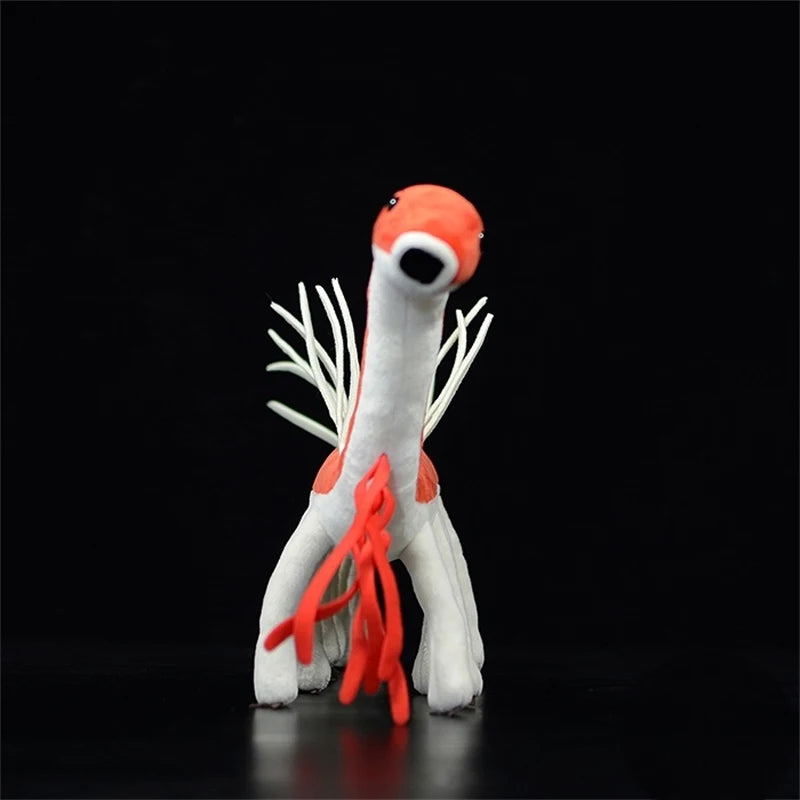
Hallucigenia Sparsa Plushie — Realistic Prehistoric Cambrian Creature Handmade Plush 43cm
Step into the deep past with the most delightfully weird soft toy in the universe: our Hallucigenia sparsa plushie. Measuring a generous 43cm, this handmade plush faithfully recreates one of the most baffling animals ever to have lived on Earth — a creature so strange that scientists spent decades arguing about which end was its head. Whether you are a palaeontology enthusiast, a biology student, a museum gift shop regular, or simply someone who appreciates the beautifully bizarre, this sparsa plushie belongs in your collection.
Our Hallucigenia plushie is crafted from premium soft plush fabric and filled with PP cotton, giving it a satisfying squish that is as comforting as it is scientifically inspired. It is the kind of gift that sparks a conversation, a Wikipedia rabbit hole, and a genuine appreciation for the strangeness of life on this planet.
What Is Hallucigenia sparsa? The Story of Earth's Most Confusing Animal
Hallucigenia sparsa was a small marine animal that lived approximately 508 million years ago during the Cambrian Explosion — a period of extraordinary evolutionary diversification when almost every major animal body plan on Earth first appeared. Fossils of this creature were first recovered from the famous Burgess Shale formation in British Columbia, Canada, a site now recognised as one of the most important palaeontological windows into early animal life.
The creature was first described scientifically in 1977 by palaeontologist Simon Conway Morris, who named it Hallucigenia because it looked so alien and dreamlike that it seemed like a hallucination. His original reconstruction placed it upside down and back to front — what he thought were legs were actually dorsal spines, and what he believed to be tentacles on its back were in fact its walking legs. For decades, the head remained unidentified. It was not until 2015 that researchers using electron microscopy confirmed the location of its head, discovered a circular tooth‑lined throat, and revealed a pair of simple eyes.
Despite its tiny size in life — typically just 0.5 to 5.5 centimetres — Hallucigenia sparsa has had an outsized cultural impact. It has appeared in documentary series, natural history museum displays worldwide, viral science posts, and an ever‑growing community of prehistoric creature fans who adore its absurdity. The Hallucigenia plushie trend grew naturally from this community: people who fell in love with the creature through palaeontology content on YouTube, TikTok, and Reddit wanted a tactile, displayable version of this icon of weirdness. Today, the sparsa plushie sits proudly alongside dinosaur plushies as a staple of the prehistoric creature collector's shelf.
Product Highlights
- Hallucigenia sparsa plushie — faithfully designed after one of palaeontology's most iconic Cambrian creatures
- Generous 43cm size — large enough to display prominently and satisfying to hold
- Handmade construction with premium soft plush fabric for a high‑quality finish
- Filled with PP cotton for a soft, resilient, and long‑lasting squish
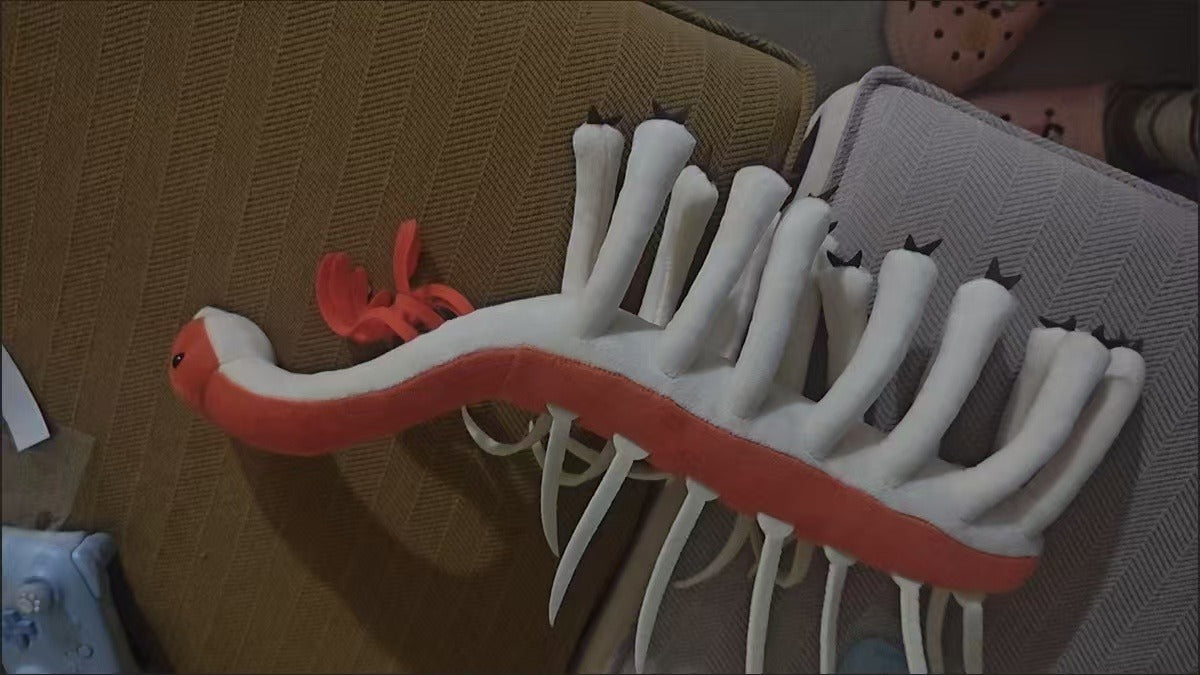
- Accurate multi‑legged body with dorsal spines — based on current palaeontological understanding
- Ideal prehistoric creature plush gift for palaeontology fans, biology lovers, and science enthusiasts
- Perfect for desk display, shelf collections, university dorm rooms, and natural history lovers
- A standout Cambrian sea creature plush unlike anything else on the market
- Great conversation starter — comes with built‑in talking points about the Cambrian Explosion
- Suitable for ages 3 and above (not a toy for children under 3 due to small decorative parts)
Why Collectors Love This Hallucigenia Plushie
The Hallucigenia sparsa plushie appeals to a uniquely passionate audience. Palaeontology fans who have watched documentaries on the Cambrian Explosion immediately recognise this creature and feel a genuine emotional connection to it. Science communicators and educators use it as a tactile teaching aid. Biology and geology students display it on their desks as a badge of nerd pride. Parents gift it to curious children who are obsessed with prehistoric life.
Unlike generic dinosaur plushies, a Cambrian sea creature plush like this signals real depth of interest. It says: I know that life existed long before dinosaurs, I know about the Burgess Shale, and I find the weirdness of early animal evolution genuinely thrilling. That is the community this prehistoric creature plush was made for.
It also photographs beautifully. The soft spines, segmented body, and walking legs make for a striking flat lay or bookshelf display, and it has become a popular subject for science‑adjacent social media accounts and museum shop aesthetic content.
Size Guide
| Measurement | Size |
|---|---|
| Total Length | 43cm (approximately 17 inches) |
| Body Width | Approximately 10cm at widest point |
| Spine Height | Approximately 5 to 8cm (varies along body) |
| Filling | PP Cotton |
| Material | Premium Soft Plush |
This is a single‑size product. The 43cm length makes it substantial enough to display on a shelf, mantelpiece, or desk without being overwhelmed by surrounding items.
Care Instructions
How to Care for Your Hallucigenia sparsa plushie
- Surface clean only — spot clean with a damp cloth and mild detergent
- Do not machine wash or tumble dry
- Do not soak in water
- Do not iron or steam
- Keep away from direct prolonged sunlight to preserve colour
- Store in a dry, dust‑free environment when not on display
- Gently reshape spines and legs after handling if needed
Exchange only. We accept exchanges for manufacturing defects or damage incurred during shipping. No time window is specified. No returns or refunds outside these conditions.
FAQ: Hallucigenia sparsa — The Cambrian's Most Iconic Weird Animal
When the first fossils of Hallucigenia sparsa were formally described in 1977, the creature was reconstructed upside down and back to front. Scientists mistook its stiff dorsal spines for legs and its soft walking legs for tentacles on its back. For decades, its head was unidentified — researchers could not agree on which end was which. It was only in 2015 that a study using high‑resolution electron microscopy finally confirmed the head's position, revealed a pair of eyes, and discovered a circular tooth‑lined throat extending into its neck. The combination of its bizarre body plan, long‑running misidentification, and the dramatic 2015 revelation made it a recurring subject in palaeontology media and science communication, cementing its status as one of the most discussed Cambrian animals ever discovered.
Based on fossil evidence and the discovery of its tooth‑lined throat in 2015, researchers believe Hallucigenia sparsa was likely a scavenger or microphagous feeder, consuming soft organic material, bacteria, or small fragments of decaying matter from the seafloor. Its clawed walking legs would have allowed it to grip onto surfaces such as sponges, which were abundant in Cambrian marine environments. The spines running along its back are thought to have provided defence against predators. The Cambrian ocean was a genuinely dangerous place — one of the first arms races between predators and prey in the history of animal life — and the spines of the Hallucigenia plushie's real‑life inspiration were almost certainly an evolutionary response to that pressure.
Hallucigenia sparsa is classified as a lobopodian — a member of an extinct group of soft‑bodied, legged animals that lived primarily during the Cambrian Period. Lobopodians are considered distant relatives of modern velvet worms (onychophorans) and may also be related to arthropods, the group that includes insects, crustaceans, and spiders. This places Hallucigenia in a fascinating evolutionary position: it is a deep ancestor of some of the most successful animal lineages on Earth today. Recent phylogenetic analyses suggest that its clawed limbs share structural similarities with the claws of modern arthropods, offering a tantalising glimpse at how the body plans of today's most abundant animals began to evolve over 500 million years ago.
The Cambrian Explosion, which occurred roughly 538 to 485 million years ago, represents one of the most significant events in the history of life on Earth. Within a geologically short window, nearly every major animal body plan — from bilateral symmetry to complex eyes to segmented limbs — appeared in the fossil record for the first time. The Burgess Shale in Canada, where Hallucigenia sparsa was discovered, preserves soft‑bodied organisms with extraordinary fidelity because the fossils were buried rapidly in fine sediment and protected from decomposition. Most of the history of animal life involves hard shells and bones — the Burgess Shale is one of the rare places where we can see what the soft parts of ancient animals actually looked like. That is why creatures like the Hallucigenia sparsa plushie's real counterpart are so scientifically valuable and so beloved by the palaeontology community.
Yes. While Hallucigenia sparsa is by far the most famous and most studied species, several related forms have been identified from Cambrian deposits around the world. Hallucigenia fortis was described from the Chengjiang biota in Yunnan Province, China — another exceptional Cambrian fossil site — and is generally considered larger and more robustly built than sparsa. Additional lobopodian relatives with broadly similar body plans have been identified from sites in Greenland and elsewhere. However, Hallucigenia sparsa remains the type species — the reference specimen against which all related animals are compared — and its fossils from the Burgess Shale are among the most extensively studied Cambrian specimens in the world. It is the species that gave the genus its name, its notoriety, and its beloved place in palaeontology pop culture, making it the natural subject for a Hallucigenia plushie.


Frequently Bought Together
-
Misuzu Kamio Plush AIR Game Handmade Plush 10cm
Precio habitual $47.25 AUDPrecio habitualPrecio unitario por$0.00 AUDPrecio de oferta $47.25 AUD -
Corneus Regulus Plush | Re:Zero Regulus Corneas Handmade Anime Collectible Plush 10cm
Precio habitual $47.25 AUDPrecio habitualPrecio unitario por$0.00 AUDPrecio de oferta $47.25 AUD -
Sledge Queen Plush | Aila Boss Decaying Winter Toy | 25cm Rare Collectible
Precio habitual $52.95 AUDPrecio habitualPrecio unitario por$0.00 AUDPrecio de oferta $52.95 AUD -
Realistic Dilophosaurus Dinosaur Plush Detailed Double-Crested Prehistoric Lizard Stuffed Animal Cool Green Dino Handmade Plush 50cm
Precio habitual $63.95 AUDPrecio habitualPrecio unitario por$0.00 AUDPrecio de oferta $63.95 AUD


Suggested Blog posts:
Ver todo-

No Heaven for Demons Anime: The Full Story Is Here
No Heaven for Demons is streaming on Trimz. Watch here for Shadow's dark fantasy about a young demon defying a holy crusade, every episode, no account needed.
No Heaven for Demons Anime: The Full Story Is Here
No Heaven for Demons is streaming on Trimz. Watch here for Shadow's dark fantasy about a young demon defying a holy crusade, every episode, no account needed.
-

DOORS: The Stairwell Expanded & Evolved Full Wa...
A complete DOORS Access Granted walkthrough: how to survive Monument and Meld, use the Starlight Jug, and reach the end of The Stairwell.
DOORS: The Stairwell Expanded & Evolved Full Wa...
A complete DOORS Access Granted walkthrough: how to survive Monument and Meld, use the Starlight Jug, and reach the end of The Stairwell.
-

Break and Steal an Egg Roblox Guide: How to Hat...
Break and Steal an Egg Roblox guide: Auto-Swing tips, guard zones, pickaxe and Treadmill upgrades, pet companions, and the latest codes status.
Break and Steal an Egg Roblox Guide: How to Hat...
Break and Steal an Egg Roblox guide: Auto-Swing tips, guard zones, pickaxe and Treadmill upgrades, pet companions, and the latest codes status.
-

Huss Valley Roblox Guide: How to Survive as a R...
A complete Huss Valley Roblox guide: controls, Gems and abilities, how rounds and the Chaser work, and how to actually win a match.
Huss Valley Roblox Guide: How to Survive as a R...
A complete Huss Valley Roblox guide: controls, Gems and abilities, how rounds and the Chaser work, and how to actually win a match.


Verified Google Reviews
Hear It from Our Customers