


Handmade Dinosaur Plush - T-Rex, Triceratops, Velociraptor, Stegosaurus & Brontosaurus Stuffed Animal Toy
Handmade Dinosaur Plush - T-Rex, Triceratops, Velociraptor, Stegosaurus & Brontosaurus Stuffed Animal Toy
En existencias
- Free Shipping
- 30 Days Return(T&C applies)
- Customer Support
No se pudo cargar la disponibilidad de retiro
Handmade Dinosaur Plush - T-Rex Plush, Triceratops Stuffed Animal, Velociraptor Plush Toy, Stegosaurus Plush and Brontosaurus Stuffed Animal
Step back into the Jurassic era with this irresistible lineup of handmade dinosaur plush companions. Whether you are searching for a cuddly T-Rex plush for a budding paleontologist, a gentle Triceratops stuffed animal for a toddler's nursery, a fearless Velociraptor plush toy for an adventurous kid, a spiky Stegosaurus plush for the classroom shelf, or a majestic Brontosaurus stuffed animal that stands tall above the rest, this Jurassic dinosaur plush range has every prehistoric favourite covered. Each character is crafted from ultra-soft polyester and filled with premium PP cotton, making them the perfect dinosaur cuddle toy for kids and collectors of all ages.
Meet the Prehistoric Plush Toy Squad
Five of the most beloved prehistoric giants come together in this dinosaur stuffed animal lineup. Each one is thoughtfully designed to capture the personality and iconic silhouette of its real-life counterpart, from the Velociraptor's sleek predator stance to the Brontosaurus's long, elegant neck. These are not just toys, they are cute dinosaur stuffed animals that spark imaginative play and a genuine love of natural history.
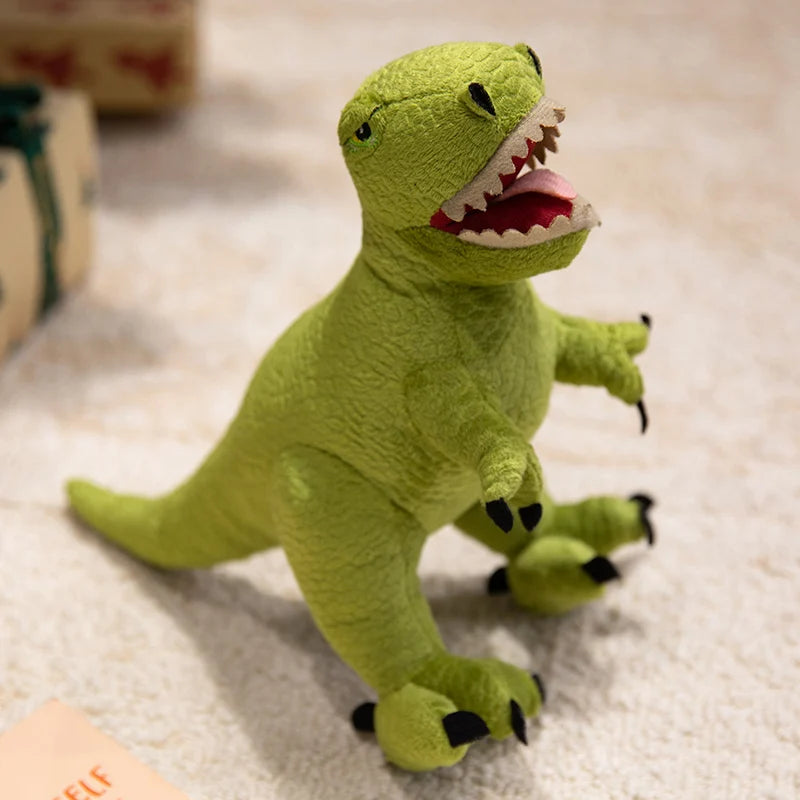
Tyrannosaurus Rex - The T-Rex Plush (40cm)
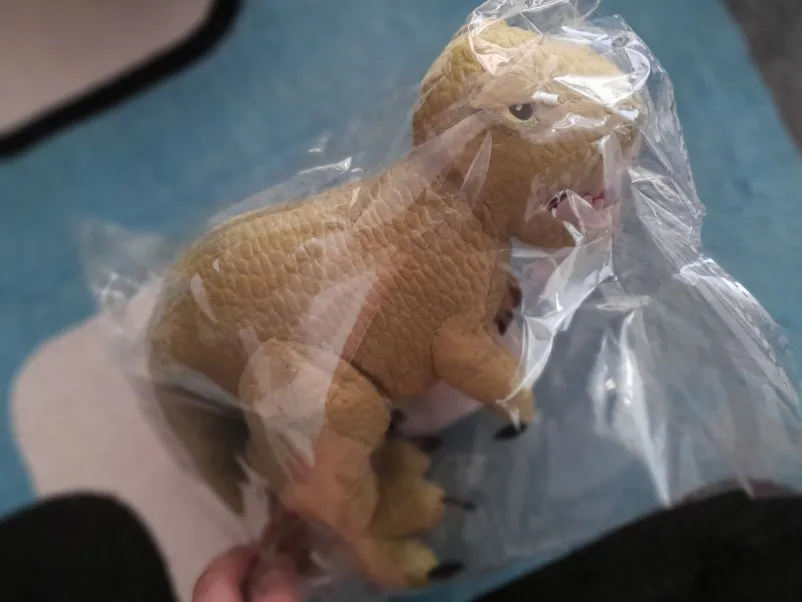
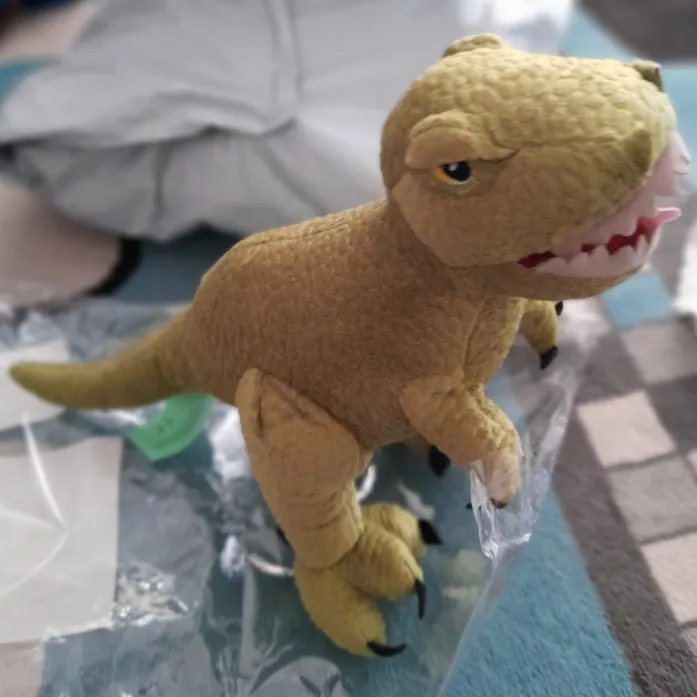
The undisputed king of the prehistoric world arrives as a huggable T-Rex plush built for big adventures. With its signature powerful body, tiny arms, and wide-jawed silhouette, this soft dinosaur toy brings the thrill of the Cretaceous period right into the playroom. At 40cm, it is large enough to be the star of any dinosaur collector toy display yet soft enough for bedtime cuddles.
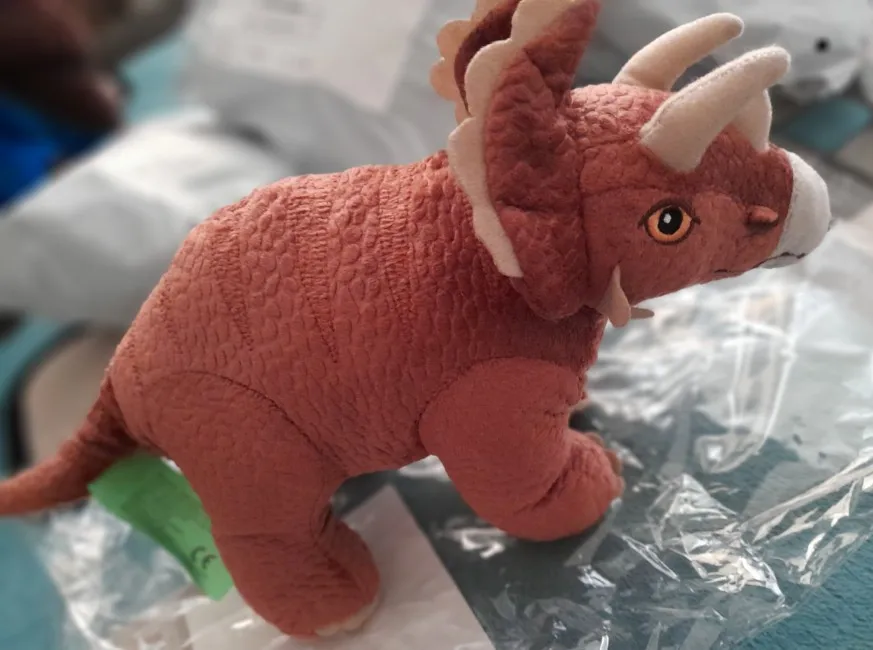
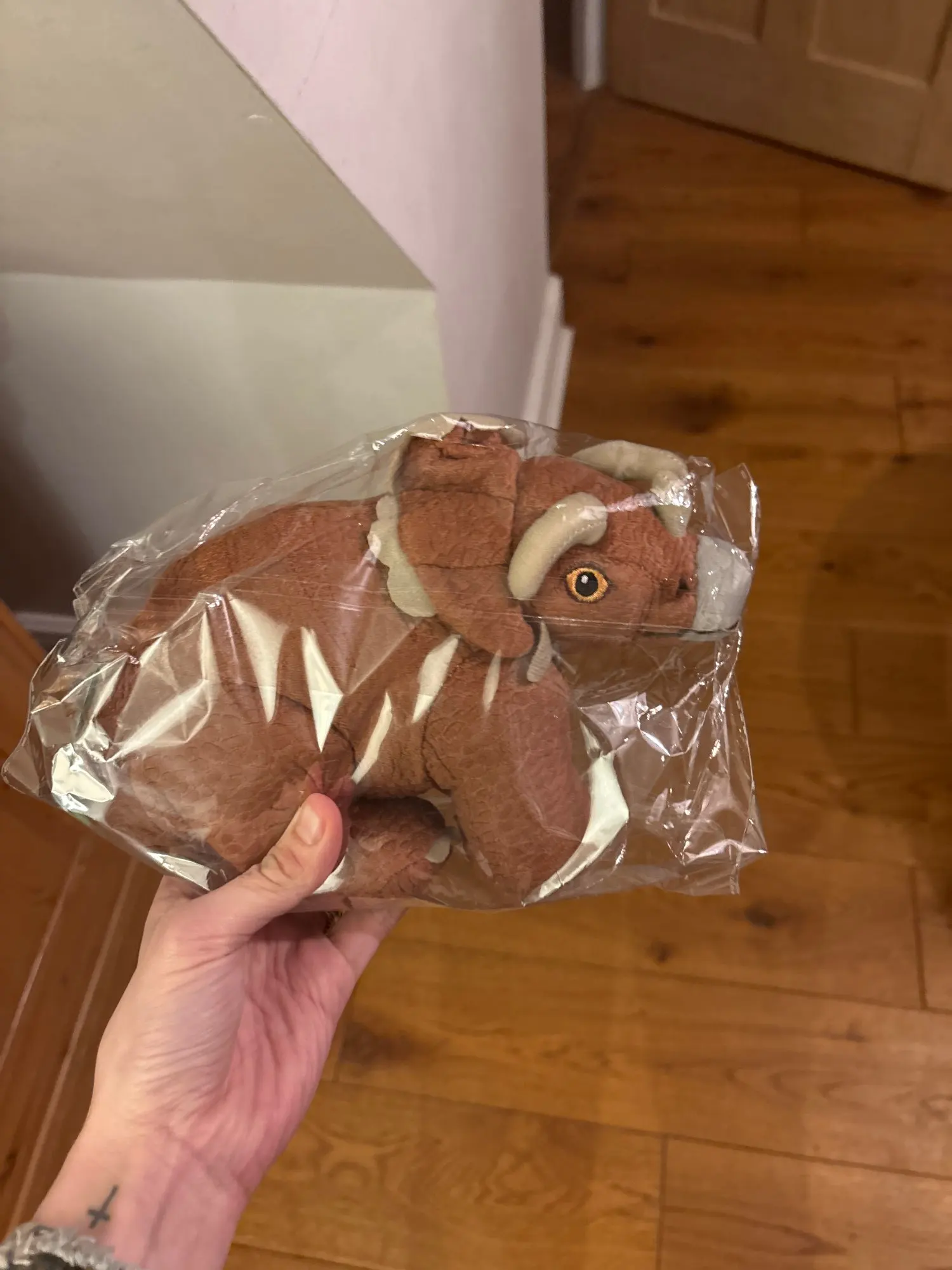
Triceratops - The Triceratops Stuffed Animal (34cm)
With its triple-horned face and wide frilled head, the Triceratops stuffed animal is one of the most recognisable dinosaur plushies in the range. This gentle herbivore from the Late Cretaceous period makes a perfect cuddly companion for younger children and a charming addition to any dinosaur plush for kids collection.
Velociraptor - The Velociraptor Plush Toy (34cm)
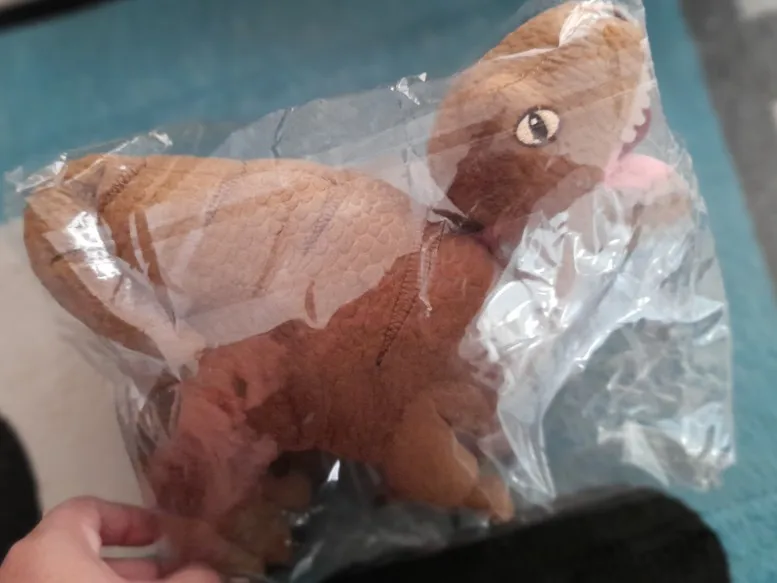
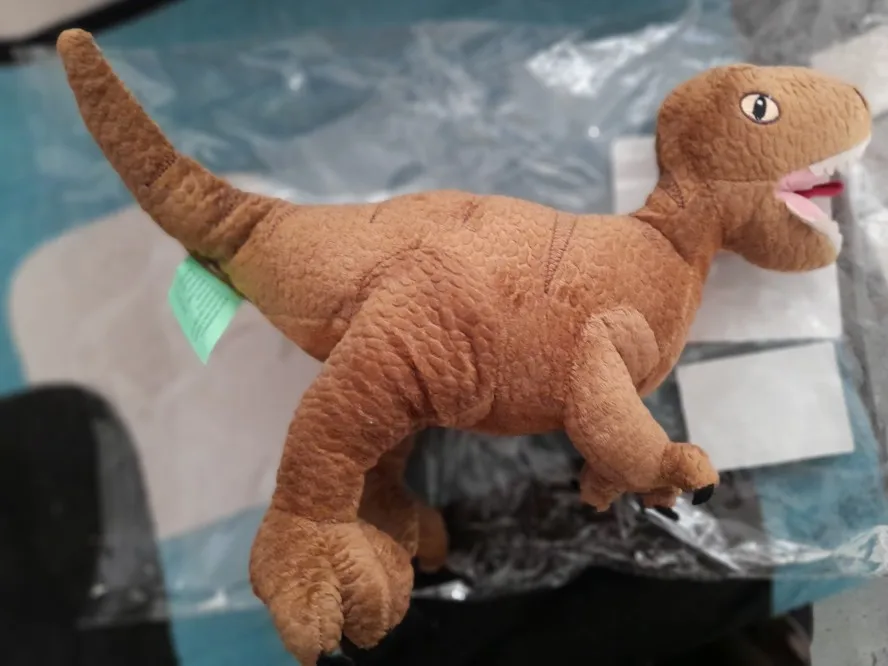
Smart, swift, and endlessly popular thanks to the big screen, the Velociraptor plush toy captures the agile energy of one of history's most famous pack hunters. This dinosaur plushie is a must-have for any fan of prehistoric predators, combining the thrill of the raptor with the comforting softness of a quality dinosaur stuffed animal.
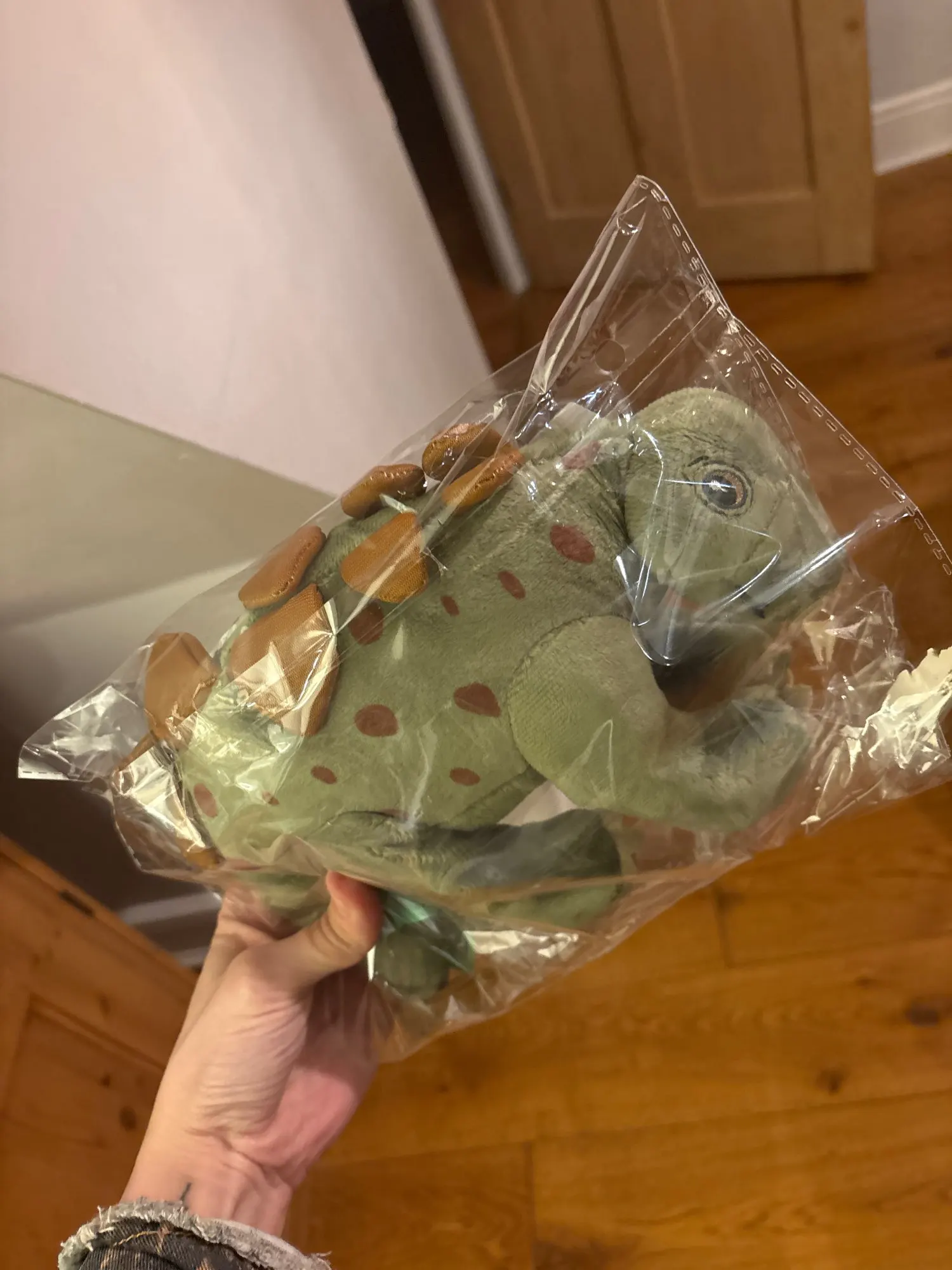
Stegosaurus - The Stegosaurus Plush (40cm)
Instantly recognisable thanks to its row of distinctive back plates, the Stegosaurus plush is one of the most iconic soft dinosaur toys in the collection. This armoured herbivore walked the Late Jurassic landscapes around 155 million years ago and today brings prehistoric charm to modern playrooms and collector shelves alike.
Brontosaurus - The Brontosaurus Stuffed Animal (45cm)
The tallest member of the lineup, the Brontosaurus stuffed animal at 45cm is a gentle giant that makes an immediate impression. With its long neck and peaceful herbivore personality, this Jurassic dinosaur plush is as much a display piece as it is a kids dinosaur gift, beloved by dinosaur enthusiasts who appreciate the grandeur of sauropods.
The History Behind These Iconic Prehistoric Plush Toys
Dinosaurs have captured the human imagination ever since the first fossil discoveries in the early 19th century. The term "dinosaur" itself, coined by British scientist Sir Richard Owen in 1842, comes from the Greek words meaning "terrible lizard." The creatures that inspired this prehistoric plush toy range each have extraordinary stories rooted in science and popular culture.
The T-Rex plush pays tribute to Tyrannosaurus rex, first formally described in 1905 by Henry Fairfield Osborn. Standing up to 4 metres tall and stretching 12 metres in length, it roamed North America roughly 66 to 68 million years ago and became the undisputed face of dinosaur culture following its legendary portrayal in cinema during the 1990s. The raptor characters that followed only deepened the public's obsession, with new fossil evidence throughout the 2000s and 2010s revealing their surprising intelligence and social behaviour.
The Triceratops, Stegosaurus, and Brontosaurus each hold their own celebrated places in palaeontological history. Triceratops fossils, first discovered in 1887, are among the most complete dinosaur specimens ever found. Stegosaurus, with its dramatic dorsal plates, has puzzled scientists for over a century with ongoing debates about whether those plates were used for defence, display, or temperature regulation. The Brontosaurus, long considered a duplicate of the Apatosaurus, was restored as its own distinct genus by scientists as recently as 2015, making it a genuinely exciting dinosaur stuffed animal choice for anyone following modern palaeontology.
The ongoing cultural popularity of these dinosaurs, driven by blockbuster film franchises, museum exhibitions, and viral educational content, has made dinosaur plush for kids and collectors one of the most consistently searched toy categories online. These plush toys tap directly into that enduring fascination, transforming scientific icons into soft, huggable friends.
Product Highlights
- Five characters available: T-Rex plush (40cm), Triceratops stuffed animal (34cm), Velociraptor plush toy (34cm), Stegosaurus plush (40cm), and Brontosaurus stuffed animal (45cm) - each sold separately
- Ultra-soft polyester exterior with PP cotton filling for a premium dinosaur cuddle toy feel
- Inspired by iconic movie and TV portrayals of these beloved prehistoric plush toy characters
- Suitable for kids' playrooms, nursery decor, and serious dinosaur collector toy displays
- Lightweight, huggable construction ideal as a kids dinosaur gift for birthdays, holidays, and special occasions
- Surface clean easily for simple maintenance
- No small detachable parts, making each cute dinosaur stuffed animal safe for supervised play
- Perfect as a standalone soft dinosaur toy or as part of a growing Jurassic dinosaur plush display
Size Guide
| Character | Height | Best For |
|---|---|---|
| Triceratops Stuffed Animal | 34cm (approx. 13.4 inches) | Toddlers, desk displays, starter collectors |
| Velociraptor Plush Toy | 34cm (approx. 13.4 inches) | Adventure play, bookshelf display |
| T-Rex Plush | 40cm (approx. 15.7 inches) | Playroom centrepiece, collector display |
| Stegosaurus Plush | 40cm (approx. 15.7 inches) | Playroom display, gifting |
| Brontosaurus Stuffed Animal | 45cm (approx. 17.7 inches) | Statement collector piece, larger cuddles |
Care Instructions
- Surface clean only: Gently wipe with a damp cloth and mild soap. Do not submerge in water.
- Air dry: Allow to dry fully in a well-ventilated area away from direct heat or sunlight.
- Do not machine wash or tumble dry as this may damage the polyester fabric and PP cotton filling.
- Do not bleach or use harsh chemical cleaners on any part of this soft dinosaur toy.
- Store in a cool, dry place away from moisture to maintain the shape and softness of your dinosaur plush.
- Spot treat promptly: For best results, address any marks on your dinosaur stuffed animal as soon as they occur.
FAQ: Dinosaur Facts - T-Rex, Triceratops, Velociraptor, Stegosaurus and Brontosaurus
The real Velociraptor was actually much smaller than its movie portrayals suggest, roughly the size of a turkey and covered in feathers rather than scales. Its brain-to-body ratio was relatively high for a dinosaur, which is why scientists consider it to have been more intelligent than many of its contemporaries. The raptor featured in famous dinosaur film franchises was actually based more closely on the Deinonychus and Utahraptor, both larger theropods. That said, even the real Velociraptor was a formidable pack hunter with a signature sickle-shaped claw on each foot, used to pin prey rather than slash. Modern palaeontologists continue to refine our understanding of raptor behaviour, with recent fossil evidence from Mongolia and China adding new details to their hunting strategies and social dynamics.
This is one of the most actively debated questions in modern palaeontology. Fossil evidence from close relatives of Tyrannosaurus rex, particularly specimens found in China such as Yutyrannus huali, confirms that some tyrannosaurids were indeed feathered. Whether full-grown T-Rex individuals had extensive feather coverage is still debated. Some researchers suggest that large body size in T-Rex may have meant that adult animals shed most of their feathery covering to avoid overheating, similar to how large modern mammals like elephants have sparse hair. The most current scientific consensus is that juvenile T-Rex individuals likely had more feather coverage than adults. The image of a scaly, lizard-like T-Rex is gradually being replaced in popular culture by a more nuanced, birdlike picture, which is part of why the T-Rex remains such a fascinating subject of ongoing research and public interest.
The large kite-shaped dorsal plates that run along the back of Stegosaurus have been the subject of scientific debate for well over a century. Early theories suggested they were armour plating, but their internal structure, which is rich in blood vessels, points strongly toward thermoregulation as a primary function. By directing blood flow through these plates and orienting them toward or away from the sun, Stegosaurus may have been able to regulate its body temperature much like a solar panel. A secondary theory that has gained traction is that the plates were used for visual display, either for mate attraction or species recognition, similar to the colourful markings seen in modern lizards and birds. Most current researchers believe the plates likely served multiple functions simultaneously. The tail spikes, known as the thagomizer, are a separate structure and were almost certainly a defensive weapon against large predators like Allosaurus.
The Brontosaurus has one of the most dramatic comeback stories in the history of science. Originally named in 1879 by palaeontologist Othniel Charles Marsh, it was later reclassified as a duplicate of the already-named Apatosaurus in 1903, and for most of the 20th century scientists considered the Brontosaurus name invalid. However, a comprehensive 2015 study published by an international team of researchers re-examined hundreds of sauropod fossils and concluded that Brontosaurus was genuinely distinct from Apatosaurus, differing in neck anatomy, shoulder structure, and overall body proportions. The name was officially reinstated, making the Brontosaurus a legitimately recognised genus once again. For a creature that spent over a century being declared nonexistent, it is now back in scientific literature and continues to be one of the most recognisable and beloved long-necked dinosaurs in popular culture.
Triceratops is one of the best-studied dinosaurs thanks to the remarkable abundance of its fossils, many of which show clear signs of combat. Fossil evidence, including healed bite and horn marks on Triceratops bones, confirms that the horns were used in direct combat with large predators such as T-Rex. Fossil records also show evidence of horn-to-horn combat between Triceratops individuals, suggesting the horns also played a role in intra-species rivalry over territory or mates, similar to modern horned mammals like rhinos and elk. The large bony frill at the back of the skull is now generally believed to have served primarily as a display structure, with blood vessel channels suggesting it may have been brightly coloured in life. Recent biomechanical studies suggest that the two large brow horns were the primary offensive weapons, while the shorter nose horn served a different role, possibly in identifying individuals of the same species.


Frequently Bought Together
-
Toothless Dancing Meme Plush 25cm | Night Fury Black & Light Fury White | How to Train Your Dragon Stuffed Animal
Precio habitual $52.95 AUDPrecio habitualPrecio unitario por$0.00 AUDPrecio de oferta $52.95 AUD -
Cursed Plankton Meme Plush Squeaker Keychain | Screaming Face Bag Charm 12cm
Precio habitual $47.25 AUDPrecio habitualPrecio unitario por$0.00 AUDPrecio de oferta $47.25 AUD -
Giant Realistic Giant Realistic Snake Plush 120cm | Python Stuffed Animal Body Pillow and Prank Toy in 6 Colors
Precio habitual $73.25 AUDPrecio habitualPrecio unitario por$0.00 AUDPrecio de oferta $73.25 AUD -
Lifelike British Shorthair Cat Plush 30cm | Realistic Stuffed Animal | Yellow Gray Black White
Precio habitual $53.95 AUDPrecio habitualPrecio unitario por$0.00 AUDPrecio de oferta $53.95 AUD


Suggested Blog posts:
Ver todo-

How to Get The Spectral Skull of Nevermoor in R...
Get The Spectral Skull of Nevermoor in Roblox The Hollow: 100 Tickets, Roblox Plus, the Little Shop of Terror, fastest ticket quests
How to Get The Spectral Skull of Nevermoor in R...
Get The Spectral Skull of Nevermoor in Roblox The Hollow: 100 Tickets, Roblox Plus, the Little Shop of Terror, fastest ticket quests
-

How to Get the Mimic Hoodie in The Hollow Event...
Get the free Mimic Hoodie in Roblox The Hollow: full Animal Hospital quest route, Hazmat NPC, slime photos, slide puzzle and how to claim it
How to Get the Mimic Hoodie in The Hollow Event...
Get the free Mimic Hoodie in Roblox The Hollow: full Animal Hospital quest route, Hazmat NPC, slime photos, slide puzzle and how to claim it
-

How To Get All Day 6 Prizes in The Hollow Roblo...
Get every Day 6 prize in Roblox The Hollow: solve the Floor 6 cauldron, clear the Banana Eats cake hunt, and finish both Animal Hospital shifts.
How To Get All Day 6 Prizes in The Hollow Roblo...
Get every Day 6 prize in Roblox The Hollow: solve the Floor 6 cauldron, clear the Banana Eats cake hunt, and finish both Animal Hospital shifts.
-

Banana Eats Lolwen Guide: Get the Item, Badge A...
Get the Lolwen item, badge and 10 tickets in Banana Eats. Full Hollow Key, cake slice and Floor 6 maze steps for The Hollow event.
Banana Eats Lolwen Guide: Get the Item, Badge A...
Get the Lolwen item, badge and 10 tickets in Banana Eats. Full Hollow Key, cake slice and Floor 6 maze steps for The Hollow event.


Verified Google Reviews
Hear It from Our Customers