


Clownfish Marshmallow Plush | Ultra-Soft Squishy Sea Life Stuffed Animal | Handmade Plushie
Clownfish Marshmallow Plush | Ultra-Soft Squishy Sea Life Stuffed Animal | Handmade Plushie
In stock
- Free Shipping
- 30 Days Return(T&C applies)
- Customer Support
Couldn't load pickup availability
Clownfish Marshmallow Plush | Handmade Squishy Sea Life Stuffed Animal
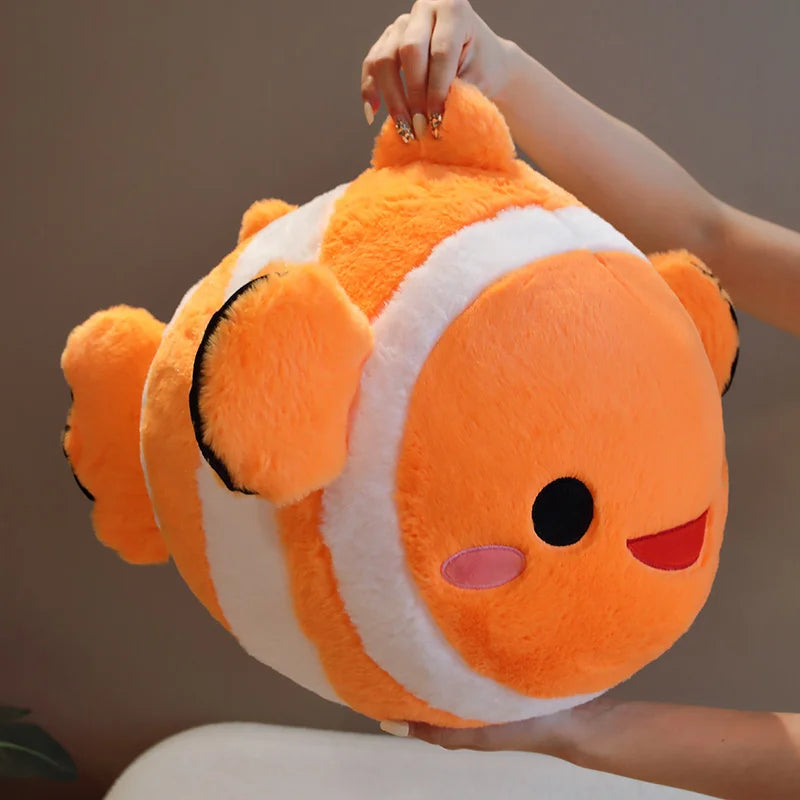
Some plush toys are soft. This one is marshmallow soft. Meet the clownfish plush that refuses to leave your arms: a handmade stuffed animal shaped like everyone's favorite striped ocean fish, stuffed to perfection with fluffy PP Cotton filling and wrapped in a velvety outer shell that feels like squishing a cloud. It doubles as a cuddly companion and a squishy throw pillow, making it the ultimate sea life stuffed animal for kids and collectors alike.
From the moment you pick it up, the exaggerated cartoon features and plump, round body make it impossible not to smile. The bold orange and white design captures the instantly recognizable look of the beloved clownfish, a species that has captured the hearts of ocean lovers and pop culture fans for decades. Whether it lives on a bed, a shelf, or a sofa, this clownfish plush brings a little piece of the ocean into any space.
Each piece is handmade with care, so no two are exactly alike. That is what sets this apart from mass-produced alternatives. You are getting a squishy plush with real character, real softness, and real love stitched into every seam.
The Story Behind the Clownfish
The clownfish is one of the most recognized marine animals on the planet. Known scientifically as Amphiprion ocellaris, this small but vivid fish lives among the stinging tentacles of sea anemones in the warm waters of the Indo-Pacific and coral reefs of the Indian and Pacific Oceans. Through a remarkable symbiotic relationship, the clownfish protects the anemone from predators while the anemone offers the fish shelter and food in return.
While marine biologists had studied clownfish for generations, it was the 2003 animated Pixar film that turned this small reef dweller into a global icon overnight. The story of a devoted father searching the ocean for his son sent clownfish demand soaring worldwide, with aquarium sales reportedly tripling in the film's wake. The character resonated with audiences across every age group and introduced millions of children to the wonders of sea life and coral reef ecosystems.
That cultural moment never truly ended. The clownfish remains one of the most searched, gifted, and collected ocean animals in plush form to this day. A sequel film released in 2016 reignited the craze all over again, and the character's image continues to appear across toys, apparel, home decor, and fan merchandise around the world. This clownfish stuffed animal taps directly into that enduring love.
Why This Clownfish Stuffed Animal Stands Out
Not every plush toy earns the name marshmallow soft. This one does. The PP Cotton filling creates a dense, squishy resistance that springs back after every squeeze, giving it that satisfying squishmallow-style feel without losing its shape. The outer plush fabric is smooth, pill-resistant, and gentle against skin, making it safe and comfortable for children of all ages.
The cartoon-style design leans into the most lovable version of the clownfish, with oversized expressive eyes, a chunky rounded body, and those signature orange and white stripes that make this fish unmistakable. It is playful without being babyish, making it equally at home in a child's bedroom and an adult's collection or workspace.
Product Highlights
- Marshmallow soft texture throughout the entire body for maximum squish and comfort
- Handmade construction with careful stitching and quality finishing on every piece
- Premium PP Cotton filling that holds its shape through repeated squeezing and cuddling
- Smooth, velvety outer plush fabric that is gentle on skin and safe for kids
- Bold cartoon clownfish design with oversized eyes and vibrant orange and white coloring
- Functions as both a stuffed animal and a squishy throw pillow
- Available in two sizes to suit different preferences, select your variant above
- No hard parts, no loose accessories and no small detachable pieces
- A perfect gift for ocean lovers, sea life fans, and anyone who loves a great plush
Perfect as a Gift
Looking for a gift that feels genuinely thoughtful? This clownfish plush works for birthdays, holidays, room decorating, or simply because. It arrives ready to cuddle, with no assembly and no batteries required. Kids love the squishy feel. Collectors love the design. Adults love it on their couch. It is one of those rare gifts that lands well every single time.
Whether you are shopping for a child who adores sea life, a fan of the iconic animated fish, or someone who simply cannot resist a perfectly squishy stuffed animal, this handmade clownfish plush delivers on every front.
Size Guide
| Variant | Height | Best For |
|---|---|---|
| Small | 32 cm | Desk companion, travel buddy, smaller gift |
| Large | 40 cm | Pillow use, bedroom display, extra squishy cuddles |
Select your preferred size using the variant selector above.
Care Instructions
- Surface clean only using a soft damp cloth
- Do not machine wash or tumble dry
- Do not submerge in water
- Keep away from direct heat sources and prolonged sunlight
- Allow to air dry fully if surface cleaned
- Suitable for ages 3 and up
FAQ: Clownfish Facts and Trivia
Yes, and it is one of the most fascinating things about clownfish. All clownfish are born male. The largest and most dominant fish in a group will eventually transition into a female to become the breeding female of the group. If that female disappears, the next largest male takes her place and transitions. This means that in Finding Nemo, Marlin would have biologically become female after Coral passed, which the film famously left out. This trait is called sequential hermaphroditism and is well documented in clownfish and several other reef fish species.
Clownfish are covered in a special mucus coating that makes them immune to the stinging cells of the sea anemone. Scientists believe this coating either mimics the chemical signature of the anemone itself or suppresses the anemone's ability to fire its stingers. The relationship between the two is one of the most famous examples of symbiosis in the ocean. The clownfish gets shelter and food scraps from the anemone, while the anemone benefits from the clownfish chasing away predators and providing nutrients through its waste. Some recent research also suggests the fanning motion of clownfish fins helps improve water circulation around the anemone.
The 2003 Pixar film had an enormous and somewhat ironic impact on wild clownfish populations. Demand for clownfish as aquarium pets reportedly tripled after the film released, leading to a surge in wild capture from coral reefs across the Indo-Pacific. Despite the film's core message about keeping fish in the ocean, millions of people rushed to buy their own version of the beloved character. Conservation groups refer to this as the Nemo Effect, and it became a widely studied case of how popular media can unintentionally drive pressure on wild animal populations. Today, captive breeding programs work to reduce reliance on wild-caught clownfish for the aquarium trade.
They do. Clownfish communicate through a series of popping and clicking sounds produced by snapping their teeth together. These sounds are used to establish dominance, signal aggression, and communicate within their social group. Research has found that different clownfish populations may even develop regional sound patterns, something similar to dialects, suggesting that some of this communication is learned rather than purely instinctive. It is a remarkable finding for a small reef fish and adds another layer to what makes clownfish one of the most studied species in marine biology.
As of 2025, scientists have classified 29 known species of clownfish, with a new species called the Polynesian anemonefish formally described in a 2025 genetic study. All clownfish species are found in the Indo-Pacific region, spanning the warm coastal waters from the Indian Ocean across to the central Pacific. They are not found in the Atlantic or the Caribbean. The most famous species is the ocellaris clownfish, the orange and white fish that inspired the beloved Nemo character, and it remains one of the most commonly kept marine fish in the world. Clownfish are always found near sea anemones and are rarely spotted in open water away from their host.


Frequently Bought Together
-
Mama and Baby Shark Plush Pillow Set with 4 Mini Shark Stuffed Animals Inside Zippered Tummy (55cm Giant Soft Plushie)
Regular price $73.25 AUDRegular priceUnit price per$0.00 AUDSale price $73.25 AUD -
Clownfish Marshmallow Plush | Ultra-Soft Squishy Sea Life Stuffed Animal | Handmade Plushie
Regular price From $56.95 AUDRegular priceUnit price per$0.00 AUDSale price From $56.95 AUD -
Pegasus Plush Stuffed Animal | Corduroy Winged Horse Cuddle Toy | Handmade Mythical Plushie Gift
Regular price $62.95 AUDRegular priceUnit price per$0.00 AUDSale price $62.95 AUD -
Red Tomato Plushie with Dangling Legs | Food Desk Buddy and Bag Charm | 10cm and 25cm
Regular price From $52.95 AUDRegular priceUnit price per$0.00 AUDSale price From $52.95 AUD


Suggested Blog posts:
View all-

Infinity Nikki 3.0 Update: Everything You Need ...
Infinity Nikki 3.0 launches Nov 26 with Cicia, a new story, Musket and Staff weapons, a pink supercar, 126 free draws and two redeem codes. Full guide.
Infinity Nikki 3.0 Update: Everything You Need ...
Infinity Nikki 3.0 launches Nov 26 with Cicia, a new story, Musket and Staff weapons, a pink supercar, 126 free draws and two redeem codes. Full guide.
-

GTA 6 Akane Anime Car: How to Get It (Complete ...
Find the GTA 6 Akane anime car in Key Lento, scan it with Waink, loot the safe, and avoid the livery trap at Joey's. Get the full step-by-step route now.
GTA 6 Akane Anime Car: How to Get It (Complete ...
Find the GTA 6 Akane anime car in Key Lento, scan it with Waink, loot the safe, and avoid the livery trap at Joey's. Get the full step-by-step route now.
-

Invincible Mumu Manhwa: Read the Full Series Here
Invincible Mumu manhwa follows Yu Mumu, the legendary ancestor of Hanjung Wolya's martial arts universe. Read the full series here and learn where to start.
Invincible Mumu Manhwa: Read the Full Series Here
Invincible Mumu manhwa follows Yu Mumu, the legendary ancestor of Hanjung Wolya's martial arts universe. Read the full series here and learn where to start.
-

I Can't Escape You Manhwa: Where to Read It
His unwanted childhood friend ruined his peaceful loner life. Here's where to read I Can't Escape You manhwa and what the viral recap is about.
I Can't Escape You Manhwa: Where to Read It
His unwanted childhood friend ruined his peaceful loner life. Here's where to read I Can't Escape You manhwa and what the viral recap is about.


Verified Google Reviews
Hear It from Our Customers