


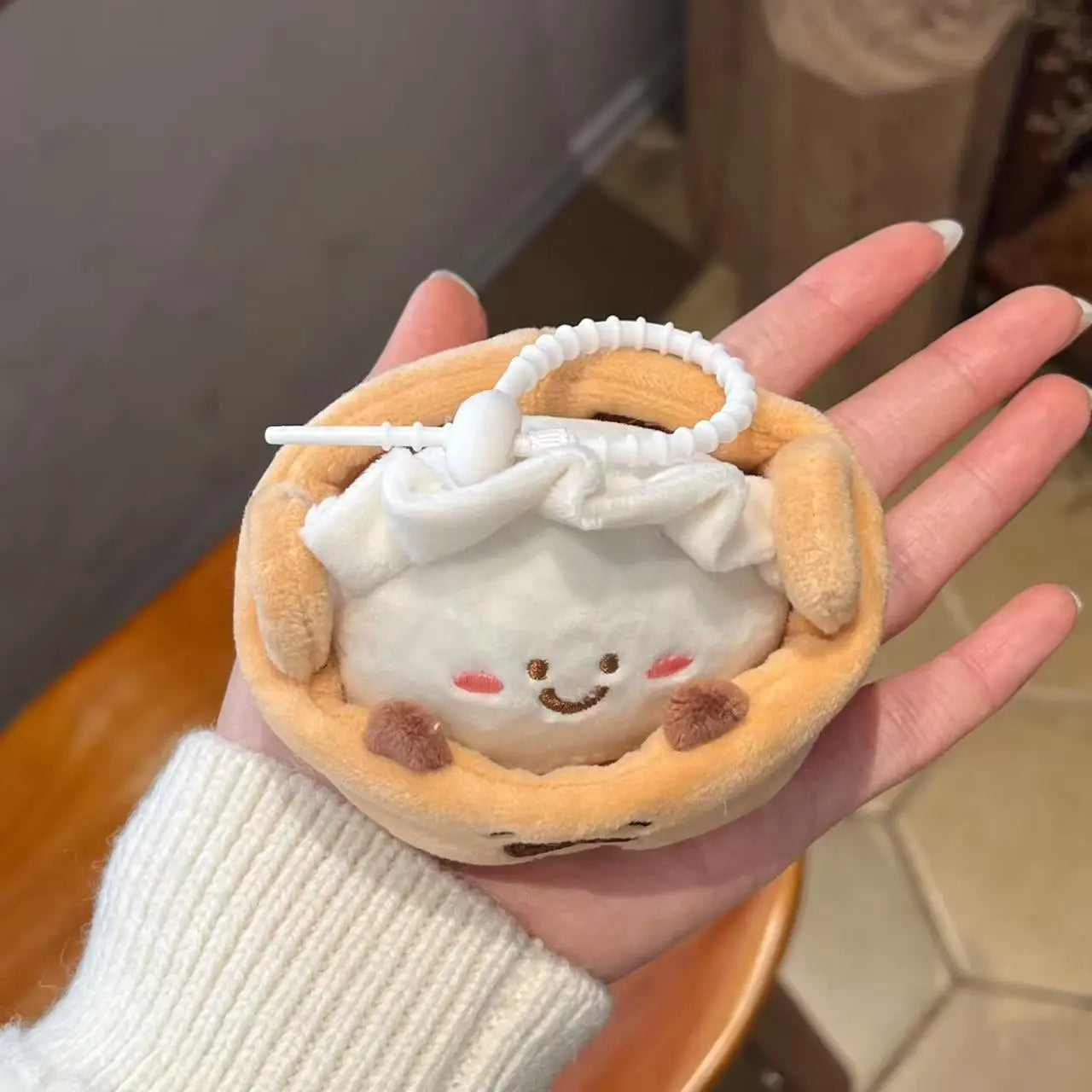
Kawaii Capybara Dumpling Plush Keychain | Bamboo Steamer Basket Hide-and-Seek Plushie | Capybara Gift 7cm
Kawaii Capybara Dumpling Plush Keychain | Bamboo Steamer Basket Hide-and-Seek Plushie | Capybara Gift 7cm
In stock
- Free Shipping
- 30 Days Return(T&C applies)
- Customer Support
Couldn't load pickup availability
Kawaii Capybara Dumpling Plush Keychain | Capybara Steamer Basket and Hide-and-Seek Cute Capybara Keychain | Handmade Plushie 7cm
Meet Your New Favorite Kawaii Capybara Companion
Introducing the ultimate capybara dumpling plush for collectors, gift seekers, and fans of all things adorably oversized and wonderfully unbothered. This capybara plush keychain, a must-have capybara stuffed animal for any collection, features a round, grinning dim sum character snuggled inside a hand-crafted capybara-themed bamboo steamer plush basket pouch. Pull the little dumpling out for a peek, or tuck it back in and carry the whole steamer basket as a bag charm. It is interactive, it is squishy, and as a dim sum plush keychain it is unmistakably capybara.
Whether you are drawn to kawaii dim sum toys, obsessed with the internet's most iconic giant rodent, or simply searching for the perfect capybara gift for a friend who lives by "calm, unbothered, and drama-free" energy, this piece delivers. Crafted from soft plush fabric and filled with PP cotton for a satisfying, gentle squeeze, the 7cm hide-and-seek design brings maximum charm in a pocket-friendly size.
Product Highlights
- Interactive hide-and-seek design featuring a smiling dim sum plush character that tucks inside a capybara-themed bamboo steamer basket pouch
- Compact 7cm size makes it perfect as a capybara plushie bag charm, backpack clip, or display piece. The charm comes pre-attached so your capybara plushie bag charm is ready to clip and carry right away.
- Soft, huggable plush fabric exterior with PP cotton filling for a light, squishy feel
- Sturdy cute capybara keychain clip attachment stays secure on bags, keys, and belt loops
- Makes an ideal capybara gift for plush collectors, kawaii enthusiasts, and meme lovers alike
- Part of an original capybara collectible design series combining food theming with beloved animal culture
- A standout piece of capybara merch that doubles as everyday functional accessories
The Kawaii Capybara: From South American Wetlands to Internet Legend
The capybara (Hydrochoerus hydrochaeris) is the world's largest living rodent, native to the wetlands, rivers, and grasslands of South America. Its name traces back to the Tupi language, roughly meaning "grass eater" or "one who eats slender leaves." For centuries, these barrel-shaped, semi-aquatic animals lived quietly in groups of dozens, thriving alongside rivers from Venezuela to Argentina.
Their global fame as a kawaii capybara icon began building in Japan. Starting in the 1990s, Japanese zoos and wildlife parks promoted capybara hot spring bath events during winter seasons to draw tourists. Footage of these enormous rodents serenely soaking in steaming onsen water, sometimes with a mandarin orange balanced on their head, captivated audiences worldwide. Japanese media quickly embraced them as symbols of gentle, stress-free living.
The modern internet era amplified everything. A significant turning point came on September 10, 2020, when a video of a capybara riding in a car passenger seat, set to rapper Don Toliver's track "After Party," went viral and sparked a wave of meme creativity. By 2021 and 2022, the trend reached critical mass on TikTok and Instagram: clips of capybaras sharing space with ducks, monkeys, and even crocodiles spread everywhere, reinforcing their reputation as the planet's most tolerant and unbothered creatures. Then came the viral song simply titled "Capybara" by Russian artist Sto-Lichnayii Ona-Nas, whose catchy repeating lyrics were used in over 430,000 TikTok videos at peak virality.
In 2021, capybaras also made headlines in Argentina when a group reclaimed a luxury residential estate built over their ancestral wetlands, delighting the internet with their calm refusal to be stressed about anything. Their image as the ultimate symbol of peace, chillness, and communal joy only grew stronger. Today, capybara collectibles, plushies, and capybara merch sell out globally because they represent more than just a cute animal: they stand for a whole attitude toward life.
This capybara dumpling plush captures that same energy in miniature. Wrapped in the cozy visual language of East Asian dim sum culture and the universally loved bamboo steamer basket, it merges two beloved aesthetics into one irresistible cute anime keychain style collectible perfect for any desk, bag, or display shelf.
Size Guide
| Measurement | Dimension | Notes |
|---|---|---|
| Plush Height | 7 cm (approximately 2.75 inches) | Measured from base to top of the steamer basket pouch |
| Plush Width | Approximately 5 to 6 cm | Round profile; slight variation is natural in handmade items |
| Keychain Ring | Standard metal split ring | Compatible with most bags, zippers, and keychains |
| Total Hanging Length | Approximately 10 to 11 cm | Including ring and chain |
Note: As a handmade plushie, minor size and texture variations may occur between individual pieces. Each one is unique by nature.
Care Instructions
Keeping Your Kawaii Keychain Fresh
- Spot clean only. Use a lightly damp cloth and mild soap to gently dab any marks or dirt. Do not submerge in water.
- Do not machine wash or tumble dry. The plush fabric and PP cotton filling may deform under heat or agitation.
- Keep away from direct sunlight for extended periods to prevent color fading.
- Air dry naturally after spot cleaning. Avoid wringing or twisting the plush body.
- Not recommended for children under 3 years. Contains small parts including the keychain clip and ring.
- Store in a cool, dry place when not in use to maintain its shape and softness.
Why This Capybara Plush Keychain Makes the Perfect Gift
Finding a gift that feels thoughtful, on-trend, and genuinely fun is not always easy. This kawaii keychain solves that problem. It is compact enough to ship anywhere in the world, affordable enough to grab as an add-on, and charming enough to make even the most hard-to-impress plush collector smile. The dim sum plush keychain concept blends food culture humor with the internet's most beloved giant rodent, making it instantly shareable and recognizable even to people who have never collected plush before.
Whether you prefer to call it a capybara stuffed animal or a bag charm, this is also a genuinely versatile capybara collectible: clip it to a school bag, hang it from a camera strap, sit it on a monitor, or use it as a zipper pull. For fans of kawaii dim sum toys or anyone who appreciates the calming energy that capybaras represent online, this is a piece that carries meaning as well as cuteness. As capybara merch goes, the bamboo steamer plush basket format is a genuinely original concept that stands apart from standard flat plush designs.
The perfect capybara meme gift for the person who has everything. Gift it for birthdays, as a stocking stuffer, for a study abroad farewell, as a capybara meme gift for your chronically online friends, or simply as a "thinking of you" token. As a cute anime keychain or plush bag charm, this piece transcends age groups. The capybara gift that keeps on spreading chill vibes wherever it goes.
FAQ: Capybara Culture, Memes, and the World's Chillest Rodent
The capybara became a global internet phenomenon through a combination of genuinely fascinating behavior and perfect timing. Native to South American wetlands, capybaras are naturally calm and deeply social animals that live in large groups. They are famously tolerant of other species, often photographed relaxing alongside ducks, birds, and even crocodiles, which gave rise to the meme narrative that "everyone likes capybaras." Japanese zoos helped build their early fanbase from the 1990s onward by hosting winter hot spring bathing events that produced endlessly shareable footage. By 2020 and 2021, TikTok edits set to viral audio tracks sent their popularity to new heights. In 2022, the "Capybara Song" by Russian artist Sto-Lichnayii Ona-Nas became an earworm used in hundreds of thousands of videos worldwide. The combination of their calming appearance, relatable "unbothered" energy, and algorithmic-friendly short-form video content has kept them at the top of meme culture ever since.
"Capybara energy" and "capybara coded" are internet slang phrases that describe a person or personality type characterized by extreme calmness, non-confrontational attitudes, and an unbothered approach to stressful situations. Just as the actual animal remains visibly relaxed even around predators and chaotic environments, someone described as "capybara coded" is seen as drama-free, easygoing, and radiating peaceful vibes. The phrase gained particular traction on TikTok and X (formerly Twitter) where it is used both as a compliment and as a humorous self-description. It reflects a broader internet trend of using animal behavior as shorthand for human emotional states and personality archetypes.
Capybaras have an unusually broad social tolerance that makes them stand out in the animal kingdom. Scientists believe this behavior evolved because living in large, calm groups near rivers and in open grasslands helped them survive in environments shared with predators. Their survival strategy relied on cooperation and minimal aggression rather than territorial defense. As a result, capybaras are remarkably non-reactive around unfamiliar animals, which is why photographs of capybaras with birds perched on their backs, monkeys grooming them, and ducks resting beside them are completely genuine. However, they are still wild animals with their own boundaries, and their apparent friendliness is better understood as calm indifference than active social enthusiasm toward all species. The viral "everyone likes capybaras" meme is a playful exaggeration of this real behavioral trait.
The capybara hot spring bathing tradition originated at the Izu Shaboten Animal Park in Shizuoka Prefecture, Japan, where staff began letting capybaras soak in warm outdoor baths during winter to help them cope with colder temperatures. The practice began in the 1990s and proved enormously popular with park visitors. Other Japanese zoos and animal parks followed. A particularly iconic recurring element is placing a whole yuzu citrus fruit (similar to a small orange) in the water or on the capybara's head during the winter solstice bath, which became a beloved annual event photographed and shared across Japanese and international social media. This imagery of a giant round rodent peacefully floating in a steaming bath with citrus on its head became one of the most-shared capybara visuals globally and contributed significantly to building the animal's reputation as the internet's symbol of serene, stress-free living.
In 2021, a group of capybaras took over a gated luxury residential estate in Nordelta, a wealthy suburb north of Buenos Aires, Argentina. The development had been built over wetlands that capybaras historically inhabited, and after years of encroachment, the animals simply returned to their ancestral territory. They grazed on manicured lawns, clashed with guard dogs, and generally refused to be removed. The internet found this deeply satisfying. Memes framed the capybaras as working-class heroes reclaiming land from the rich, turning the incident into a lighthearted but pointed piece of social commentary. The story resonated globally because it combined adorable animals, a relatable frustration with urban overdevelopment, and the capybara's signature "unbothered" demeanor. It added a political and philosophical dimension to their meme identity that gave them lasting cultural weight beyond simple cuteness.


Frequently Bought Together
-
Cute Lifelike Duck Plush 16cm Realistic White Goose Stuffed Animal Handmade Kawaii Duck Toy
Regular price $52.95 AUDRegular priceUnit price per$0.00 AUDSale price $52.95 AUD -
Smiling Grapes Plush | Kawaii Cute Fruit Stuffed Animal | Aesthetic Room and Car Hanging Decor | S 20cm L 26cm
Regular price From $52.95 AUDRegular priceUnit price per$0.00 AUDSale price From $52.95 AUD -
Chonky Big-Eye Goldfish Plush | Kawaii Stuffed Fish Pillow | Handmade Plushie Yellow Red Pink 35cm 70cm
Regular price From $53.95 AUDRegular priceUnit price per$0.00 AUDSale price From $53.95 AUD -
Funny Cockroach Plush Toy 25cm | Dapper Bowtie, Cool Gangster & Lace Collar | Cartoon Roach Novelty Gift
Regular price $52.95 AUDRegular priceUnit price per$0.00 AUDSale price $52.95 AUD


Suggested Blog posts:
View all-

Eclipse Animator Free Guide : How the 3 Day Lau...
Eclipse Animator free explained: how the reported 3 day launch window works, what it costs afterward, and how to avoid fake download scams.
Eclipse Animator Free Guide : How the 3 Day Lau...
Eclipse Animator free explained: how the reported 3 day launch window works, what it costs afterward, and how to avoid fake download scams.
-

OSRS Money Making Guide 2026: Best GP/hr Method...
The complete OSRS money making guide for 2026. Best GP/hr methods ranked from F2P beginner to high-level bossing — updated for current Grand Exchange prices.
OSRS Money Making Guide 2026: Best GP/hr Method...
The complete OSRS money making guide for 2026. Best GP/hr methods ranked from F2P beginner to high-level bossing — updated for current Grand Exchange prices.
-

HUSH Zombie Extraction Roblox: Full Guide
Learn how HUSH Zombie Extraction works on Roblox: sound-based stealth, secure case rules, enemy types, extraction tips, and the latest on codes. Read the guide.
HUSH Zombie Extraction Roblox: Full Guide
Learn how HUSH Zombie Extraction works on Roblox: sound-based stealth, secure case rules, enemy types, extraction tips, and the latest on codes. Read the guide.
-

Electricity Bricklayer Roblox: Full Guide to Bu...
Master Electricity Bricklayer on Roblox — full guide to the core loop, wiring mechanics, earning fast, game pass breakdown, and co-op tips.
Electricity Bricklayer Roblox: Full Guide to Bu...
Master Electricity Bricklayer on Roblox — full guide to the core loop, wiring mechanics, earning fast, game pass breakdown, and co-op tips.


Verified Google Reviews
Hear It from Our Customers