

Echo Mitsuki
I write about the intersection of fandom, psychology, and the strange things we love. A lifelong collector of handmade plush and horror art prints, I spent years trying to explain to family members why a smiling monster could be comforting.
Published: June 4, 2026 | 10 min read | Last updated: June 4, 2026
The Psychology of Creepy-Cute: Why We Love Adorable But Spooky Monsters
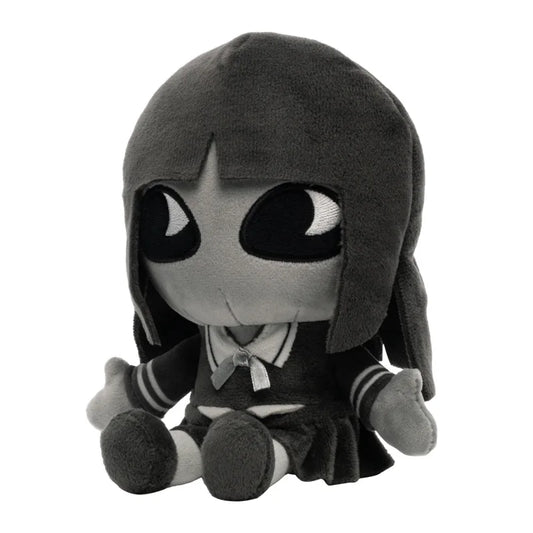
Picture a plush ghost with hollow black eyes and a tiny, stitched smile. Your brain fires two signals at once: one says danger, one says hug it immediately. That contradiction is the whole magic of creepy-cute, and it is not an accident. The psychology behind why we love adorable but spooky monsters sits at a genuine crossroads of evolutionary neuroscience, Japanese pop culture, and the deeply human need to make peace with fear. By the end of this article you will understand exactly what is happening in your brain when a smiling skeleton makes your heart sing, where this aesthetic came from, and why it is showing up everywhere from your favorite games to your plush shelf.
⚡ Quick Answer
Creepy-cute works because our brains hold two responses at once: the evolutionary nurturing reflex triggered by round eyes and chubby shapes (Kindchenschema), and the adrenaline-tinged thrill of safe danger. When a monster is clearly harmless but visually spooky, the result is a uniquely satisfying emotional blend that feels comforting, playful, and just a little daring.
The Science of Cute: Why Big Eyes Rewire Your Brain
Before we can talk about creepy-cute, we have to talk about cute on its own. In 1943, Austrian ethologist Konrad Lorenz identified what he called the Kindchenschema (baby schema): a set of infantile physical features that trigger an automatic nurturing response in adult humans. The list includes a large round head relative to body size, oversized eyes, chubby cheeks, a small nose, and short, stubby limbs. These features are not just charming. They are a biological on-switch.
A landmark 2009 study published in Proceedings of the National Academy of Sciences found that baby schema directly activates the nucleus accumbens, the core reward structure in the brain's mesocorticolimbic system, the same circuitry that lights up for food, music, and romantic attraction. Put simply, looking at something with baby-like features gives your brain a measurable hit of reward-seeking motivation. You do not choose to find it appealing. You are wired to.
Key Stat: A 2009 study in PNAS confirmed that baby schema activates the brain's nucleus accumbens, the same reward center engaged by food, music, and attraction, regardless of whether the viewer has children.
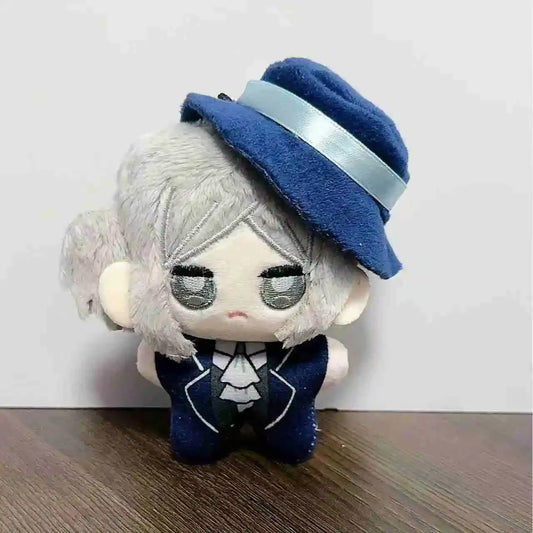
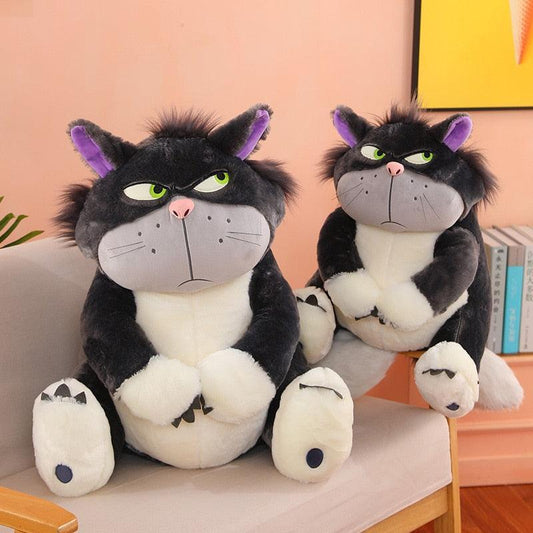
Here is where it gets relevant to monster design. Creepy-cute characters are almost always built on a Kindchenschema skeleton. Take any beloved spooky character and look at the proportions: the head is enormous relative to the body, the eyes are massive and round, the limbs are stubby, the overall silhouette is soft. The horror elements, hollow pupils, dripping shadows, stitched mouths, are layered on top of that foundational cuteness blueprint. Your brain fires the nurturing response first. The spooky elements arrive after. That sequence matters.

Safe Danger: How Fear Becomes Fun
Once you understand the cute response, the second piece of the creepy-cute puzzle falls into place. Fear is genuinely pleasurable when we know we are safe. Coltan Scrivner, a behavioral scientist at the Recreational Fear Lab at Aarhus University who studies the evolutionary and psychological underpinnings of our fascination with horror, describes the attraction to scary entertainment as a form of play that lets us experience the physiological thrill of threat without any real risk.
"Fear, especially this time of year with haunted houses and scary movies, is such a social bonding experience."
When you look at a creepy-cute monster, your amygdala registers the spooky elements (darkness, hollow eyes, horror iconography) and sends a low-level threat signal. Your cortisol and adrenaline nudge upward. But because the monster is also undeniably cute, the nurturing response runs simultaneously. The brain resolves the tension by framing the whole experience as play. The result is a kind of emotional carbonation: two charged feelings mixed together that feel more interesting than either one alone.
Research from Uprise Psychology supports this framing, noting that spooky experiences tap into deep psychological needs and can help manage stress and build resilience precisely because they offer controlled exposure to fear signals. A smiling plush monster is the softest possible version of that exposure.
Pro Tip: If you collect creepy-cute plush and feel oddly soothed by having them around, that is not strange. You are essentially running a low-stakes fear-and-comfort cycle on loop, which research suggests can genuinely reduce ambient anxiety.
From Japan with Teeth: The Origins of Gurokawa
Creepy-cute as a deliberate aesthetic tradition has a name and a home: Gurokawa (グロカワ), a Japanese portmanteau of "grotesque" (guro, グロ) and "cute" (kawaii, カワイ). It emerged from Japan's underground alternative subcultures and found mainstream traction through fashion, character design, and music.
Within the larger kawaii ecosystem, gurokawa occupies the horror corner. As a 2025 academic paper published in the journal Fashion Theory via Taylor & Francis noted, kawaii has expanded well beyond innocence and sweetness to include darker, emotionally complex subgenres such as guro-kawaii, which juxtaposes cuteness with violent or disturbing imagery. It is not a bug in kawaii culture. It is a feature, a deliberate challenge to the assumption that cute must mean safe and cheerful.
One of the most iconic gurokawa characters is Mori Chack's Gloomy Bear, a pale pink bear with blood around its mouth. The design is unambiguous: the bear has clearly attacked someone. And yet the round body, soft pink palette, and oversized eyes make it unmistakably cute. That coexistence is the whole point. Gloomy Bear became an international cult collectible not despite its violence but because of the way the violence is wrapped in softness.
Gurokawa's Western cousin arrived via Pastel Goth (which gurokawa directly inspired) and found fertile ground in horror game fandoms, indie game character design, and the kind of online spaces where someone might spend three hours debating whether a particular enemy design crosses from unsettling into adorable.
Why Fan Culture Took Creepy-Cute Global
The global spread of creepy-cute is inseparable from the rise of digital fan communities and the games, anime, and indie media they orbit. Horror game design in particular has been a massive engine for the aesthetic. When a developer renders a genuinely threatening enemy with oversized expressive eyes and soft, rounded proportions, something interesting happens: players form emotional attachments to the thing trying to kill them. That attachment generates fan art, plush demand, and an entire afterlife for the character beyond the game itself.
Indie games have been especially fertile ground. Titles built around cute-but-eerie visual languages have generated enormous collector communities. The characters arrive already loaded with that Kindchenschema structure, so the nurturing response fires immediately even when the lore around them is dark.
Anime contributes the same energy. Shows that layer genuine psychological horror or moral complexity under soft, kawaii-adjacent character designs create a tonal friction that fans find deeply compelling. It is the same mechanism that makes a villain with perfectly round eyes and a cheerful voice more unsettling, and more beloved, than a villain rendered in pure grimness.
Key Stat: According to a 2025 industry report from Gifts & Decorative Accessories, 58% of Gen Z consumers plan to purchase plush in the next 12 months, with licensed character merchandise (including horror and dark-themed IPs) driving a significant portion of that demand.
I noticed this dynamic clearly when I first started collecting horror-adjacent plush. The pieces that got the most attention from guests in my apartment were never the straightforwardly cute ones. They were the ones that made people stop, tilt their heads, and say "that is deeply wrong but I kind of love it." There is something in that pause, that moment of the brain catching itself, that is more memorable and more emotionally engaging than simple cuteness ever manages on its own. The best creepy-cute designs hold you there in that pause.
The Uncanny Sweet Spot: Why Stylized Monsters Work
You have probably heard of the uncanny valley: the point at which a human-like representation becomes so realistic that it tips into deeply unsettling territory. Hyper-realistic humanoid robots, for instance, provoke unease precisely because they look almost human but not quite. The brain struggles to categorize them, and that struggle registers as dread.
Creepy-cute design sidesteps the uncanny valley entirely by going in the opposite direction. As researchers from Biology Insights note, designers who embrace a clear artistic style, with oversized eyes, simplified facial structures, and distinct cartoonish elements, prevent the cognitive dissonance that arises when an entity looks almost human but slightly wrong. A monster that looks like a monster, but a soft and round one, never triggers the uncanny valley because it never tries to pass as human. It sits comfortably in its own category.
This is why stylization is essential to the creepy-cute formula. Push the design too far toward photorealism and you lose the safety. Keep the proportions soft and exaggerated and the brain happily processes it as play, not threat.
Identity, Aesthetics, and What Your Monster Says About You
There is a social and identity dimension to creepy-cute that goes beyond brain chemistry. Gravitating toward dark kawaii aesthetics is a way of signaling that you contain multitudes: that you can hold softness and edge simultaneously, that you are not reducible to one register. For a lot of people drawn to subcultures around anime, horror games, and indie art, that signal matters.
The Kore Kawaii style guide describes dark kawaii as a deliberate collision of two things that culture says cannot coexist, and notes that its power comes precisely from that tension. Dark kawaii challenges the assumption that cute must also mean innocent, cheerful, or safe. By insisting on the compatibility of cuteness and darkness, it offers a more honest aesthetic philosophy, one that acknowledges that people, like the characters they love, are rarely one simple thing.
This resonates particularly with the Yami Kawaii movement, which grew partly as a way for young Japanese creatives to process and express emotions like anxiety and depression through a visual language that was acceptable within kawaii culture's soft aesthetics. The monsters, in that context, are proxies for internal experience. Giving a feeling big round eyes and a stitched smile makes it manageable.
Why Creepy-Cute Plush Toys Hit Different
All of the psychology above intensifies when the creepy-cute character is made physical. A plush toy engages tactile processing on top of visual processing. The softness of the material sends yet another signal of safety, warmth, and comfort to the brain. You are now holding something that looks slightly ominous and feels like a cloud. The contradiction is impossible to resolve, so your nervous system settles into the pleasurable state of accepting both at once.
This is not a niche phenomenon. Adults buying plush for emotional comfort and personal expression is a documented and growing trend. The kidult market (adults buying toys for themselves) is expanding rapidly, driven by a combination of nostalgia, self-care, and the kind of deliberate identity curation that social media has made both possible and appealing. Creepy-cute plush sits at the center of that trend because it satisfies the emotional complexity that simple cuteness cannot deliver on its own.
Handmade pieces carry an additional layer. When a plush is handmade rather than factory-produced, it arrives with a sense of uniqueness and intentionality that amplifies the emotional investment. The stitching is visible. The character feels specific rather than generic. That specificity strengthens the attachment, which is already primed by the Kindchenschema response and the comfortable low-level tension of the creepy-cute aesthetic.
Pro Tip: When choosing a creepy-cute plush, the ones with the strongest emotional pull tend to have the most exaggerated baby-schema proportions: the largest head-to-body ratio, the roundest eyes. Trust that instinct. Your nucleus accumbens is doing the heavy lifting.
Frequently Asked Questions
What is the creepy-cute aesthetic?
Creepy-cute is an aesthetic that combines horror or macabre imagery with cute, kawaii-adjacent design elements: think round-eyed ghosts, smiling skeletons, or monsters with soft pastel palettes. It originated in Japanese gurokawa culture and spread globally through anime, gaming, and indie art communities.
Why do people find spooky things cute?
It comes down to two overlapping brain responses: the Kindchenschema nurturing reflex triggered by baby-like features (large eyes, round heads), and the safe-danger thrill of mild fear in a no-risk context. When a scary design carries cute proportions, the brain fires both responses simultaneously, which produces a uniquely satisfying emotional blend.
What is gurokawa and how is it different from other dark kawaii styles?
Gurokawa (grotesque plus kawaii) focuses specifically on horror and gore rendered in cute visual styles. It differs from Yami Kawaii, which is more focused on dark mental health themes, and from Pastel Goth, which incorporates gothic fashion elements. Gurokawa is the most directly horror-adjacent of the three dark kawaii traditions.
Is it normal for adults to collect creepy-cute plush toys?
Completely. Adult plush collecting (the kidult market) is a documented and growing trend driven by emotional comfort, identity expression, and nostalgia. Creepy-cute plush appeals to adults precisely because its tonal complexity matches adult emotional range in a way that purely cheerful toys often do not.
Why does creepy-cute design avoid the uncanny valley?
Creepy-cute characters are stylized, not realistic. The uncanny valley effect is triggered when something looks almost human but slightly wrong. Stylized monster designs with exaggerated proportions never try to pass as human, so the brain processes them as a clear category (cartoon/character), bypassing the cognitive dissonance that causes unease.
The Monster in the Mirror
The creepy-cute aesthetic is not a quirk or a phase. It is a psychologically coherent response to the full spectrum of what it feels like to be human: soft and tough, comforted and unsettled, drawn to both safety and the thrill of something slightly beyond it. The monster with the big round eyes and the stitched smile is not confused about what it is. It knows exactly what it is doing to your brain, and so now do you.
If you are building a collection, decorating a space, or looking for a gift that lands differently from anything else on the shelf, creepy-cute is the aesthetic that earns the pause, the head-tilt, and the "I kind of love it." That is not accidental. That is your nucleus accumbens and your amygdala reaching an agreement.
Sources & References
- Baby Schema Modulates Brain Reward System in Nulliparous Women - PNAS, 2009
- Kawaii as a Tool of Emotional Expression: Yami-Kawaii and Related Categories - Fashion Theory (Taylor & Francis), 2025
- Why We Love Spooky Things: A Psychologist's Perspective - Uprise Psychology, 2025
- Why Do We Love Scary Things? With Coltan Scrivner, PhD - American Psychological Association
- Why We Love Getting Spooked: The Psychology of Halloween - University of Virginia, 2025
- Gurokawa - Aesthetics Wiki
- Dark Kawaii: Gothic and Horror Kawaii Style Guide - Kore Kawaii, 2025
- Top Plush Toy Trends for 2026 - Gifts & Decorative Accessories, 2025
- The Uncanny Valley Effect: Why It Is So Unsettling - Biology Insights, 2025