

Julian David
A digital content creator and deep-dive gaming analyst specializing in the visual language, character psychology, and power-scaling mechanics of iconic gaming franchises.
Published: April 23, 2026 | 12 min read | Last updated: April 23, 2026
Devil May Cry Season 2 Trailer Breakdown: Vergil, Mundus, and Whether This Season Can Finally Fix What Season 1 Broke
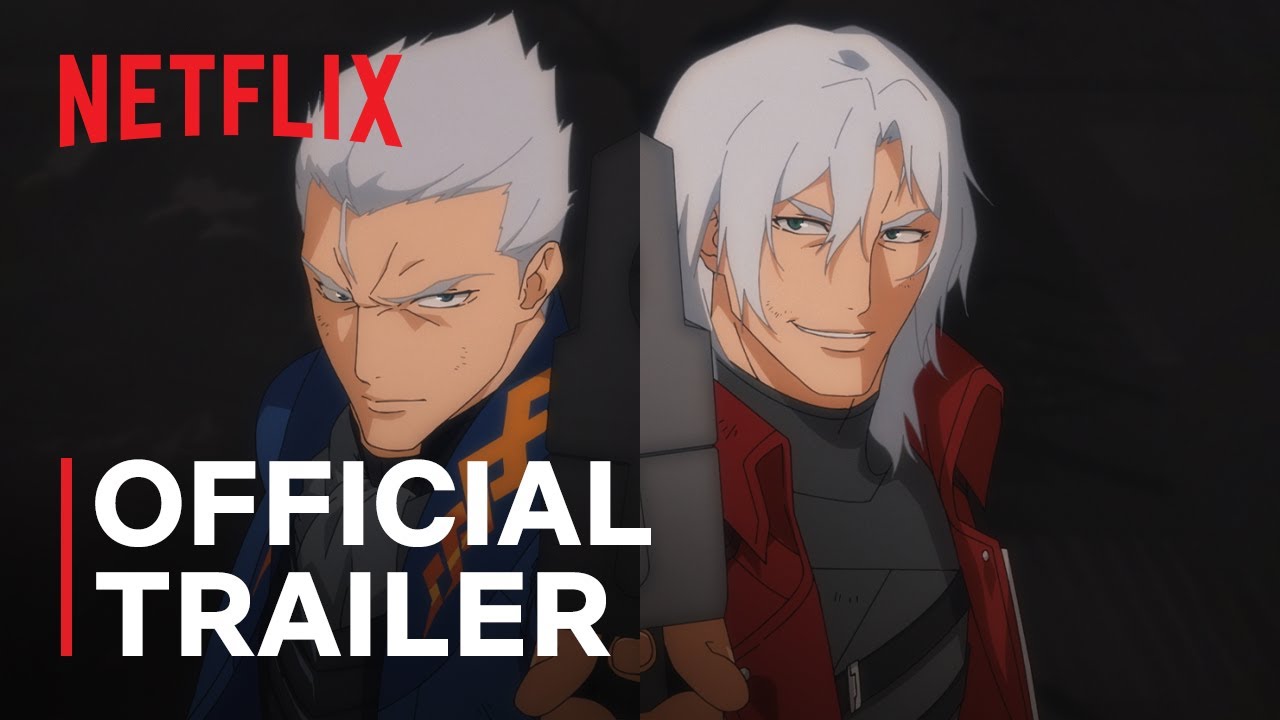
The Devil May Cry Season 2 trailer dropped on April 21, 2026, and within hours the discourse had already split the fanbase down the exact same fault line as last time. One camp is losing their minds over Vergil finally sharing the screen with Dante. The other is cataloguing every lore deviation like a prosecutor building a case. Both reactions make sense. What this trailer actually shows, when you sit with it, is something more interesting than either camp is giving it credit for: a season that has studied its predecessor's mistakes and is betting hard on a single corrective move. The move is Vergil. This article breaks down every major story signal in the Season 2 trailer, what the Mundus alignment actually means for Vergil's character arc, why bringing Arius and Argosax into the anime is a bigger swing than it sounds, and whether any of this is enough to heal the wounds Season 1 left on the franchise's most dedicated fans.
Quick Answer
Devil May Cry Season 2 premieres May 12, 2026 on Netflix with 8 episodes. The trailer confirms Vergil has aligned with demon king Mundus, a major departure from game canon. Season 2 also introduces Arius from DMC2 and hints at Argosax. The season focuses on the Dante and Vergil reunion.
What We Know: Season 2 Release, Cast, and Episode Count
Season 2 of Devil May Cry arrives on Netflix on May 12, 2026, carrying the same eight-episode structure as its predecessor. The core English voice cast returns intact: Johnny Yong Bosch as Dante, Robbie Daymond as Vergil, and Scout Taylor-Compton as Lady. For longtime fans, Bosch's casting carries its own layer of franchise history, given that he previously voiced Nero in both Devil May Cry 4 and Devil May Cry 5 before stepping into the protagonist's red coat for this adaptation.
Key Stat: Devil May Cry Season 1 debuted at number four on Netflix's global Top 10 with 5.3 million views in its first three days, reaching the Top 10 in 87 countries. The season was renewed within a week of premiere.
The series is produced by showrunner Adi Shankar, the same creative force behind the acclaimed Castlevania animated series, with animation handled by South Korean studio Studio Mir. Shankar has been publicly committed to a multi-season arc since at least 2021, and that long-game planning is now visible in the way Season 2's trailer is structured. This is not a show scrambling to find a direction after a surprise renewal. The architecture was laid in advance.
The Vergil-Mundus Alliance: What "He Set Me Free" Actually Means
The most debated three seconds in the entire trailer arrive early: Dante, looking at Vergil with unmistakable horror, asking, "What did Mundus do to you?" Vergil's answer is the lore bomb. He claims Mundus set him free.
In the game canon, specifically in Devil May Cry 3: Dante's Awakening (2005), Vergil's relationship with Mundus is defined entirely by subjugation. After being defeated in the demon world, Vergil is captured, enslaved, and psychologically broken into Nelo Angelo, the corrupted knight who serves as one of the original game's recurring antagonists. The horror of that arc is precisely that Vergil, the proudest character in the franchise, loses everything that defines him under Mundus's dominion. His eventual reclamation of identity in Devil May Cry 5 is one of the most satisfying payoffs in the series because of how total that initial loss was.
Shankar's version discards that framework. Here, Vergil is not enslaved. He chose this, or at least believes he did. That one change detonates most of the sympathy architecture that makes Vergil so compelling in the games. The fan discourse that erupted immediately after the trailer dropped is not irrational. The concern is legitimate: if Vergil's darkness is a willing choice rather than a corruption imposed on him at his most vulnerable, the emotional stakes of his eventual turn toward his brother collapse. What transforms from a rescue into just a negotiation.
The Two Readings That Keep Hope Alive
There are two ways to interpret this that do not require abandoning all narrative optimism. The first: Vergil is lying, or deceived. The claim that Mundus "set him free" could be the rationalization of someone who has been manipulated so thoroughly that they read subjugation as liberation. This is, in fact, more psychologically disturbing than simple enslavement and would serve Vergil's established characterization as someone who interprets strength and freedom as synonymous. A Vergil who voluntarily aligns with Mundus because Mundus offered him what his trauma made him crave, and who cannot see the transaction for what it is, is arguably the most interesting version of this story.
The second reading: strategic deception. Vergil has always been among the most calculating characters in the franchise. The trailer's closing moments show the brothers standing alongside each other against a shared threat. If Vergil has been working an angle against Mundus from inside his own court, the "he set me free" line becomes a performance rather than a confession. The fact that the trailer refuses to resolve this ambiguity suggests the writers are aware of it as a narrative tension point rather than an oversight.
"A war between worlds ignites as Dante must battle the only force that mirrors his own: his estranged twin brother, Vergil."
What is worth noting is that the official synopsis uses the word "estranged" rather than corrupted or enslaved. That framing is deliberate and consistent with a show that wants to keep both readings available for as long as possible before committing. It is a smart structural choice, even if it is the kind of thing that only buys goodwill if the eventual execution earns it.
Why Bringing Back Arius and Argosax Is a Bigger Bet Than You Think
The single most surprising creative decision in Season 2 is not the Vergil situation. It is the rehabilitation of Devil May Cry 2's entire villain ecosystem.
Devil May Cry 2, released in 2003, is broadly considered the weakest entry in the franchise. Its version of Dante is famously silent and detached, a departure from the cocky showmanship that defines the character. Its story is thin even by the franchise's pulpy standards. Arius, the corporate sorcerer who serves as the game's primary antagonist, is largely forgotten even by people who completed the game. Argosax, the demonic entity who sits behind him in the lore as a rival to Mundus himself, appears in a form so uninspiring that most players remember the fight more for its awkwardness than its drama.
Shankar is using all of this as raw material. Arius appears in the Season 2 trailer pursuing demonic artifacts in a way that closely mirrors his game role, with the key difference that his relationship to Dante appears more complicated than straightforward antagonism. The Season 1 finale already seeded his arrival, suggesting the show has been building toward this integration for some time. If the anime can make Arius genuinely menacing, or better yet give him a personality that justifies his screen time, it will have achieved something the source material never managed.
The Argosax angle is even more intriguing for lore veterans. In the games, Argosax was canonically a demon powerful enough to have ruled hell after Mundus's initial defeat at Sparda's hands. The anime trailer appears to show something resembling Argosax's final form, and several frame-by-frame analyses by DMC community members on forums like ResetEra have flagged the visual. If accurate, Season 2 is constructing a three-tier villain structure: Arius as the visible human-world threat, Mundus as the cosmic-level antagonist, and Argosax as a potential wild card whose lore position makes him a threat to both sides. That is dramatically more coherent than anything DMC2 attempted.
Watch for this: In the games, Vergil receives the Yamato blade as part of his own arc. The trailer shows Mundus handing Vergil the Yamato directly, which inverts the weapon's narrative significance. Whether that inversion pays off thematically or just functions as a shortcut is one of the season's key open questions.
What Season 1 Got Wrong and What Season 2 Is Doing About It
To understand what Season 2 is attempting, you need to be honest about Season 1's specific failures, because they were not random. They were the product of a coherent set of choices that simply did not work.
The most consistent criticism from dedicated franchise fans was tonal dissonance. Devil May Cry's DNA is campy, operatic, and deeply personal. Its drama derives from Dante's psyche and his relationship to loss and power, not from geopolitical allegory. Season 1 wrapped its demon mythology in what amounted to post-Iraq War political commentary, complete with a sequence scored to Green Day's "American Idiot" as the human military wages war on demonkind. The intent was not wrong exactly. But the execution created a show that kept interrupting its own momentum with messaging that felt both heavy-handed and somehow dated simultaneously.
The second major complaint was structural: Lady received an enormous amount of screen time relative to Dante, and many viewers found her characterization in the anime a significant departure from what makes her compelling in the games. IMDb reviews from Season 1 viewers repeatedly cited this as the season's most frustrating quality-of-life issue. Not because Lady is an unworthy character, but because the imbalance felt like it was coming at the cost of the show's actual thesis statement, which was supposed to be about Dante.
Season 2's trailer addresses both of these directly without ever acknowledging them. The political scaffolding is absent from every frame. What replaces it is exactly what the franchise has always been most powerful at: two brothers shaped by the same tragedy who became irreconcilable opposites, forced back into the same room by circumstances neither can escape. That is pure DMC. It is also, based on the trailer, the entire structural spine of Season 2.
Key Context: Devil May Cry Season 1 holds a 96% score on Rotten Tomatoes, reflecting strong critical reception, but the Rotten Tomatoes score substantially diverges from fan sentiment among dedicated game players, who represent the show's most vocal audience segment.
I have played every mainline Devil May Cry game, and I will tell you from experience that what makes the franchise emotionally durable is not the demon lore. It is the specific quality of grief that defines both brothers. Dante's grief for their mother Eva, and the way it turns outward into protective fury. Vergil's grief for the same woman, and the way it turns inward into a obsession with power as armor. Season 1 did not have room for that because it was too busy explaining the world. Season 2, if the trailer is an honest preview, has finally cleared the space.
The Dante and Vergil Reunion: Can This Show Pull Off Its Most Important Scene?
The Dante and Vergil dynamic is the most beloved relationship in hack-and-slash gaming. Full stop. DMC3 built an entire game around it and delivered one of the most satisfying brotherly confrontations in the medium. DMC5 returned to it over a decade later and somehow made it hit even harder. The animated series has been building to this moment since the Season 1 finale revealed Vergil's survival, and Season 2 is the delivery window.
The pressure on this is enormous, and the trailer earns some cautious optimism. The visual language of the reunion sequence is strong. Dante does not look triumphant when he finds Vergil. He looks devastated. That is the correct emotional register. The show appears to understand that seeing Vergil again is not a victory for Dante. It is a reopening of every wound that made him who he is. The line, "What did Mundus do to you?" is as much self-protective grief as it is a question, and Bosch's delivery in the trailer clip communicates that.
The trailer also shows the brothers fighting alongside each other in at least one sequence, which suggests the season does not simply sustain their opposition for eight episodes before an abrupt reconciliation. The architecture appears to be: conflict, revelation, tentative alignment against a greater threat. That is the correct narrative shape for this story, borrowed from DMC5's own structure and adapted for the series's altered timeline.
Shot-by-Shot: The Trailer Details That Veteran Fans Will Not Miss
Beyond the narrative framework, the trailer is dense with visual references that reward franchise familiarity. Here is what stands out most when you slow it down.
The Yamato Hand-Off
Mundus is shown giving Vergil the Yamato, which the community has already identified as a significant departure from the games. In the source material, the Yamato is Vergil's by birthright, passed down from Sparda. Having Mundus bestow it reframes the blade's meaning entirely: instead of an heirloom that connects Vergil to his father's legacy, it becomes a gift from his corruptor. That is either a clumsy shortcut or a deliberate inversion that the season will interrogate. The trailer does not tell you which.
Force Edge and the Triple Devil Arm Setup
Attentive viewers will catch shots of Vergil wielding both the Yamato and the Force Edge, the precursor sword to Sparda's legendary blade. DMC fans will recognize this as the setup toward Vergil's canonical three-arm configuration: Yamato, Beowulf, and Force Edge or the Mirage Blade derivative. The show is telegraphing a full Devil Trigger sequence for Vergil, and if Studio Mir delivers that with the same craft they brought to Dante's transformation moments in Season 1, it will be spectacular regardless of the lore debates.
Mundus with a Sword
In the games, Mundus never used a conventional sword. He was a reality-bending cosmic entity. The trailer shows him with one, which the JCR Comic Arts breakdown flagged as a new invention. The throne imagery and wing unfurling are recognizable from his canonical appearance, but the sword positions him as a more direct physical combatant, which would be a visually exciting change for animation purposes even if it softens his mythological scale slightly.
Portal Use and the DMC5 Connection
Vergil's use of portals in the trailer echoes his moveset from Devil May Cry 5 specifically, where the Yamato's dimensional-cutting properties were displayed most explicitly. The show is clearly drawing from the entire franchise timeline rather than adapting any single entry, which is consistent with how Adi Shankar has described the project's relationship to the source material: inspired by, not bound to.
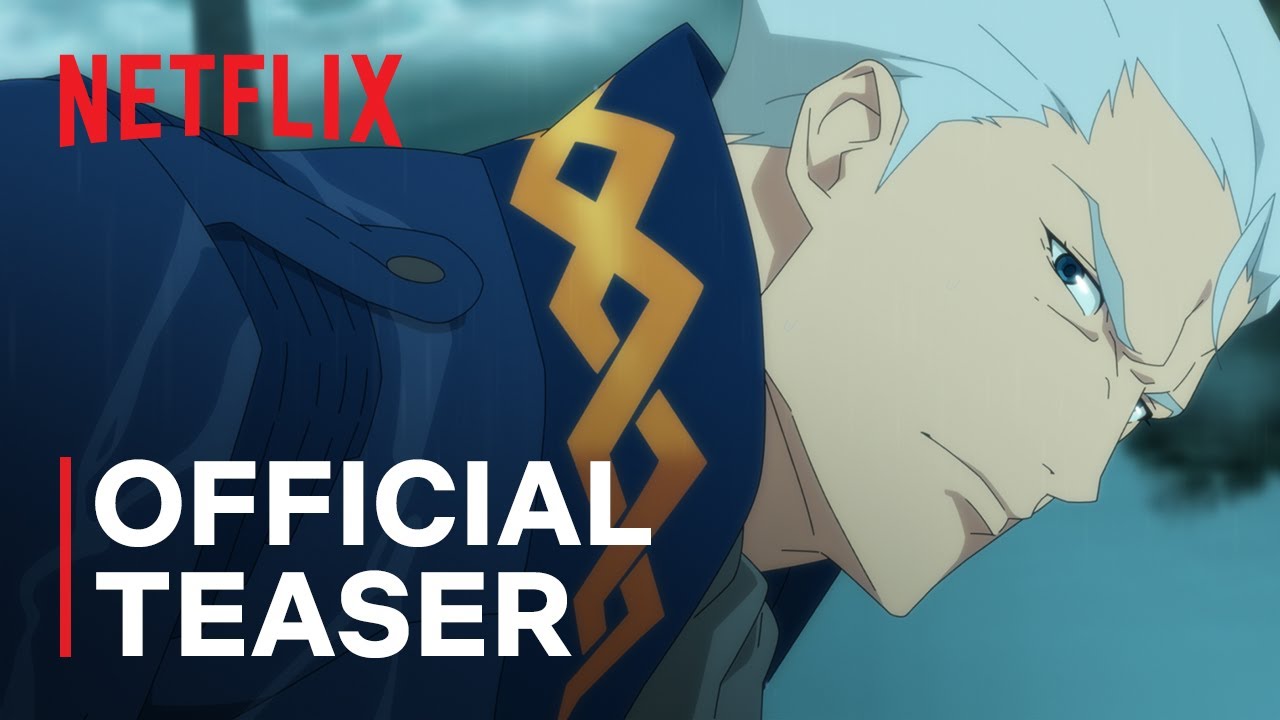
Game Canon vs. Netflix Anime: Key Departures So Far
| Element | Game Canon | Netflix Anime |
|---|---|---|
| Vergil and Mundus | Vergil is enslaved and tortured into Nelo Angelo | Vergil claims Mundus "set him free" (willing alliance or deception) |
| The Yamato | Vergil's by birthright from Sparda | Bestowed on Vergil by Mundus |
| Setting | Gothic, stylized, loosely contemporary | Post-modern with heavy real-world political parallels |
| Arius | Primary villain of DMC2, mostly forgotten | Teased in S1 finale, expanded role in S2 |
| Mundus's Form | Cosmic entity, no conventional weapons | Shown wielding a sword alongside throne/wing imagery |
The Verdict Before the Drop
Devil May Cry Season 2 is carrying the weight of a fandom that felt burned. The trailer earns real optimism, not blind hype. The structural pivot toward Dante and Vergil as the emotional center, the expansion of the villain roster with villains who have actual narrative relationships to the brothers, and the apparent shedding of Season 1's most tonally mismatched elements are all signs that Shankar's team processed the criticism and responded. Whether the Vergil-Mundus alliance pays off or collapses under scrutiny depends entirely on execution, and eight episodes is enough space to either make it profound or expose it as the shortcut the most skeptical fans already suspect it is.
What is certain is that Devil May Cry Season 2 is the most anticipated gaming adaptation premiere of 2026. May 12 is three weeks away. There is genuinely something at stake.
Frequently Asked Questions
When does Devil May Cry Season 2 come out on Netflix?
Devil May Cry Season 2 premieres on Netflix on May 12, 2026. The season consists of eight episodes and features returning voice cast including Johnny Yong Bosch as Dante and Robbie Daymond as Vergil. It was produced by Adi Shankar and animated by Studio Mir.
Why is Vergil working with Mundus in Devil May Cry Season 2?
The trailer shows Vergil claiming that Mundus "set him free," suggesting either a willing alliance or a deeply manipulated one. This diverges from game canon, where Vergil is enslaved by Mundus. Whether his allegiance is genuine, a deception, or psychological manipulation remains the season's central mystery.
Who is Arius in the Devil May Cry Netflix anime?
Arius is a powerful sorcerer and businessman who originally appeared as the main villain in the Devil May Cry 2 video game. In the Netflix anime, he was teased at the end of Season 1 and takes a larger role in Season 2, pursuing demonic artifacts while connected to both Dante and the Mundus conflict.
Is Devil May Cry Season 2 faithful to the games?
No, the Netflix anime is an inspired reimagining rather than a direct adaptation. Season 2 draws from the lore of DMC1, 2, 3, and 5 while making significant changes, including how Vergil relates to Mundus, who gives him the Yamato, and the show's overall post-modern setting and tone.
How many episodes does Devil May Cry Season 2 have?
Devil May Cry Season 2 has eight episodes, matching the structure of the first season. The show drops all episodes simultaneously on Netflix on May 12, 2026, allowing viewers to watch at their own pace across the full season in a single sitting if preferred.
Sources and References
- Animated Devil May Cry Show's 2nd Season Unveils New Trailer, Key Art — Anime News Network, April 21, 2026
- Netflix Drops Devil May Cry Season 2 Trailer — VGTimes
- Devil May Cry Season 2: Everything We Know So Far — What's on Netflix
- Dante vs. Vergil Showdown in Devil May Cry Season 2 Trailer — Digital Trends, April 22, 2026
- New Devil May Cry Season 2 Trailer Teases Bold Return to Divisive Storyline — Fiction Horizon
- Netflix Devil May Cry Season 2 Release Date and Plot Details for 2026 — InGameNews
- Netflix Devil May Cry Season 2 Official Trailer Breakdown — JCR Comic Arts, April 22, 2026
- I'm a Huge Devil May Cry Fan, And That's Why I Have a Big Problem With Its Anime — Screen Rant, April 2025
- Devil May Cry — Official Netflix Series Page