

Kei Urana
A former protégé of Atsushi Ohkubo (Soul Eater), Kei Urana is a rising star in the manga industry and the creator of Gachiakuta.
Published: March 23, 2026 | 10 min read | Last updated: March 23, 2026
Gachiakuta vs Jujutsu Kaisen: Is the New Era of Dark Shonen Finally Here?
In January 2026, something happened that shook the manga industry: Gachiakuta Vol. 1 knocked Jujutsu Kaisen Vol. 28 off the top spot on Circana BookScan's Adult Graphic Novel chart — an almost unthinkable feat for a series that barely a year earlier most Western fans had never heard of. The dark shonen landscape just shifted under everyone's feet. Gachiakuta, a gritty dystopian revenge manga by Kei Urana, finished its explosive 24-episode anime run on Crunchyroll in December 2025, earned a jaw-dropping 100% on Rotten Tomatoes, and has already had a Season 2 greenlit. The question isn't whether Gachiakuta is good. It obviously is. The real question — the one fans of Jujutsu Kaisen, Chainsaw Man, and Soul Eater are actually arguing about — is whether Gachiakuta represents something bigger: the arrival of a genuinely new era of dark shonen. Let's dig into what makes this series tick, where it stacks up against JJK, and why your next anime binge probably starts in a trash heap.
⚡ Quick Answer
Gachiakuta is a 24-episode dark shonen anime (Crunchyroll, July–December 2025) by Studio Bones, based on Kei Urana's manga. It beat Jujutsu Kaisen on U.S. bestseller charts in early 2026, boasts a 100% Rotten Tomatoes score, and has a confirmed Season 2. It's the strongest dark shonen contender since Chainsaw Man.
What Is Gachiakuta? The Pitch in Plain English
Gachiakuta (ガチアクタ roughly "Legit Trash") is a manga by Kei Urana that launched in Kodansha's Weekly Shōnen Magazine in February 2022. As of early 2026, it spans 18 collected volumes in Japan, with the first 10 available in English through Kodansha USA.
The setup is blunt and brilliant. A floating city called the Sphere operates on a brutal caste system: the wealthy live in luxury up top, while the poor "tribesfolk" descendants of criminals scrape by on the outer perimeter below a wall. Both groups dump their garbage, and their criminals, into an endless abyss called the Pit. Rudo Surebrec, our orphaned protagonist, scavenges discarded objects from the upper city's trash. He's poor, angry, and fiercely loyal to his adoptive father Regto. Then Regto is murdered, Rudo is framed for it, and he's thrown into the Pit like just another piece of garbage.
He survives and that's where the story really begins. The Pit isn't an empty void. It's a toxic wasteland called the Ground, overrun with Trash Beasts: monsters born from the negative emotional energy (called Anima) locked inside discarded objects. Rudo discovers he's a "Giver," someone who can channel Anima into loved objects and turn them into weapons his Vital Instrument being a pair of battered work gloves his father gave him. He joins a faction called the Cleaners, who hunt Trash Beasts and protect the Ground's survivors, all while Rudo nurses a single, laser-focused goal: get back up to the Sphere and burn it all down.

Urana has been open about the manga's real-world inspiration. She worked as an assistant under Atsushi Ohkubo the creator of Soul Eater and Fire Force who publicly called her his "legitimate successor." That lineage shows. Gachiakuta carries the same bone-deep weirdness and kinetic energy as Ohkubo's work, wrapped in something that feels even more politically charged and emotionally raw.
📊 Key Stat: Per ICv2 and Circana BookScan data (January 2026), Gachiakuta Vol. 1 ranked #1 on the Adult Graphic Novel chart — the first time a non-JJK title has claimed that position in months.
Why the Vital Instruments Power System Hits Different
Most dark shonen series hang their hat on a power system that's clever in isolation but ultimately arbitrary. Cursed Energy in JJK is cool to watch but doesn't mean anything outside the fights. The Vital Instruments in Gachiakuta are different they are the theme, not just the mechanic.
Here's how it works. Anima is a mysterious energy generated by emotional attachment to objects. When someone genuinely loves and cares for something over time, that object accumulates positive Anima. A Giver can tap into that stored emotion and awaken the object as a weapon a Vital Instrument. The key is that the instrument is a direct reflection of the wielder's relationship with the object. Rudo's gloves rough, worn, full of his father's care become powerful exactly because of what they meant. Riyo's oversized scissors are an expression of her violent, lonely past. Every weapon is a character study.
Urana rooted this concept in real Japanese folklore. The Tsukumogami spirits said to inhabit objects after 100 years of use are a direct cultural ancestor of Gachiakuta's Anima system. This gives the series a mythological depth that most Western readers pick up instinctively without even knowing the source. When Rudo holds those gloves and fights, something ancient is happening.
💡 Pro Tip: If you're reading the manga, pay attention to which objects each Cleaner uses as their Vital Instrument they're not random. Each one is a deliberate statement about that character's identity and what they value.
And then there's the other side: the Trash Beasts. These monsters are born from the negative Anima in discarded objects the rage, grief, and hopelessness baked into things people threw away. In other words, the Sphere's callous consumerism has literally weaponized the Ground against itself. Every monster Rudo fights is a consequence of the system that produced him. The power system and the social commentary are inseparable. That's rare craftsmanship.
Gachiakuta vs Jujutsu Kaisen: A Real Comparison
Let's not be precious about this. Both series are legitimately excellent. Comparing them head-to-head is a way to understand what each one is trying to do not a death match.
| Category | Gachiakuta | Jujutsu Kaisen |
|---|---|---|
| World-building | Layered dystopian class system — central to every fight | Modern Japan with supernatural overlay — familiar backdrop |
| Power System | Vital Instruments (Anima / emotional attachment to objects) | Cursed Energy / Techniques (supernatural manipulation) |
| Protagonist | Rudo — rage-fueled, class-conscious, revenge-driven | Yuji — optimistic, friendship-forward, morally uncomplicated |
| Social Commentary | Core to the plot — classism, inequality, environmental decay | Present but secondary to supernatural action |
| Art Style | Rough, sketch-heavy, graffiti-influenced — intentionally chaotic | Polished, clean linework — conventionally beautiful |
| Anime Studio | Studio Bones (Mob Psycho 100, FMA: Brotherhood) | MAPPA (Chainsaw Man, AoT Final Season) |
| Series Status | Ongoing manga (18+ volumes); Season 2 confirmed | Manga concluded Sept. 2024; spinoff Jujutsu Kaisen Modulo ongoing |
| Rotten Tomatoes (Anime) | 100% critics score (Season 1) | 97% (Season 1) |
The most meaningful difference isn't animation quality or fight choreography — both are elite. It's structural. JJK is ultimately a story about characters operating within a broken system. The sorcerer hierarchy is corrupt and the series knows it, but Yuji and his friends are still fundamentally working alongside it, even as it betrays them. Rudo wants to destroy the system entirely. That's not just a personality difference. It shifts the whole moral logic of the story.
"Gachiakuta stands out as one of the most unique shonen anime in recent years, blending intense action with a striking artistic style."
Where JJK stumbled in its later arcs killed off too many fan favorites, left plot threads dangling, delivered an ending that split the fandom Gachiakuta is still in its build phase. It has the rare luxury of learning from JJK's mistakes in real time. The absence of a Gojo-equivalent (an untouchable "strongest character" who distorts the power scaling) keeps every fight feeling genuinely dangerous.
The Anime: Studio, Staff, Streaming, and Season 2
The Gachiakuta anime adaptation is nothing short of a dream team on paper and it delivered. Here's the full technical rundown:
- Studio: Bones (BONES FILM) — the studio behind Mob Psycho 100, Fullmetal Alchemist: Brotherhood, and My Hero Academia
- Director: Fumihiko Suganuma
- Series Composer: Hiroshi Seko — the same writer who handled Jujutsu Kaisen and Attack on Titan scripts
- Music: Taku Iwasaki (Soul Eater, Bungo Stray Dogs, Gurren Lagann)
- Episodes: 24 (two consecutive cours), aired July 6 – December 22, 2025
- Streaming: Crunchyroll (global, with English sub and dub)
- Opening Theme: "HUGs" by Paledusk (Cour 1); "Let's Just Crash" by Mori Calliope (Cour 2)
- Ending Theme: "TOMOSHIBI" by DUSTCELL (Cour 1); "Ban" by Karanoah (Cour 2)
- IMDb Rating: 8.0 / 10
- Rotten Tomatoes: 100% critics score
📊 Key Stat: Gachiakuta dominated Fall 2025 Crunchyroll rankings for multiple consecutive weeks, outpacing My Hero Academia, One Piece, and Solo Leveling during its run.
What About Season 2?
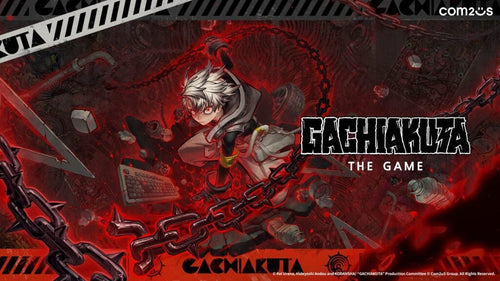
Season 2 was officially announced in December 2025, simultaneous with the Season 1 finale broadcast. Studio Bones is confirmed to return for production, with the same core creative team. No premiere date has been set, but industry production timelines point toward a late 2026 to early 2027 window. Beyond the anime, Gachiakuta is also getting a Japanese stage play (Tokyo's Stellar Ball, May 22–31, 2026; Kyoto's Rohm Theater, June 5–7, 2026) and an action RPG from Com2uS Group for PS5, Xbox Series X, and PC — the full franchise expansion treatment.
Is This the New Era of Dark Shonen?
The phrase "new era of dark shonen" gets thrown around every time something halfway edgy drops. Kagurabachi got that treatment. So did Chainsaw Man. So did Blue Lock. Most of those calls aged weirdly not because those series were bad, but because the scope of what they were doing didn't quite match the hype. Gachiakuta feels different, and I think it's worth explaining why.
I watched the first episode on its simulcast day and had the same gut reaction I had watching the first episode of JJK in 2020: this thing is not messing around. Gachiakuta opens with Rudo getting falsely condemned, thrown off a floating city, and landing in a hellscape all within the span of one episode, without flinching once. No slow-burn setup, no reassuring power-of-friendship pep talks. Just a kid in the garbage, angry and alive. By episode three, I'd already recommended it to four different people. That doesn't happen often.
What makes Gachiakuta actually different from its dark shonen peers is that its darkness is systemic rather than spectacular. JJK's darkness is in the body horror, the shocking deaths, the corruption of the sorcerer hierarchy. Chainsaw Man's darkness is in the psychological disintegration of its characters. Gachiakuta's darkness is in the quiet brutality of a world where people are treated like trash — literally — and nobody above the wall loses a minute of sleep over it. The Trash Beasts are terrifying, but the real villain is an economy of contempt. That lands harder in 2026 than it ever could have in 2012.

The "Dark Trio" Jujutsu Kaisen, Chainsaw Man, Mob Psycho 100 was always a slightly awkward categorization. Mob Psycho is as much a comedy about self-discovery as a dark action series. Chainsaw Man completed its anime run and is still waiting on Season 2 of the anime. JJK's manga has ended. The trio has been looking for a fourth member for a while. Gachiakuta isn't just a candidate it's the obvious one.
The timing matters too. The anime caught a perfect wave: it arrived exactly as JJK was closing its manga run and before any other new-gen dark shonen had fully established itself. The Crunchyroll "World Takeover" campaign advance screenings in 15 countries, graffiti-maker tools, global fan events treated Gachiakuta like a cultural event before a single episode had aired internationally. That kind of institutional confidence, matched by genuine quality, is rare. It's what turns a great anime into a generational one.
⚠️ Important: Gachiakuta is rated 16+ and earns it. The series deals with child abuse, slavery-adjacent conditions, class-based violence, and some genuinely disturbing body horror in later arcs. If you're recommending it to younger viewers, check the content first.
None of this means Gachiakuta is flawless. The first 10-12 episodes move slower than some viewers will want the manga's dense, kinetic art style takes time to fully translate into fluid animation. Some critics have flagged certain later sections as pacing-uneven. These are fair observations. But they're the complaints of a series with ambition, not a series that plays it safe. Gachiakuta takes swings. Most land. That's enough to put it in rare company.
Frequently Asked Questions
Is Gachiakuta better than Jujutsu Kaisen?
It depends what you value. Gachiakuta offers richer social commentary, a more philosophically integrated power system, and no completed-series baggage it's still building. JJK has the larger established fanbase, more iconic characters, and a broader tonal range. Both are genuinely excellent. Gachiakuta is the stronger argument right now in 2026.
Where can I watch Gachiakuta?
All 24 episodes of Gachiakuta Season 1 are available now on Crunchyroll with both English subtitles and English dub. It streams globally in North America, Europe, Oceania, South America, Asia, Africa, and the Middle East. Select regions may also find it on Netflix or Amazon Prime Video through licensing deals.
Will Gachiakuta get a Season 2?
Yes Season 2 was officially confirmed in December 2025 alongside the Season 1 finale. Studio Bones is returning for production. No premiere date has been announced, but industry estimates point toward late 2026 or early 2027 based on typical production timelines for 24-episode anime seasons.
Who is the creator of Gachiakuta?
Gachiakuta is written and illustrated by Kei Urana, with graffiti artwork by Hideyoshi Andō. Urana previously worked as an assistant to Atsushi Ohkubo (Soul Eater, Fire Force), who has publicly named her his "legitimate successor." The manga has been serialized in Kodansha's Weekly Shōnen Magazine since February 2022.
What is the power system in Gachiakuta?
Gachiakuta uses a system based on Anima emotional energy stored in objects through years of care and attachment. "Givers" can awaken these objects into Vital Instruments: personalized weapons that reflect the user's history and values. Negative Anima from discarded trash creates Trash Beasts, the series' monsters. The system is rooted in Japanese Tsukumogami folklore.
How many episodes does Gachiakuta Season 1 have?
Gachiakuta Season 1 ran for 24 episodes across two consecutive cours (halves), airing from July 6 to December 22, 2025. The first cour covered the early Ground arcs; the second escalated into the Raiders conflict. All episodes are available now on Crunchyroll in both subbed and dubbed formats.
The Verdict
Gachiakuta has done something that almost nothing does: it arrived at exactly the right moment with exactly the right material and didn't waste either. It knocked Jujutsu Kaisen off the top of the charts not through controversy or hype alone, but because readers got to the end of 24 episodes and immediately needed more story. That's the highest possible compliment a serialized manga adaptation can receive.
If you're a fan of Soul Eater's visual chaos, Fire Force's kinetic action, Chainsaw Man's refusal to comfort the reader, or JJK's high-octane fights with actual emotional stakes Gachiakuta is already your series. You just haven't started it yet. With Season 2 confirmed, a live-action stage play launching in Tokyo this May, a video game in development, and the manga still actively building toward its climax, there's never been a better entry point than right now.
Is this the new era of dark shonen? Probably yes. But more importantly, Gachiakuta is a great story being told at full volume by people who care about every panel of it. That's enough, regardless of which era we're in.
📚 Sources & References
- Gachiakuta — Wikipedia (Series Overview, Production Details, Sales Data)
- Jujutsu Kaisen Loses No. 1 Spot to Gachiakuta — CBR / ICv2 / Circana BookScan, January 2026
- Crunchyroll's New Dark Shonen Masterpiece — CBR, March 2026
- Gachiakuta: Perfect Rotten Tomatoes Score — Collider, March 2026
- Gachiakuta Officially Renewed for Season Two — Essential Japan, December 2025
- Gachiakuta Season 2 Anime Announced — Crunchyroll, December 2025
- Gachiakuta English Manga — Kodansha USA
- Gachiakuta: Best Dark Anime JJK Successor — CBR, August 2025
- Jujutsu Kaisen Already Has Its True Successor — ComicBook.com, May 2025
- Gachiakuta Live-Action Stage Play Announced — Collider, December 2025