


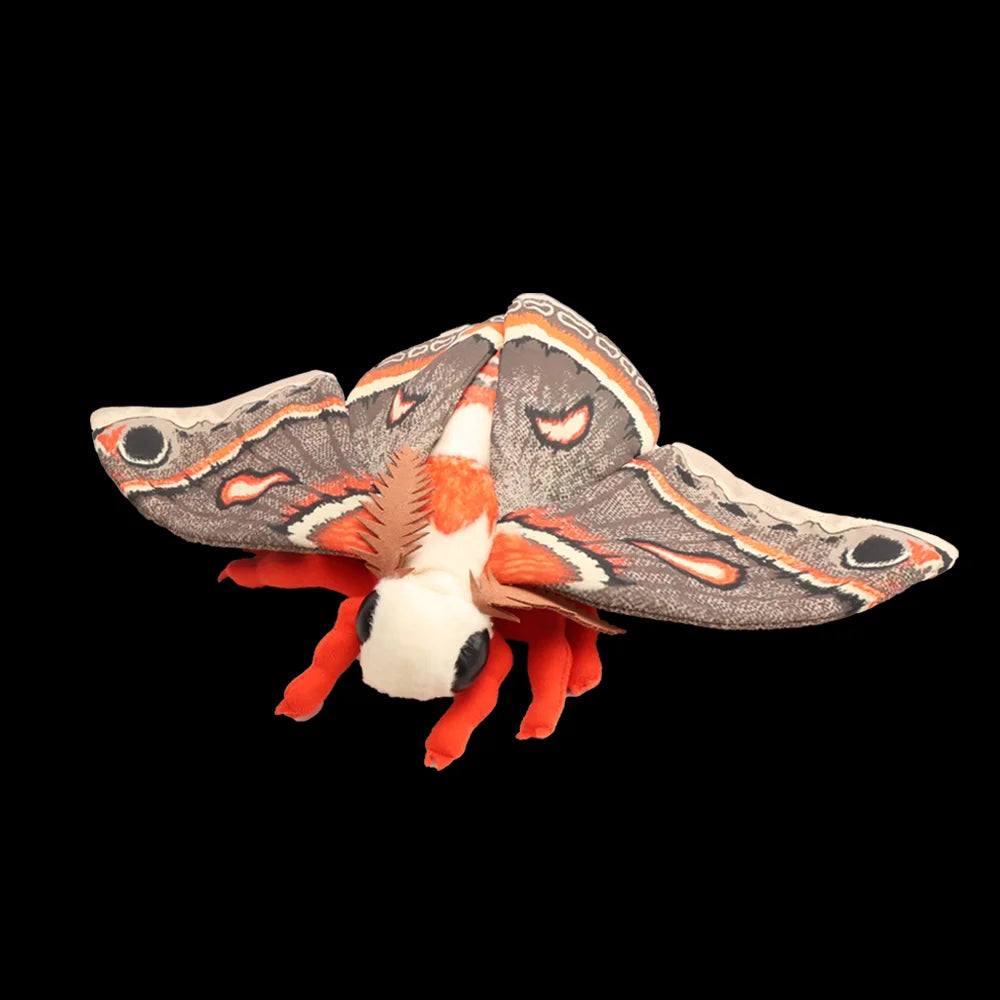
Giant Cecropia Moth Plush | Lifelike Fluffy Silk Moth Stuffed Animal | Handmade Luna Moth Plushie 25cm
Giant Cecropia Moth Plush | Lifelike Fluffy Silk Moth Stuffed Animal | Handmade Luna Moth Plushie 25cm
Auf Lager
- Kostenloser Versand
- 30 Tage Rückgaberecht (AGB gelten)
 Kundenbetreuung
Verfügbarkeit für Abholungen konnte nicht geladen werden
Giant Cecropia Moth Plush | Lifelike Fluffy Stuffed Animal Collectible | 25cm Handmade Style Moth Plush
The Most Stunning Cecropia Moth Plush You Will Ever Own
Nature has never looked this cuddly. This Giant Cecropia Moth plush is a meticulously designed stuffed collectible modeled after one of North America's most breathtaking moths. Standing at 25cm, every detail of the real Cecropia moth's dramatic wing patterns, striking eye spots, and rich earthy color palette has been faithfully recreated in soft, huggable form. Whether you are a lifelong entomology enthusiast, a lover of woodland critters, or simply someone who appreciates beautiful creatures of the night, this moth plush is the perfect addition to your world.
The Cecropia moth (Hyalophora cecropia) is the largest native moth in North America, and it has become a beloved icon among naturalists, artists, and collectors alike. Now you can bring this magnificent insect to life in the softest way possible with our 25cm Cecropia Moth plush stuffed animal.
About the Cecropia Moth: North America's Giant Beauty
The Cecropia moth belongs to the family Saturniidae, commonly known as giant silk moths. It is the largest moth species found on the North American continent, with a wingspan that can reach up to 15cm in the wild. First formally described by Carl Linnaeus in 1758, the Cecropia moth is found across much of eastern North America, from the Rocky Mountains to the Atlantic coast, ranging as far north as Nova Scotia, Canada, and as far south as Florida.
What makes the Cecropia moth so extraordinary is its stunning wing design. Each wing is adorned with crescent shaped white and red markings, bold eye spots near the wingtips, and a mosaic of deep red, orange, brown, and white bands. Adult Cecropia moths do not eat at all during their brief adult stage (lasting only one to two weeks), as their sole purpose is to find a mate and reproduce. The caterpillar stage, by contrast, is a vivid green larva covered in colorful tubercles, feeding on a wide variety of trees including cherry, apple, and birch.
The rise of the Cecropia moth as a cultural icon accelerated alongside the explosion of moth appreciation online. Viral social media posts featuring close up photos of real Cecropia moths shocked and delighted viewers who had no idea such a dramatic, almost fantastical creature existed in their own backyards. This sparked a wave of moth related merchandise, art, and community building that made the Giant Cecropia Moth plush a highly sought after collectible.
Product Highlights
- Realistic giant silk moth design faithfully modeled after the North American Cecropia moth with accurate wing coloring and pattern detail
- 25cm size making it substantial enough to display proudly or snuggle comfortably
- Premium polyester plush material that is incredibly soft, fluffy, and durable for long term enjoyment
- PP cotton filling provides a firm yet huggable feel with excellent shape retention
- Perfect moth plush gift for entomology fans, nature lovers, lepidopterists, and curious minds of all ages
- Lifelike fluffy texture captures the natural fur like body of a real silk moth
- Collectible quality suitable for shelf display, desk decor, or as a cozy companion
- Child safe construction with securely attached details and non toxic materials
- Lightweight and packable making it an ideal travel buddy or gift ready item
Size Guide
| Measurement | Dimension | Notes |
|---|---|---|
| Height | 25cm (approx. 9.8 inches) | Measured from top of body to lowest wing point |
| Width (wingspan) | Approx. 28cm (varies by pose) | Wing spread at widest point |
| Body length | Approx. 10cm | Central body segment only |
| Weight | Approx. 120g | Lightweight and easy to display or carry |
Materials and Specifications
- Material: Polyester plush outer fabric
- Filling: PP Cotton (hypoallergenic, shape retaining)
- Height: 25cm
- Features: Stuffed and plush construction
- Style: Realistic giant silk moth collectible
- Recommended age: 3 years and above
Care Instructions
Keeping Your Moth Plush Fresh and Beautiful
- Surface clean only: Use a soft damp cloth to gently spot clean any marks or dust from the surface
- Do not machine wash as this may distort the shape and damage delicate surface details
- Do not tumble dry or expose to high heat sources such as radiators or direct sunlight for extended periods
- Do not bleach or use harsh chemical cleaners on the fabric
- Air dry naturally if the plush becomes damp, in a well ventilated area away from direct sunlight
- Fluff gently by hand after cleaning to restore its natural shape and texture
- Store in a cool dry place when not on display to preserve color and material quality
Why Collectors Are Obsessed With the Cecropia Moth Plush
The internet's love affair with giant silk moths has grown into a full blown cultural phenomenon. Online communities dedicated to moth appreciation, sometimes humorously calling themselves "moth fans," have propelled the Cecropia moth to meme worthy fame. Unlike most insects, the Cecropia moth inspires awe rather than fear, with its jewel toned wings and almost regal appearance earning it comparisons to stained glass art. Owning a Giant Cecropia Moth plush has become a way for nature enthusiasts to celebrate this remarkable creature every single day.
This Cecropia Moth plush is also an educational tool in the most delightful form imaginable. Parents use it to spark conversations with children about metamorphosis, ecosystems, and the incredible biodiversity hiding in North American forests. Teachers, nature centers, and wildlife educators have found stuffed animal replicas like this moth plush to be an engaging way to introduce young learners to entomology without any of the "ick factor" some kids associate with real insects.
FAQ: Cecropia Moth Facts, Myths and Trending Questions
The Cecropia moth is not considered endangered, but it is genuinely uncommon to spot one in the wild due to its brief adult lifespan of only one to two weeks and its nocturnal activity patterns. When someone does find a Cecropia moth resting on a window screen or tree trunk, the sheer size and beauty of the creature tends to make it a memorable and shareable moment. Photos of Cecropia moths routinely go viral on platforms like Reddit and Instagram because most people cannot believe such a dramatically beautiful insect exists in ordinary North American backyards. Their dramatic wingspan, striking eye spots, and richly patterned wings look almost too extraordinary to be real, which is exactly why the Giant Cecropia Moth plush has become such a beloved collectible for people who want to celebrate this creature year round.
Both the Cecropia moth and the Luna moth belong to the Saturniidae family of giant silk moths and are among North America's most visually striking insects, but they are quite distinct. The Luna moth (Actias luna) is famous for its pale green wings and long elegant tails, giving it an almost ethereal appearance often compared to a fairy wing. The Cecropia moth, by contrast, is larger, more boldly colored with deep reds, oranges, and browns, and lacks the dramatic wing tails of the Luna. The Cecropia is actually the larger of the two, holding the title of the biggest native moth in North America. Both have inspired dedicated fan communities online and both are popular subjects for plush collectibles, but enthusiasts often say the Cecropia Moth plush has the more dramatic and immediately eye catching visual impact of the two.
This is one of the most frequently asked and most fascinating facts about the Cecropia moth. Adult Cecropia moths have no functional mouthparts and are literally incapable of eating. They live entirely off the energy reserves stored during their caterpillar stage, when they feed voraciously on the leaves of trees like wild cherry, apple, and birch. The adult moth's sole biological purpose is to find a mate and reproduce before its energy reserves run out, which typically happens within one to two weeks. Female Cecropia moths release pheromones that can attract males from distances of over a mile away. This remarkable survival strategy, living fast and dying young purely for the purpose of reproduction, is part of what makes the Giant Cecropia Moth plush such a poignant and conversation starting collectible for biology enthusiasts.
The Cecropia moth caterpillar is as visually striking as its adult form. It is a large, chunky green larva covered in rows of colorful tubercles, small knobby protrusions that are tipped in blue, yellow, and orange depending on the life stage. Despite its otherworldly appearance, the Cecropia caterpillar is completely harmless to humans. It does not sting, bite, or produce any toxic secretions. It feeds on a wide range of common trees and shrubs, including cherry, apple, plum, birch, and maple leaves. The vivid colors of the caterpillar have made it a popular subject in entomology photography and nature education content, contributing to the broader surge of interest in Cecropia moths that has driven demand for products like the Cecropia Moth plush across collector communities worldwide.
The giant silk moth craze, which prominently features the Cecropia moth alongside the Luna moth, the Atlas moth, and the Polyphemus moth, grew organically from nature photography communities on Reddit, Tumblr, and later TikTok and Instagram. Posts featuring close up, high resolution images of these moths would routinely accumulate hundreds of thousands of interactions from users who were genuinely shocked that such spectacular creatures existed in everyday environments. This sense of wonder, combined with a broader cultural shift toward appreciating insects and invertebrates as beautiful rather than frightening, created a passionate collector and enthusiast community. The aesthetic appeal of the Cecropia moth's wing patterns, which genuinely resemble stained glass or intricate textile art, made it a natural fit for merchandise, plush toys, enamel pins, and art prints. The moth plush trend in particular exploded as collectors wanted tactile, displayable pieces that celebrated these magnificent creatures beyond a screen.


Wird oft zusammen gekauft
-
Machine Party Test Subject Plush Handmade Cone Guy Collectible Stuffed Toy 26cm
Normaler Preis $53.95 AUDNormaler PreisStückpreis pro -
Giant Cecropia Moth Plush | Lifelike Fluffy Silk Moth Stuffed Animal | Handmade Luna Moth Plushie 25cm
Normaler Preis $52.95 AUDNormaler PreisStückpreis pro$0.00 AUDVerkaufspreis $52.95 AUD -
Magical Shimmer Mermaid Plush Doll | Handmade 30cm Princess Ragdoll with Glitter Tail
Normaler Preis $53.95 AUDNormaler PreisStückpreis pro$0.00 AUDVerkaufspreis $53.95 AUD -
Buddy Plush Toy | Handmade Buddy the Unicorn Horror Character Plush | 25cm Collectible Stuffed Animal
Normaler Preis $58.25 AUDNormaler PreisStückpreis pro$0.00 AUDVerkaufspreis $58.25 AUD


Vorgeschlagene Blogbeiträge:
Alle anzeigen-

Strongest Anime Monsters Ranked: From Weakest t...
From Muzan's terror to Boros's planet-busting blasts — we rank the strongest anime monsters by tier, from entry-level scares to reality-breaking OP threats.
Strongest Anime Monsters Ranked: From Weakest t...
From Muzan's terror to Boros's planet-busting blasts — we rank the strongest anime monsters by tier, from entry-level scares to reality-breaking OP threats.
-

Doraemon Steam Powered Time Machine: Release Da...
Doraemon's 46th movie heads to Victorian London in Spring 2027. Get the confirmed release date, teaser trailer, plot, director, and everything fans need to know.
Doraemon Steam Powered Time Machine: Release Da...
Doraemon's 46th movie heads to Victorian London in Spring 2027. Get the confirmed release date, teaser trailer, plot, director, and everything fans need to know.
-

Jump to Steal An Egg Guide : All Eggs and Codes...
Jump To Steal An Egg Codesfree rewards confirmed. Plus every egg ranked: T-Rex, Unicorn, Sphinx, Brainrot hatch rates, Angel and Demon Eggs, and Rift Eggs.
Jump to Steal An Egg Guide : All Eggs and Codes...
Jump To Steal An Egg Codesfree rewards confirmed. Plus every egg ranked: T-Rex, Unicorn, Sphinx, Brainrot hatch rates, Angel and Demon Eggs, and Rift Eggs.
-

Gundam RG XARX-ZERO: New Anime Officially Launc...
Gundam RG XARX-ZERO officially launches in North America and Japan in April 2027. Here's the full breakdown of story, cast, director Kamiyama, and the RG Project.
Gundam RG XARX-ZERO: New Anime Officially Launc...
Gundam RG XARX-ZERO officially launches in North America and Japan in April 2027. Here's the full breakdown of story, cast, director Kamiyama, and the RG Project.


Verifizierte Google-Rezensionen
Das sagen unsere Kunden