


Glow in the Dark Bat Plush | Anatomical Skeleton Wing Goth Bat Stuffed Toy | Handmade Halloween Plushie
Glow in the Dark Bat Plush | Anatomical Skeleton Wing Goth Bat Stuffed Toy | Handmade Halloween Plushie
Auf Lager
- Kostenloser Versand
- 30 Tage Rückgaberecht (AGB gelten)
- Kundenbetreuung
Verfügbarkeit für Abholungen konnte nicht geladen werden
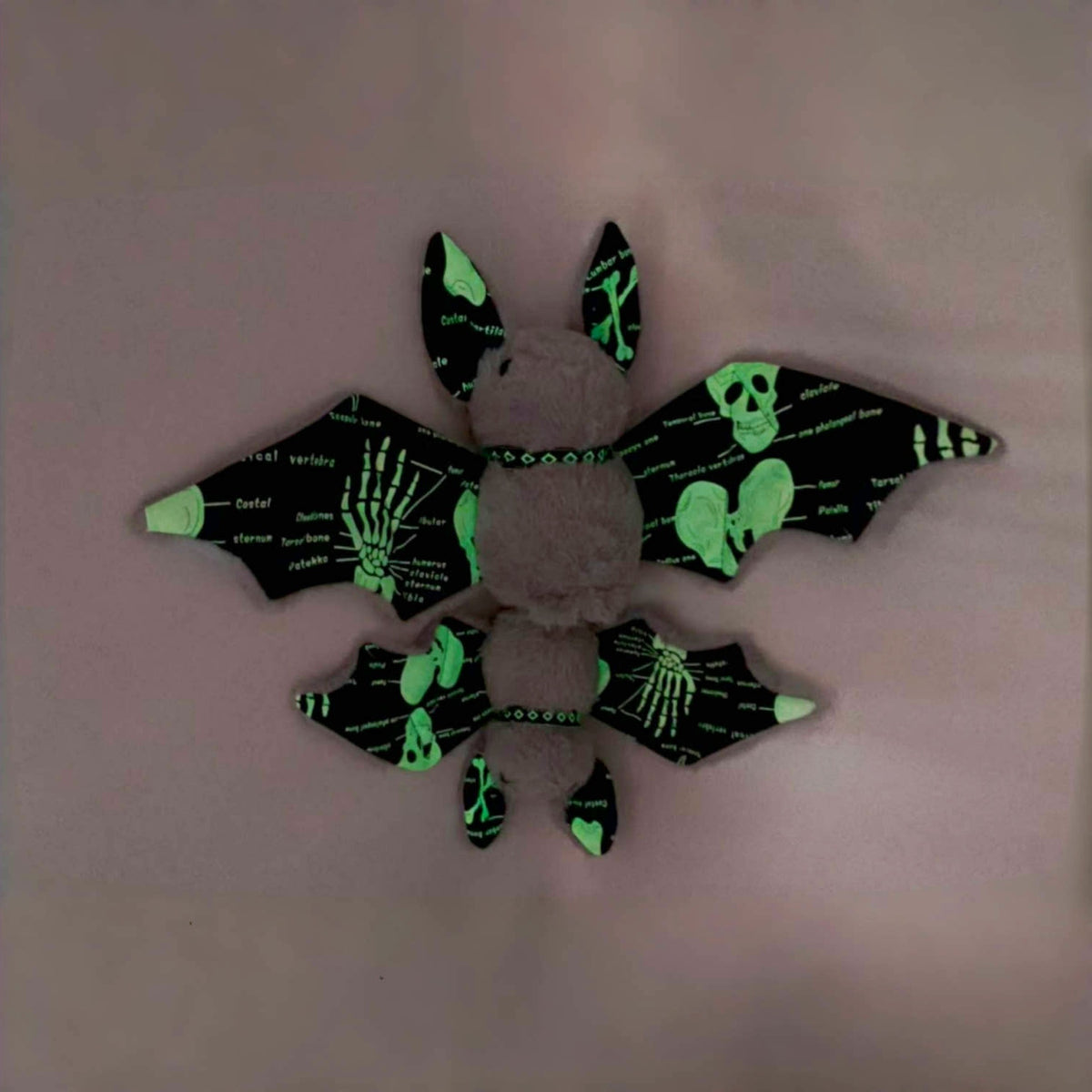
Glow in the Dark Bat Plush with Skeleton Wings | Handmade Goth Halloween Plushie
Some plushies sit on a shelf. This one haunts it. This handmade bat plush is stitched with painstaking care and finished with a detailed anatomical skeleton print across its wings, a print that comes alive in low light with an eerie spectral glow. Whether you are searching for a striking piece of gothic decor, setting the scene for a Halloween party, or hunting down a genuinely one of a kind spooky novelty gift for someone who loves the darker side of cute, this bat stuffed toy delivers on every count.
The combination of soft, cuddly plush material with bold skeletal detailing makes this a standout piece in any spooky collection. Available in two sizes, 18cm and 25cm, it works equally well as a compact desk accent or a full statement display piece. If you have been looking for a Halloween bat plush that goes beyond generic seasonal decor, this is the one.
Product Highlights
- Handmade bat plush with a glow in the dark anatomical skeleton wing print
- Available in 18cm and 25cm to suit a range of display styles
- Soft, quality plush exterior with tight and durable stitching throughout
- Ideal as a spooky plush toy, Halloween party prop, or dark home decor accent
- A standout spooky novelty gift for goth aesthetic lovers and Halloween collectors
- Skeleton wing print illuminates in low light for a dramatic display effect
- Anatomical wing structure adds artistic depth and dark visual character
- The perfect glow in the dark stuffed animal for fans of spooky collectibles
- Suitable for display, gifting, styled photography, and seasonal Halloween setups
Bats in History, Gothic Culture, and Halloween Tradition
The Ancient Origins of the Bat as a Spooky Symbol
The bat has earned its place as the face of Halloween through thousands of years of myth, fear, and fascination. In ancient Celtic tradition, the festival of Samhain marked the end of the harvest season and the beginning of a darker half of the year, a time when the boundary between the living and the dead was believed to grow thin. Bats, creatures of pure darkness that materialized at dusk and vanished before dawn, were seen as natural inhabitants of that supernatural threshold. The large communal bonfires lit during Samhain drew swarms of insects, and the bats that followed became part of the eerie spectacle of the night, cementing their identity as creatures of the uncanny for generations to come.
Gothic Symbolism and the Bat in Literature and Art
The bat became a cornerstone of gothic culture largely through its association with vampire mythology. Bram Stoker's 1897 novel Dracula introduced the image of the vampire transforming into a bat, a motif that spread rapidly through literature, theatre, and eventually film. By the twentieth century, the bat had become a universal shorthand for darkness, transformation, and the seductive appeal of the night. Gothic art and scientific anatomy illustration both embraced bat imagery across centuries, and the skeletal wing structure of bats, with its dramatically elongated finger bones stretched into a membrane, became a recurring motif in artistic anatomical works. A goth bat plushie or skeleton bat plush draws directly from this rich visual and cultural tradition.
The Modern Skeleton Bat Aesthetic and Collector Culture
In recent years the skeleton bat has had a significant resurgence in popularity across goth, dark academia, and alt aesthetic communities online. Anatomical prints, skeletal motifs, and spooky cute design sensibilities have merged into a visual style that celebrates the beautiful and the macabre together. This is exactly the world the anatomical bat toy was designed for. The demand for skeleton wing plush pieces and gothic collectibles has grown steadily as collector culture and dark aesthetic fandoms have expanded across social platforms, making a handmade Halloween plushie with this kind of design a sought-after piece for serious collectors and casual dark decor fans alike. The Halloween bat plush and broader bat imagery trend shows no signs of slowing, with gothic home decor continuing to grow as a mainstream interior interest.
Size Guide
| Size Option | Height | Best Suited For |
|---|---|---|
| Small | 18cm | Desk accents, shelf companions, and compact spooky decor arrangements |
| Large | 25cm | Statement display pieces, Halloween party props, and feature shelf setups |
Care Instructions
Keeping Your Bat Plush in Perfect Shape
- Spot clean gently using a soft damp cloth with a small amount of mild soap
- Do not machine wash or submerge in water
- Do not tumble dry or apply heat of any kind
- Allow to air dry fully in a well ventilated space before returning to display
- Keep away from prolonged direct sunlight to preserve the glow in the dark pigment in the wing print
- Store in a cool, dry location when not on display
- Handle the wing areas gently to maintain the shape of the skeleton wing plush detailing
FAQ: Bats, Gothic Symbolism, and Halloween Culture
Bats became symbols of Halloween through a blend of ancient tradition and observable natural behavior. During the Celtic festival of Samhain, which is widely considered the direct ancestor of Halloween, large fires were lit to ward off spirits and mark the turning of the season. The heat and light from those fires attracted insects, and the bats that fed on them became a regular and eerie sight at these gatherings. Over centuries, bats were woven into the mythology of the season, associated with night, the supernatural, and the thin barrier between life and death. This symbolism persisted through medieval European folklore and eventually became one of the defining visual icons of Halloween, found today on everything from costumes and decorations to a goth bat plushie or Halloween plushie collection.
In gothic traditions, bats represent transformation, the night, hidden knowledge, and the boundary between the visible world and whatever lies beyond it. This symbolism was dramatically amplified by vampire mythology, which positioned the bat as a creature capable of crossing between life and death. In spiritual and esoteric traditions, bats are frequently associated with intuition, the subconscious mind, and the ability to navigate darkness without fear. Some cultures, particularly in East Asia, actually view bats as symbols of good luck and prosperity rather than darkness or foreboding. In the modern goth aesthetic, the bat is embraced as a symbol of dark beauty and mystery, which is why it appears so frequently across gothic decor, art, and collectibles including the skeleton bat plush and anatomical bat toy styles that continue to grow in popularity.
No, bats are not blind. This is one of the most persistent myths about the species. All bat species can see, and several, particularly the larger fruit bat varieties, have quite good vision including some degree of color sensitivity. What bats are extraordinarily capable of is echolocation, a biological sonar system in which they produce high frequency sound pulses that bounce off objects and return as echoes, allowing them to navigate and hunt with pinpoint accuracy in complete darkness. This echolocation ability is so effective that it gave rise to the mistaken idea that bats must not be using their eyes at all. In reality, many bat species use both vision and echolocation together depending on lighting conditions. The combination of mystery, nocturnal habits, and this remarkable acoustic ability is a large part of what makes bats such compelling creatures in folklore, art, and collector culture.
A bat skeleton is one of the most visually dramatic examples of mammalian anatomy. The wings of a bat are essentially highly evolved hands, with finger bones stretched to extraordinary lengths to support the wing membrane, known scientifically as the patagium. In some species, a single finger bone can be several times the total body length of the bat itself. The overall skeleton is lightweight and compact, featuring a small rounded skull, a narrow rib cage, and those extraordinary elongated limbs that form the iconic wing shape. When illustrated in anatomical art or printed onto fabric, bat skeletal structure creates a visually compelling and immediately recognizable design, which is exactly why the skeleton bat aesthetic has become so popular in gothic decor, fashion, and collectibles. A glow in the dark stuffed animal with this kind of skeletal wing detailing captures that visual drama in a tactile and displayable form.
The bat's resurgence in goth and dark aesthetic culture is driven by several converging trends. The growth of dark academia, cottagecore goth, and alt aesthetic communities on social media over the past several years has brought a renewed appetite for gothic imagery that blends the beautiful with the macabre. Bats fit this sensibility perfectly: they are elegant, mysterious, associated with classic literature and myth, and carry centuries of cultural weight. At the same time, the broader collectible and plushie community has embraced the spooky cute concept, where traditionally dark subjects are reimagined as soft, collectible, and visually appealing. A spooky plush toy or goth bat plushie featuring bat imagery lands squarely in this space, appealing to genuine gothic collectors and seasonal decor enthusiasts alike. Gothic decor as a whole is also growing as a mainstream interior design interest, which means the bat stuffed toy format is reaching wider audiences than ever before.


Wird oft zusammen gekauft
-
Kawaii Birthday Cake Plushie with Dangling Legs | Handmade Kawaii Cake Plush Toy | 25cm
Normaler Preis $52.95 AUDNormaler PreisStückpreis pro -
Border Collie Stuffed Animal | Realistic Handmade Dog Plush Stuffed Puppy 25cm
Normaler Preis $52.95 AUDNormaler PreisStückpreis pro -
Handmade Flower Fairy Plushie Ballerina Doll | Petal Skirt Winged Fairy Stuffed Animal | Sleepy Eye Nursery Decor Plush 31cm 32cm 34cm
Normaler Preis $53.95 AUDNormaler PreisStückpreis pro -
Realistic Opossum Plush 22cm | Handmade Possum Stuffed Toy
Normaler Preis $52.95 AUDNormaler PreisStückpreis pro


Vorgeschlagene Blogbeiträge:
Alle anzeigen-

ROBLOX HALLOWEEN 2026 EVENT CONFIRMED ALREADY?
Roblox's teaser confirms a Halloween 2026 event is coming. Here's what's official vs. leaked — The Pumpkin, the Riddling Skull, and Orange.
ROBLOX HALLOWEEN 2026 EVENT CONFIRMED ALREADY?
Roblox's teaser confirms a Halloween 2026 event is coming. Here's what's official vs. leaked — The Pumpkin, the Riddling Skull, and Orange.
-

How to Get the Shedletsekkar in Roblox (Complet...
Can you still buy the Shedletsekkar in Roblox? See the resale route, the 30-day holding period, its real-money price, and free Hunt: Roblox 20 alternatives.
How to Get the Shedletsekkar in Roblox (Complet...
Can you still buy the Shedletsekkar in Roblox? See the resale route, the 30-day holding period, its real-money price, and free Hunt: Roblox 20 alternatives.
-

Shinigami's Human Life Anime: Watch the Full Se...
Shinigami's Human Life is streaming on Trimz. Watch here for Linguinistudios' dark fantasy about an exiled reaper juggling shadow magic and barista shifts.
Shinigami's Human Life Anime: Watch the Full Se...
Shinigami's Human Life is streaming on Trimz. Watch here for Linguinistudios' dark fantasy about an exiled reaper juggling shadow magic and barista shifts.
-

How To Get JAILBREAK SECRET BADGE in The Hunt: ...
How to get the Jailbreak secret badge in The Hunt: Roblox 20 — the exact bomb sequence, crater bomb retrieval, and classic obby walkthrough.
How To Get JAILBREAK SECRET BADGE in The Hunt: ...
How to get the Jailbreak secret badge in The Hunt: Roblox 20 — the exact bomb sequence, crater bomb retrieval, and classic obby walkthrough.


Verifizierte Google-Rezensionen
Das sagen unsere Kunden