


Honeybee Plush 17cm | Ultra-Soft Baby-Safe Bumblebee Stuffed Animal | Handmade Kawaii Bee Gift
Honeybee Plush 17cm | Ultra-Soft Baby-Safe Bumblebee Stuffed Animal | Handmade Kawaii Bee Gift
En existencias
- Free Shipping
- 30 Days Return(T&C applies)
- Customer Support
No se pudo cargar la disponibilidad de retiro
Honeybee Plush Ultra-Soft Baby-Safe Stuffed Bumblebee Handmade Plush 17cm
Meet the tiniest golden guardian you will ever hold. This honeybee plush is a 17cm handcrafted collectible built for every age, every shelf, and every heart that has a soft spot for the world's most beloved pollinator. Lightweight, impossibly soft, and stitched with care, it makes an instant favourite whether you are gifting it to a newborn, tucking it into a lunchbox, or displaying it on your desk.
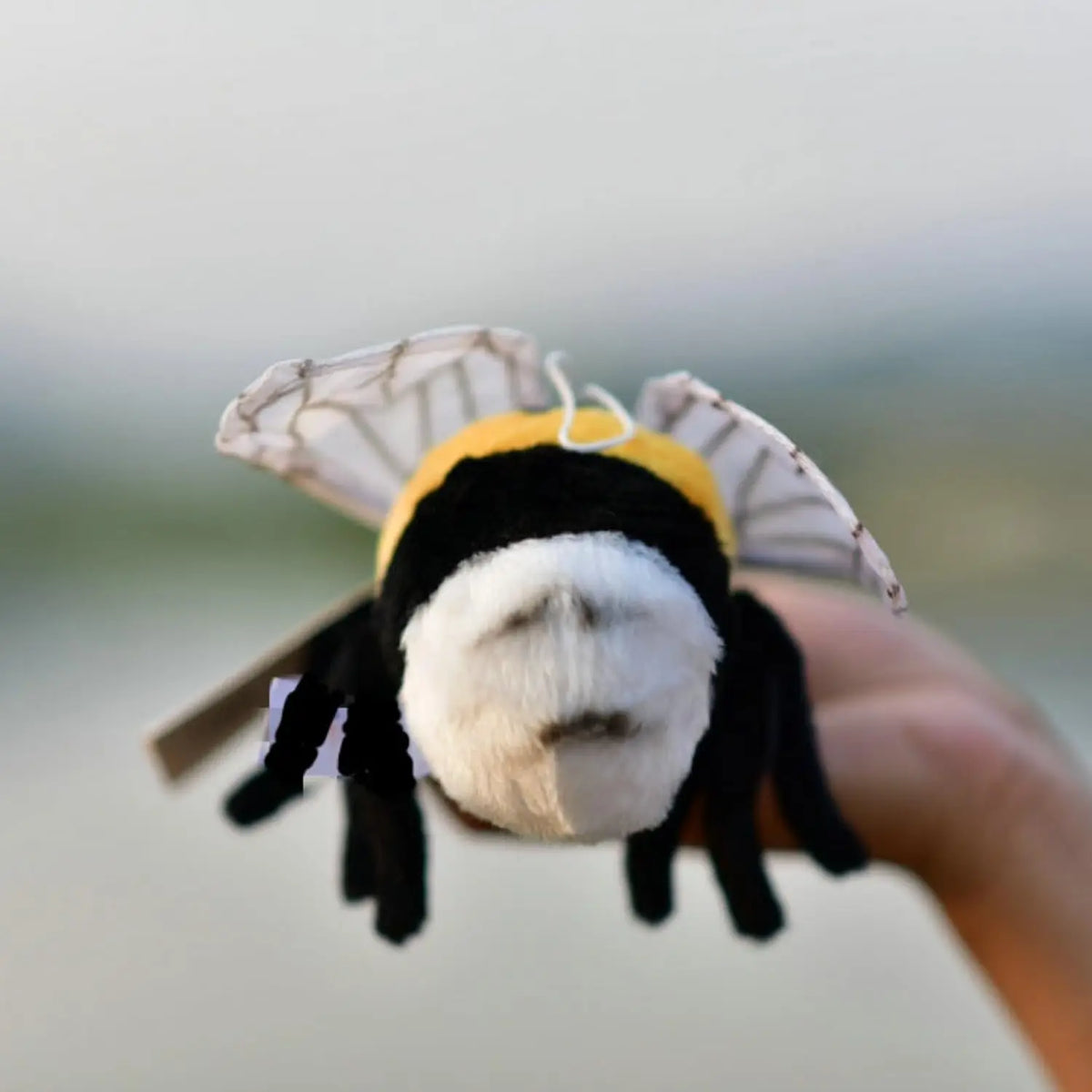
The bumblebee stuffed animal arrives wearing its iconic golden-and-black stripes, tiny embroidered wings, and a peaceful expression that never stops being cute. At 17cm it is palm-sized, travel-ready, and perfectly proportioned for small hands. Because it is filled with premium PP Cotton and finished in baby-safe plush materials, it passes the softness bar set by the most demanding tiny critics.
Bees have been symbols of community, diligence, and sweetness across every civilisation on earth, and this cute bee plush toy carries that warmth in every fibre. Whether you are a beekeeper, a save-the-bees activist, a fan of cottagecore aesthetics, or simply someone who needs a cheering-up gift, this little bee delivers.
Why This Bee Stuffed Animal Stands Out
Handmade production means no two bees are machine-stamped copies. Each soft honeybee toy is assembled by hand, giving it a character and warmth that mass-produced alternatives cannot replicate. The PP Cotton fill is resilient, maintains its shape after repeated hugs, and meets the safety standards expected of a baby-safe plush product. The outer shell uses a velvety short-pile fabric that is gentle on sensitive skin, making this a worry-free choice for parents and gift buyers alike.
At 17cm this kawaii bee plush fits perfectly in a gift bag, a stocking, a bag charm loop, or inside a small box for flat-rate shipping. It is the kind of bee plush gift that photographs beautifully, travels easily, and lands with a smile every single time.
Product Highlights
- Honeybee plush handmade construction for unique, artisan quality every buyer notices
- Premium PP Cotton fill that holds its plump shape through years of love
- Baby-safe plush materials tested for skin sensitivity, suitable from infancy upward
- Compact 17cm size ideal for gifting, desk display, bag charm, or nursery decoration
- Bumblebee stuffed animal design featuring embroidered wings, golden stripes, and a sweet face
- Lightweight at under 60g, making it perfect for travel, lunchboxes, and postal gifting
- Works beautifully as a kawaii bee plush collectible for cottagecore and nature aesthetics
- Ideal bee plush gift for birthdays, baby showers, beekeeping enthusiasts, and nature lovers
- Cute bee plush toy for children and adults alike, with no small parts or loose attachments
- Makes a sweet companion for anyone who wants to carry a little piece of nature everywhere
- A charming addition to honey-themed nurseries, classroom nature displays, and garden-inspired desk setups
- Soft honeybee toy that sparks conversations about pollinators, bees, and saving our ecosystem
- Pairs brilliantly with bee-themed wrapping, honey jars, wildflower seed packets, or garden gifts
The Honeybee: A Character Rooted in 10,000 Years of Human History
The honeybee is not a trend. It is one of the most ancient and enduring symbols in human culture. Fossil evidence places bees on earth roughly 100 million years ago, and honey bees in particular are believed to have originated in South and Southeast Asia before spreading across every continent except Antarctica. The genus Apis, which includes the common honeybee, co-evolved alongside flowering plants, making bees and blooms one of nature's greatest partnerships.
Humans began harvesting wild honey at least 8,000 years ago, as recorded in cave paintings found in Spain. Ancient Egypt formalised beekeeping around 2,400 BCE, treating honey as a sacred substance used in offerings to gods, in the preservation of pharaohs, and in everyday medicine. Egyptian hieroglyphs included the bee as a royal symbol for Lower Egypt. In ancient Greece, bees were considered messengers of the gods, and Aristotle wrote extensively on their social structure in his natural history texts. Celtic and Norse traditions associated bees with wisdom, and mead, a fermented honey drink, was considered the drink of poets and warriors alike.
The 2026 World Bee Day theme, "Bee Together for People and the Planet," celebrates over 10,000 years of beekeeping history and highlights the global movement to protect pollinators. This cultural moment has renewed mainstream interest in bee symbolism, bee-related merchandise, and the save-the-bees movement that has dominated social media aesthetics from cottagecore to dark academia. The bee has become one of the most beloved motifs in plush toy design precisely because it carries all of this meaning in an instantly recognisable, universally adored shape.
This honeybee plush taps directly into that legacy. Gifting or collecting this bee stuffed animal is a small nod to one of the most important creatures in the history of human civilisation.
Size Guide
| Dimension | Measurement | Notes |
|---|---|---|
| Height (tip to base) | 17cm / 6.7 inches | Measured standing upright |
| Width (wing to wing) | Approx. 10cm / 3.9 inches | Wings included in measurement |
| Weight | Under 60g | Lightweight for gifting and travel |
| Fill Material | PP Cotton | Hypoallergenic, shape-retaining |
| Outer Fabric | Short-pile plush | Baby-safe, skin-gentle |
Care Instructions
- Surface clean only: Use a damp cloth with mild soap to spot-clean the outer fabric. Do not submerge in water.
- Air dry: Allow to dry completely at room temperature away from direct sunlight or heat sources, which can affect the fabric's texture and colour.
- Do not machine wash or tumble dry: Machine washing may distort the shape of the PP Cotton fill and damage embroidered details.
- Do not iron or bleach: Heat and bleaching agents will damage the soft outer material.
- Keep away from sharp objects: The soft fabric can snag on rough or sharp surfaces.
- Storage: Store in a cool, dry location away from prolonged direct sunlight to preserve the colour and softness over time.
FAQ: Honeybees, Bumblebees, and Why Everyone Loves Them Right Now
Honeybees and bumblebees are both members of the Apidae family, but they are distinct species with different roles in nature. Honeybees (genus Apis) are smaller, slimmer, and are famous for living in large hive colonies of up to 80,000 individuals. They are the primary producers of honey and beeswax and are managed commercially for pollination and honey production worldwide. Bumblebees (genus Bombus) are larger, rounder, fuzzier, and live in much smaller colonies of a few hundred bees. Bumblebees are exceptionally powerful pollinators because they perform "buzz pollination," vibrating their bodies at a specific frequency to release pollen from certain flowers. Both are critical to global food systems, but they look, behave, and nest quite differently. The classic yellow-and-black striped, round, chubby bee most people picture is typically a bumblebee, which is also the inspiration behind this bumblebee stuffed animal design.
Bees pollinate roughly one third of all the food humans eat, including most fruits, vegetables, nuts, and seeds. Without bee pollination, global agriculture would collapse within a few years, affecting food security for billions of people. The save-the-bees movement gained major momentum in the 2010s as scientists began documenting sharp declines in both wild and managed bee populations due to pesticide use, habitat loss, climate change, and parasites like the Varroa mite. By the mid 2020s, the topic had spread from environmental circles into mainstream pop culture, fashion, and design. World Bee Day on 20 May has become a globally observed event, and the bee has become a cultural symbol of resilience, community, and environmental responsibility. This cultural moment is why bee-themed gifts, bee stuffed animals, and bee merchandise in general are enjoying such sustained demand across age groups right now.
Cottagecore is an internet aesthetic that romanticises rural, pastoral, and nature-connected living. It draws on imagery of wildflower meadows, homemade honey, baking bread, pressed flowers, hand-sewn textiles, and woodland creatures. The aesthetic exploded on platforms like TikTok and Pinterest during the early 2020s and has remained a dominant visual trend through 2026. Bees sit at the absolute heart of cottagecore because they represent everything the aesthetic celebrates: natural sweetness, hard work, community, and the beauty of simple, slow living. Kawaii bee plush toys, bee-embroidered clothing, honeycomb candles, and bee-themed stationery are all staple cottagecore items. If you are building a cottagecore shelf, corner, or gift set, a soft honeybee toy like this one is a natural anchor piece.
The bee's association with royalty is ancient and widespread. In ancient Egypt, the bee was a hieroglyph that represented Lower Egypt and was used in the pharaoh's official title. Egyptian rulers kept bees and used honey in religious ceremonies, as a preservative in royal burials, and as a sweetener reserved for the elite. In ancient Greece, bees were believed to be the sacred animals of Artemis and other deities, and their hives were seen as models of a perfectly ordered, industrious society. Napoleon Bonaparte famously adopted the bee as one of his imperial symbols, replacing the French royal fleur-de-lis. He used golden bees embroidered on his coronation robe as a direct reference to Merovingian royal bees discovered in a fifth century grave, connecting his empire to the oldest French dynasty. This royal symbolism has carried through to modern fashion houses, royal crests, and decorative motifs, making the bee one of the most elegant and meaningful symbols in the world of design and collectibles.
Buzz pollination, also called sonication, is a technique where a bee grabs a flower and vibrates its flight muscles at a very specific frequency, typically around 400 Hz, without flapping its wings. This vibration shakes pollen loose from the flower's anthers in a way that most other insects cannot replicate. Tomatoes, blueberries, cranberries, peppers, and potatoes all rely on buzz pollination to produce fruit, which is why commercial greenhouse growers use bumblebees almost exclusively for indoor crop pollination. The chunky, muscular build of the bumblebee makes it particularly well suited to this vigorous technique. It is estimated that buzz pollination is responsible for a significant proportion of global fruit and vegetable production. This is one of the many reasons bumblebees are considered among the most ecologically valuable insects on the planet, and why they have inspired so much affection across science communication, environmental campaigns, and popular culture, including the design of this cute bee plush toy.


Frequently Bought Together
-
Pigeon Plush 20cm | Rock Pigeon & Peace Dove Stuffed Animal
Precio habitual $52.95 AUDPrecio habitualPrecio unitario por$0.00 AUDPrecio de oferta $52.95 AUD -
Shiny Nessie Plush | Fishing Game Collectible | Handmade Blue Nessie Top Hat Toy 15cm
Precio habitual $54.15 AUDPrecio habitualPrecio unitario por -
Arctic Fox Plush Stuffed Animal | Soft Handmade White Snow Fox Plushie 30cm
Precio habitual $53.95 AUDPrecio habitualPrecio unitario por$0.00 AUDPrecio de oferta $53.95 AUD -
Realistic Baby Chick & Duckling Plush | Handmade Farm Animal Plushie | 11cm
Precio habitual $52.95 AUDPrecio habitualPrecio unitario por$0.00 AUDPrecio de oferta $52.95 AUD


Suggested Blog posts:
Ver todo-

Ink Game Reaper Power Guide: Stats, Curse, and ...
Ink Game Reaper power guide: stats, curse effects, soul stacks, and the real wheel odds. Find out how many spins it takes to unlock Reaper this event.
Ink Game Reaper Power Guide: Stats, Curse, and ...
Ink Game Reaper power guide: stats, curse effects, soul stacks, and the real wheel odds. Find out how many spins it takes to unlock Reaper this event.
-

The Mimic Nightmare Circus Solo Guide: Nightmar...
The Mimic Nightmare Circus solo guide: Nightmare Mode route, phase pacing, lantern rewards, and expired event items. Read it before your next solo run.
The Mimic Nightmare Circus Solo Guide: Nightmar...
The Mimic Nightmare Circus solo guide: Nightmare Mode route, phase pacing, lantern rewards, and expired event items. Read it before your next solo run.
-

South Hell Roblox Guide: Keys, Basement Exit an...
Stuck in South Hell? This South Hell Roblox guide covers the crowbar, all four key locations, hiding, mic tips and the ending so you can escape alive.
South Hell Roblox Guide: Keys, Basement Exit an...
Stuck in South Hell? This South Hell Roblox guide covers the crowbar, all four key locations, hiding, mic tips and the ending so you can escape alive.
-

Rocket League Patch Notes v2.79: What You Need ...
Rocket League patch notes v2.79 fix the G-Wagon grille color and One Piece bounty display. See what changed, event dates, and free rewards
Rocket League Patch Notes v2.79: What You Need ...
Rocket League patch notes v2.79 fix the G-Wagon grille color and One Piece bounty display. See what changed, event dates, and free rewards


Verified Google Reviews
Hear It from Our Customers