


Realistic Giant Komodo Dragon Plush - Lifelike Monitor Lizard Stuffed Animal Toy, 75cm
Realistic Giant Komodo Dragon Plush - Lifelike Monitor Lizard Stuffed Animal Toy, 75cm
In stock
- Free Shipping
- 30 Days Return(T&C applies)
- Customer Support
Couldn't load pickup availability
Realistic Giant Komodo Dragon Plush - Lifelike Monitor Lizard Stuffed Animal Toy, 75cm
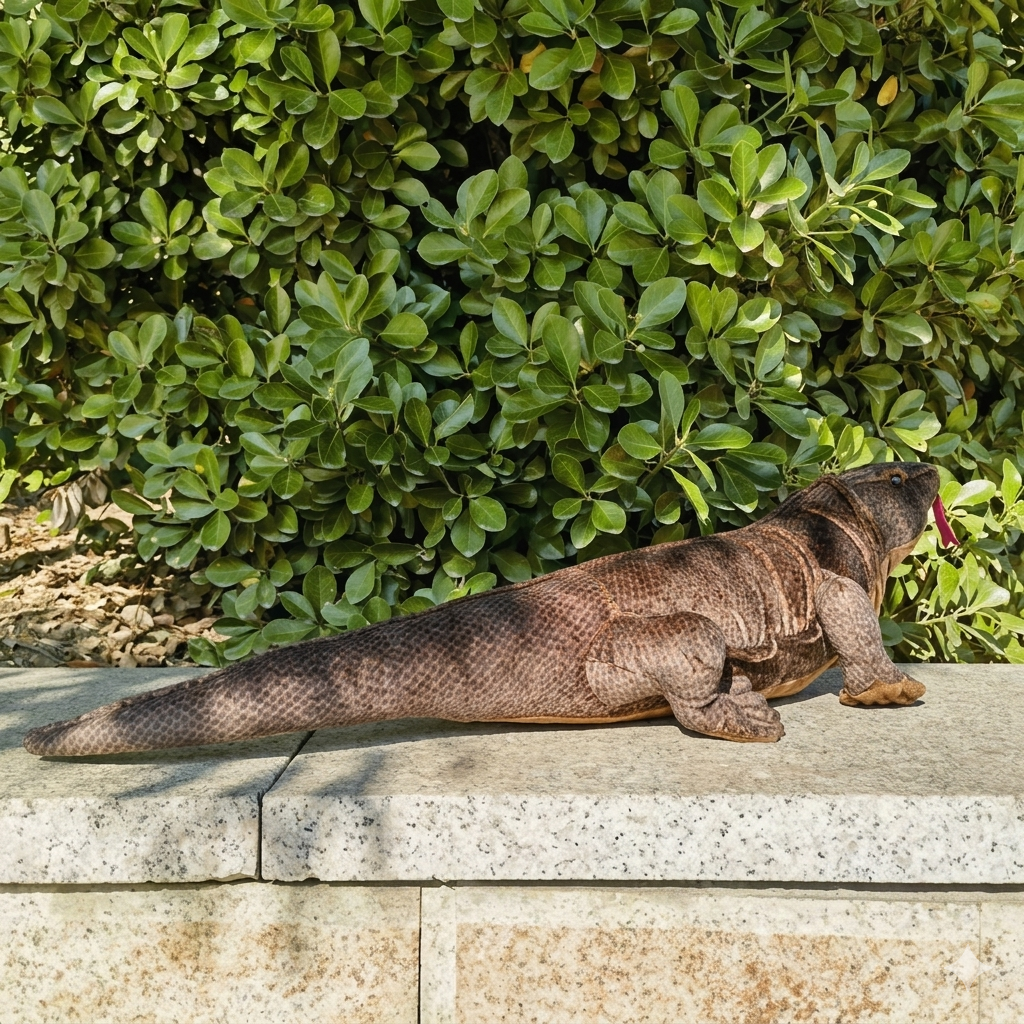
If you have ever been captivated by the raw power of the world's largest living lizard, this Komodo dragon plush was made for you. Measuring a commanding 75cm from snout to tail, this ultra-realistic giant monitor lizard stuffed animal is a true-to-life replica of Varanus komodoensis, sculpted to capture every defining feature of this remarkable apex predator. Whether you are a wildlife enthusiast, a reptile collector, or simply someone who appreciates extraordinary design, this lifelike lizard plush delivers a level of detail that sets it apart from anything ordinary.
This is not a cutesy cartoon plush. This is a realistic reptile plush toy designed to look exactly like the real animal. From the scaled, textured body surface and earth-toned coloring to the powerful limb posture and elongated tail, every detail has been crafted to reflect the appearance of a living Komodo dragon stuffed animal. Filled with premium PP cotton for a satisfying weight and soft feel, this piece sits beautifully as a display collectible or as an adventurous companion for wildlife-loving kids.
What Is the Komodo Dragon? The Living Legend Behind This Realistic Lizard Stuffed Animal
The Komodo dragon (Varanus komodoensis) is the largest lizard alive on Earth today. Found exclusively on a handful of Indonesian islands including Komodo, Rinca, and Flores, it is a species that has fascinated scientists, explorers, and nature lovers for over a century. Adult males can reach nearly three metres in length and weigh as much as a grown human, making the Komodo dragon the undisputed heavyweight of the lizard world.
Long misunderstood, the Komodo dragon was once thought to kill its prey through bacteria-laden saliva. Modern science has since revealed the truth: it possesses venom glands that produce anticoagulant toxins, which cause massive bleeding and shock in prey. Combined with serrated, shark-like teeth and a bite force delivered through powerful neck muscles, this animal is one of nature's most effective hunters. What makes it even more extraordinary is its ability to reproduce through parthenogenesis. Female Komodo dragons, when isolated from males, can produce fertile eggs without mating, with all offspring being male. This remarkable survival adaptation, confirmed at Chester Zoo in 2006, continues to be one of the most talked-about biological phenomena in the reptile world.
These qualities have made the giant monitor lizard a perennial favourite in wildlife documentaries, natural history museums, and now, as a sought-after wildlife plush collectible for fans who want to bring a piece of the prehistoric wild into their homes.
Product Highlights
- Ultra-realistic simulation design - modelled to replicate the true appearance of a living Komodo dragon, with detailed scale-texture body surface and accurate proportions
- Impressive 75cm length - a commanding size that makes this giant monitor lizard stuffed animal a striking display piece or play companion
- Premium PP cotton filling - soft, resilient, and non-clumping for a satisfying feel that holds its shape over time
- Lifelike coloring - earth tones, muted greens, and natural grey-brown hues that mirror the real animal's camouflage palette
- Durable construction - securely sewn seams and quality fabric designed to withstand enthusiastic handling
- Makes an outstanding gift for reptile lovers, wildlife fans, nature enthusiasts, and collectors of all ages
- Perfect as a room decor piece, a display collectible, or an imaginative play companion
- Doubles as an educational realistic reptile plush toy for curious kids learning about exotic animals
Size Guide
| Dimension | Measurement |
|---|---|
| Total Length (nose to tail tip) | 75cm (approximately 29.5 inches) |
| Filling Material | PP Cotton |
| Style | Realistic simulation plush |
Care Instructions
Keeping Your Komodo Dragon Plush Looking Its Best
- Surface clean only: Spot clean with a damp cloth and mild soap. Gently dab the affected area rather than rubbing to protect the fabric texture.
- Do not machine wash: Machine washing can distort the realistic shape and damage the detailed surface fabric.
- Do not tumble dry: Allow to air dry naturally in a well-ventilated area away from direct sunlight, which can fade the coloring over time.
- Do not bleach: Bleaching agents will damage the fabric and alter the lifelike coloring of this realistic lizard stuffed animal.
- Storage: Store in a cool, dry place away from prolonged direct sunlight to preserve the colors and fabric quality.
- Not suitable for children under 3 years without adult supervision.
Why This Giant Komodo Dragon Stuffed Animal Makes the Perfect Gift
Few plush toys can genuinely stop people in their tracks. This giant lizard plush does exactly that. Its sheer size and hyper-realistic appearance make it the kind of piece that sparks conversations, whether displayed on a shelf, a bedroom floor, or in a living room. For wildlife fans, it is a celebration of one of nature's most formidable creatures. For collectors, it is a standout addition to any exotic animal plush display. For curious kids, it is a gateway to learning about the real animal, its habitat, and its extraordinary biology.
This Komodo dragon stuffed animal also appeals strongly to anyone fascinated by prehistoric aesthetics. With its dinosaur-like build, powerful scaled body, and commanding length, it is frequently described as the closest thing to a living dinosaur on Earth today. Owning this simulation lizard toy is the next best thing to standing on the volcanic slopes of Komodo Island itself.
Looking for a gift that is truly memorable? This lifelike monitor lizard plush works beautifully for birthdays, holidays, nature-themed collections, and as a one-of-a-kind desk or shelf statement piece. It is the kind of gift that genuinely surprises and impresses, for anyone from wildlife-obsessed kids to adult collectors.
FAQ: Komodo Dragon Facts People Are Searching Right Now
This is one of the most widely searched questions about the Komodo dragon, and the answer surprised the scientific world. For decades, the belief was that Komodo dragons killed prey through bacteria in their saliva. Research published in 2009 overturned this idea entirely. Komodo dragons possess dedicated venom glands in their lower jaws that secrete toxins which lower blood pressure, prevent blood from clotting, and induce rapid shock in prey animals. The bacteria story was a myth. The real mechanism is a sophisticated venom delivery system that makes the giant monitor lizard one of the most effective venomous predators in the reptile world. The venom seeps into deep bite wounds rather than being injected like a snake's venom, and even if prey escapes, the anticoagulant effect ensures it weakens and eventually collapses, allowing the dragon to track and consume it.
Yes, and it is one of the most astonishing biological facts about the Komodo dragon. Female Komodo dragons can reproduce through parthenogenesis, a form of asexual reproduction in which an egg develops without being fertilized by sperm. The landmark confirmed case occurred at Chester Zoo in England in 2006, when a female named Flora, who had never been in contact with a male, laid a clutch of viable eggs. Genetic testing confirmed the offspring carried only her DNA. The twist is in the sex chromosomes: Komodo dragons use a ZW chromosome system rather than the human XY system. Females are ZW, males are ZZ. Parthenogenetic offspring produced from a female's own chromosomes always result in ZZ (male) dragons. This means every virgin-born Komodo dragon is male, an evolutionary insurance policy allowing a lone female stranded on an island to potentially found an entirely new population.
The Komodo dragon is the world's largest living lizard, and its size is genuinely impressive by any measure. Most adults reach between 2.5 and 3 metres in length, with large males typically outgrowing females. Average wild adults weigh between 70 and 90 kilograms. The largest wild individual ever reliably recorded measured just over 3.1 metres and weighed approximately 166 kilograms. In captivity, where food is more consistently available, some individuals have grown even larger. This extraordinary size is a product of insular gigantism, a phenomenon where island-dwelling animals evolve to be significantly larger than their mainland relatives, often because they become the apex predator in an ecosystem with fewer competitors. The giant monitor lizard's size is the core reason it dominates its island habitats so completely, able to take down prey as large as water buffalo.
Yes. The Komodo dragon was officially reclassified as an Endangered species by the IUCN in 2021, a status upgrade from its previous Vulnerable listing. The primary threat is climate change. Scientists project that rising sea levels could eliminate between 30 and 70 percent of the Komodo dragon's already limited island habitat within decades. With a wild population estimated at fewer than 1,400 breeding adults and a geographic range restricted entirely to a few Indonesian islands, this species has almost no buffer against rapid environmental change. Poaching and illegal wildlife trade have also historically impacted the population, though protections within Komodo National Park, a UNESCO World Heritage Site, provide some defence. Conservation organisations and the Indonesian government continue to work on habitat protection programs to safeguard the giant monitor lizard for future generations.
Adult Komodo dragons have no natural predators. They sit at the very top of their food chain, which is exactly what makes them one of the most iconic apex predators in the natural world. However, juvenile Komodo dragons face a very different reality: their greatest threat comes from adult members of their own species. Cannibalism is common, with large adults readily preying on smaller and younger dragons. Hatchlings have developed a remarkable behavioural defence as a result. Newly hatched young will roll in the dung of larger animals to mask their own scent, making themselves less detectable to adult dragons. Young Komodos also spend much of their early life in trees, out of reach of the ground-dwelling adults. This extreme early-life survival strategy, combined with the species' solitary and territorial nature, means that reaching adulthood as a Komodo dragon is genuinely earned.


Frequently Bought Together
-
Cute Bee Capybara Plush Toy | Kawaii Stuffed Animal Room Decor | Handmade Plushie 23cm 33cm
Regular price From $52.95 AUDRegular priceUnit price per$0.00 AUDSale price From $52.95 AUD -
Creative Manta Ray Fish Cat Plush Soft Stuffed Throw Pillow Sofa Cushion Plush
Regular price $63.95 AUDRegular priceUnit price per$0.00 AUDSale price $63.95 AUD -
Hot Chocolate Plush 18cm Kawaii Cute Cocoa Stuffed Animal Handmade Food Plushie Gift
Regular price $52.95 AUDRegular priceUnit price per$0.00 AUDSale price $52.95 AUD -
Cute Pink Baby Panda Plush | Handmade Newborn Giant Panda Cub Stuffed Animal | 20cm & 30cm
Regular price From $52.95 AUDRegular priceUnit price per$0.00 AUDSale price From $52.95 AUD


Suggested Blog posts:
View all-

HOW To CLAIM All New HALLOWEEN ITEMS In The NEW...
The Dress To Impress Halloween update is delayed to October 17. See what is confirmed, how last year’s items were earned, and how to prepare.
HOW To CLAIM All New HALLOWEEN ITEMS In The NEW...
The Dress To Impress Halloween update is delayed to October 17. See what is confirmed, how last year’s items were earned, and how to prepare.
-

How to Get Free Duck-o-Lantern UGC: Family Zone...
Get the free Duck-o-Lantern UGC hat in Roblox. Find all 25 ducks in Family Zone, finish Duck Duck, and claim it before November 8, 2026.
How to Get Free Duck-o-Lantern UGC: Family Zone...
Get the free Duck-o-Lantern UGC hat in Roblox. Find all 25 ducks in Family Zone, finish Duck Duck, and claim it before November 8, 2026.
-

Play MapleStory Classic World Like a Pro: Best ...
Not sure which MapleStory Classic World class to pick? Compare Cleric, Spearman, Hermit and more, plus pro tips for launch week and the October 21 free launch.
Play MapleStory Classic World Like a Pro: Best ...
Not sure which MapleStory Classic World class to pick? Compare Cleric, Spearman, Hermit and more, plus pro tips for launch week and the October 21 free launch.
-

Best Free Indie Horror Games on Steam 2026, Ranked
The best free indie horror games on Steam in 2026, ranked by real ratings and review counts. Find your next scare without spending a cent.
Best Free Indie Horror Games on Steam 2026, Ranked
The best free indie horror games on Steam in 2026, ranked by real ratings and review counts. Find your next scare without spending a cent.


Verified Google Reviews
Hear It from Our Customers